
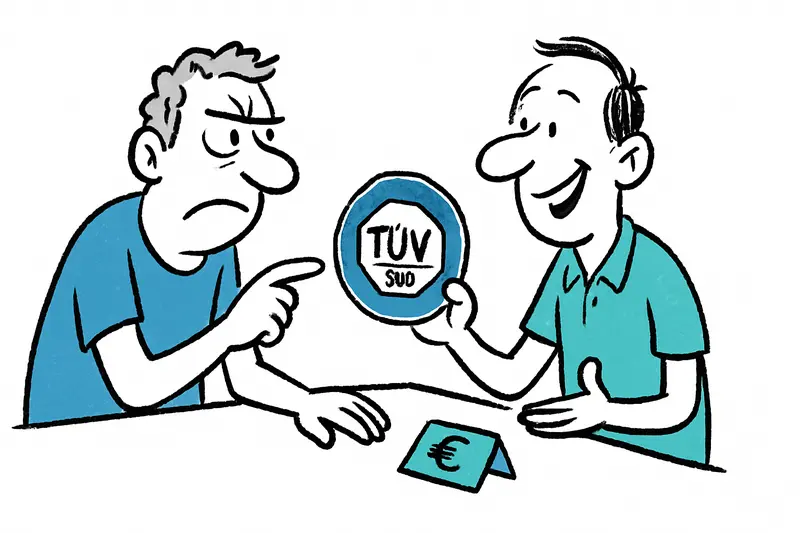
Fake TÜV Stickers in Mallorca: Harmless Bargain or Costly Risk?
Stickers for a few euros — nice for a photo, dangerous for your wallet: why fake TÜV stickers in Mallorca are more than online gossip and what consequences they can have for residents, police and insurers.
One sticker, many questions: harmless or risky?
One morning at the Plaça Major, between the cries of seagulls and the scent of freshly brewed café con leche, a single photo was enough to set the discussion alight: a stack of round stickers printed with "TÜV", offered for six to eight euros in a popular classifieds group — discussed in ¿Pegatinas TÜV falsas en Mallorca?. The key question that quickly emerged: is this just an internet stunt — or a real problem for the island?
Short answer and follow-up thoughts
Short: Both. A single sticker seems trivial at first, a small plastic disc among many on our cars. But the possible consequences run deep: legal risks, insurance problems, and a loss of trust between residents, authorities and platforms.
Why Mallorca reacts particularly sensitively
The island is its own microcosm: many cars with foreign plates, long stays by residents from Germany or Scandinavia, complicated questions about taxes and first registration. That makes checks more vigilant. Guardia Civil and Policía Local are more often present where parents drop off their children at private schools in the morning, along the Paseo Marítimo, at the entrances to urbanizations or in ports like Palma and Port de Pollença. A fake sticker can quickly fit into a larger picture — and be met with suspicion.
Analytical view: what is often overlooked
1) The sticker is a symptom, not the cause: Authorities look at documents, import data, technical defects and insurance status. A fake sticker alone doesn't cause the problems, but it can intensify the inspection.
2) Marketplaces as hubs: Such offers appear where neighbors, residents and tourists trade. The role of platforms — reporting channels, quick removal, protection of buyer data — is rarely debated loudly, but could make a big difference, as seen in incidents like fake QR stickers in Palma's port that deceived drivers.
3) Insurance gaps are the bigger risk: In an accident, it will be checked whether there was manipulation. Insurers may reduce or refuse payments if documents or inspections are falsified.
4) Cross-border coordination is often lacking: Problems with a German inspection sticker are not only a "German concern". Solutions require coordination between German testing bodies, Spanish registration authorities and local police — technically and diplomatically demanding.
Concrete risks for drivers in Mallorca
Anyone who drives on the island for an extended period without properly re-registering risks fines, warnings or even vehicle immobilization. Manipulated plates or forged documents can be punishable. And in a serious case — accident, check or investigation — a cheap sticker can become very expensive: fines, insurance problems and inquiries from customs or traffic authorities.
Pragmatic steps — realistic and local
1. Get your papers in order. If you stay for more than just a visit: clarify re-registration, import formalities and insurance. A gestor on site can take care of a lot of administrative work — it costs time, but is cheaper than legal consequences.
2. Don’t bargain hunt for legally relevant items. A sticker for a few euros is a risky gamble. For offers that promise "TÜV" or "registration": steer clear and ask official authorities.
3. Report suspicious listings. Platforms often respond to repeated reports. Send screenshots to the marketplace operators and inform the Policía Local if necessary — especially when sellers provide false information.
4. Involve your insurer early. If in doubt: call, explain and clarify. That helps you avoid nasty surprises after an accident.
5. Contact the authorities. Concrete evidence of forgery: file a report with the Guardia Civil. For general advice, local town halls or resident advisory centers are helpful points of contact.
A view from the café at the Plaça
The Facebook post was less a scandal than a wake-up call. On a small island like Mallorca, worries spread quickly, as do rumors. More important than outrage is pragmatism: check, inform, hold platforms accountable and engage the community for factual tips.
My tip: at the next coffee, don’t just stare at the sticker on the car opposite — briefly think through the papers in the glove compartment. It’s tedious, yes — the sun is strong, the streets are getting busier — but a properly registered car is ultimately the more relaxed one.
Frequently asked questions
Are fake TÜV stickers in Mallorca really a serious risk for drivers?
What can happen if you drive in Mallorca without properly re-registering your car?
Can an insurance company refuse to pay after an accident in Mallorca if papers were falsified?
How can I tell if a TÜV sticker offer in Mallorca is suspicious?
Where in Mallorca are vehicle checks more likely to happen?
Should I report fake vehicle document listings in Mallorca?
What is the safest way to sort out car paperwork if I live in Mallorca for part of the year?
What should I do if I think my car documents may not be valid in Mallorca?
Similar News
Cafetería San Siro: A Meeting Place on Schinken Street Since 1966
In the middle of Schinken Street, Cafetería San Siro has been offering Mallorcan hospitality for more than six decades —...
From Ballermann to Prison: What the Verdict Against the Femina Operator Means for Palma
The Munich Regional Court convicted a German operator for subsidy fraud. What does the verdict mean for the Femina Club,...
Underpass Verge de Lluc: 19-year-old fights her way out of flooded car – a warning sign for Palma
A 19-year-old recently escaped swimming from her car after the Verge de Lluc underpass held up to one and a half meters ...
When the Floodgates Open Again: Why Palma's Floods Aren't a Coincidence
A sudden heavy downpour around 5 p.m. brought Palma to a standstill: flooded streets, full basements, panicked commuters...
Playa de Palma: Life-saving at Balneario 11 – Lifeguards Act Quickly
A German holidaymaker suffered cardiac arrest at Playa de Palma. Lifeguards resuscitated her on the beach; emergency ser...
More to explore
Discover more interesting content

Can Cap de Bou

Townhouse Lleo 72
