
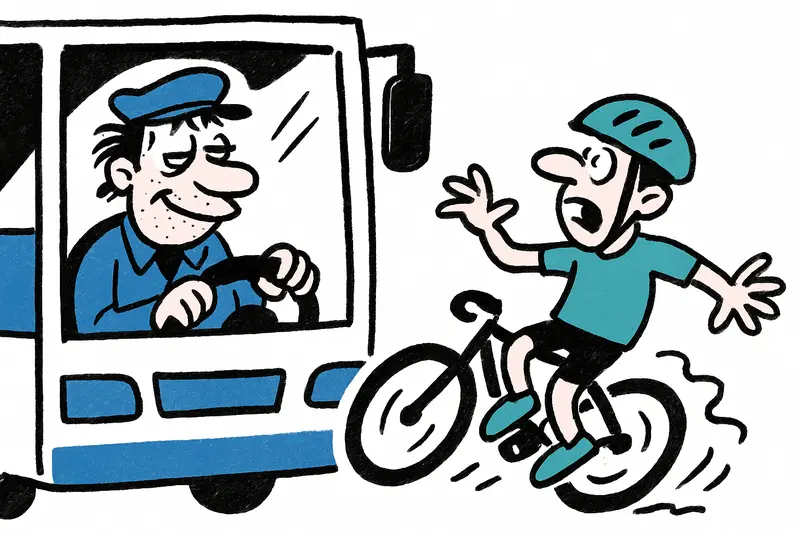
Bus driver on drugs hits cyclist on Ma-3413: More than an accident
Bus driver on drugs hits cyclist on Ma-3413: More than an accident
On the Ma-3413 country road between Santa Margalida and Can Picafort a foreign cyclist was seriously injured by a coach. The driver tested positive for cocaine. A sober assessment: where is the problem — and what needs to change?
Bus driver on drugs hits cyclist on Ma-3413: More than an accident
Guiding question: How could a coach driver, who later tested positive for cocaine, end up in a traffic situation in which a cyclist was seriously injured — and what are we missing in dealing with such risks in Mallorca?
On Friday afternoon the scene on the Ma-3413 country road between Santa Margalida and Can Picafort was familiar: police cars with flashing lights, two ambulances and the smell of diesel in the air. A foreign cyclist lay injured at the roadside; emergency responders took him to Son Espases hospital in Palma. The Guardia Civil has taken over the case, the local police were on site, and initial tests on the bus driver showed a positive result for cocaine. Those are the known facts — everything that follows, however, is not solely a legal issue but a societal one.
Critical analysis: Several problem areas come together in a sober assessment. First: the presence of illegal substances among drivers of passenger transport vehicles is not new, but the root causes are rarely clearly named. Are long shifts, irregular breaks, performance pressure in a competitive market or laxly controlled medical checks to blame? Second: the infrastructure on routes like the Ma-3413 is often not designed for the coexistence of fast vehicles and leisure cyclists. Narrow shoulders, missing protective lanes, unclear junctions — these increase risk, even when road users act correctly.
What is missing in the public debate: there is much talk about individual offenders and penalties, but less about systemic risks. Public debates often skip questions about how bus companies schedule working hours, whether regular drug tests actually take place and whether regulatory authorities have sufficient staff to carry out spot checks; local case studies such as Fatal accident near Capdepera: motorcycle collides with microcar on MA-4040 emphasize the need for thorough reviews. The perspective of cyclists — especially foreign visitors discovering Mallorca by bike — is also rarely heard: who takes care of them after accidents, and how are insurance and language barriers resolved?
A typical everyday scene in the area: delivery vans drive along the fields in the morning, tractors chug in the distance, and couples or holidaymakers on racing bikes cut through the roads. On the Ma-3413, just away from the tourist centers, you can clearly hear the screech of bicycle brakes. People who live here have seen the combination of fast car traffic and leisure cyclists for years — the problem is therefore not surprising, it has simply often been tolerated, as past incidents such as Crash on the Ma-10: Bus collides head-on with a truck — What does this say about our roads? show.
Concrete measures that can be implemented immediately:
1) More frequent, unannounced drug tests: Not only after accidents, but as part of a regular control program for drivers of coaches and commercial transporters. Random checks increase deterrence and give authorities data on the scale of the problem.
2) Controls on working and rest times: Stricter monitoring of driving and rest periods can compensate for fatigue and risk that are often associated with substance use.
3) Temporary speed limits and better signage on routes popular with cyclists. Visible markings and warning signs reduce the likelihood of conflicts.
4) Expansion of simple protective lanes or at least clear shoulders where topography allows. Small structural measures significantly reduce severe injuries.
5) Reporting and support network for foreign victims: A contact person in several languages at accident sites, clear information on insurance and hospital procedures — this would help victims and reduce administrative burden.
In the long term more is needed: better data collection on collisions between buses and cyclists, mandatory further training for professional drivers on risky behavior and conflict avoidance in traffic, and a transparent review of every serious accident without rushing to assign blame, similar to responses after incidents like Fatal accident on the Ma-19 near Llucmajor: Why motorcyclists are repeatedly affected. Internal company controls that are regularly documented should play a role in tenders and licensing procedures.
What should happen now: authorities must wait for the ongoing Guardia Civil investigation — that is legally necessary — but preventive measures should be strengthened in parallel. Local authorities can order additional short-term checks and visible traffic-calming measures on popular cycling routes. Bus companies are obliged to disclose their internal safety and control processes.
Pointed conclusion: This accident is a wake-up call. It shows that individual faults — drug use at the wheel — are embedded in a larger web of infrastructural deficiencies, operational pressure and uneven control. Those who dismiss it as mere bad luck overlook that these are repeatable risks. In Mallorca, where people on bicycles and the wheels of the tourism industry travel close to one another, the issue of safety must be addressed on multiple levels: legally, organizationally and practically on the roads.
Our thoughts are with the injured person and the helpers who worked that afternoon on the Ma-3413. Legal clarification is underway; we should use the time until a final result to draw real consequences from this case — so that such incidents happen less often and Mallorca becomes safer for locals and visitors alike.
Frequently asked questions
What happened on the Ma-3413 near Santa Margalida in Mallorca?
Why do cyclists face higher risks on Mallorca country roads?
What should I know before cycling in Mallorca during the tourist season?
What happens after a serious road accident involving a cyclist in Mallorca?
Why are drug tests for professional drivers important in Mallorca?
What safety improvements could help cyclists on roads like the Ma-3413 in Mallorca?
Where is Son Espases hospital in Mallorca used after traffic accidents?
Who investigates serious road accidents in Mallorca?
Similar News
Parking dispute in Els Hostalets: When a gap leads to violence
A parking dispute on Calle Aragón escalated into a mass brawl at night. Why do trivial conflicts here turn bloody so qui...
Bodycams in Palma: More clarity needed so surveillance doesn't become the norm
Palma's local police equip UII officers with Axon Body 4 cameras. Useful for evidence collection — but specific rules on...
When the Bread Door Closes: Why Maria de la Salut Lost Its Last Bakery
The only bakery in Maria de la Salut, a sales outlet of Forn de ca'n Joan Terès from Palma, has permanently closed. What...
Ancient Piece Brought to Light: Guardia Civil Recovers Roman Anchor Fragment off North Coast of Mallorca
Divers from the Guardia Civil recovered a massive iron piece from Roman times off Mallorca's north coast. The roughly 35...
Who Benefits from the Half‑Hourly Flight on the Edge? Aena, Investments and the Island's Interests
Almost one billion euros is flowing into Son Sant Joan. The figures show the scale of investment and expected beneficiar...
More to explore
Discover more interesting content

Can Cap de Bou

Townhouse Lleo 72
