
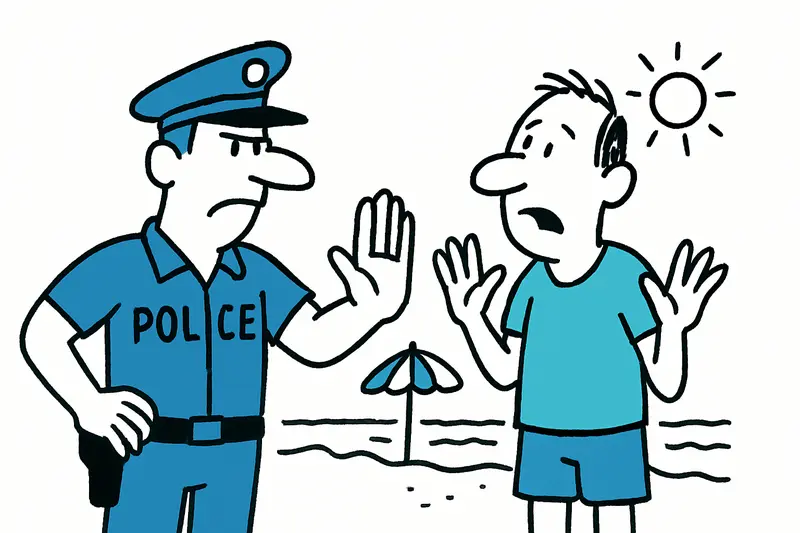
More Police at Playa de Palma – does that really bring peace?
More Police at Playa de Palma – does that really bring peace?
Palma's city hall is sending 95 officers to the Playa de Palma this summer and has reopened the station at Plaça de les Meravelles. What does the reinforcement achieve – and what's missing from the debate?
More Police at Playa de Palma – does that really bring peace?
Key question
Palma's city hall has reopened the police station at Plaça de les Meravelles and announced that by the end of October it will deploy a total of 95 officers at the Playa de Palma, a move discussed in Night raid at Playa de Palma: assessment, questions and what's missing. The central question: Is more staff alone enough to solve the problems that residents, workers and visitors complain about every year during peak season?
Critical analysis
More uniforms along the promenade can have immediate effects: faster response times, presence during conflicts, visible deterrence against open violations. Official figures from last summer show that just at the Playa de Palma and in s'Arenal around 2,500 reports were filed for breaches of public order, a trend addressed in Palma takes stock: Arrests made — is that enough to make beaches safer?. This is not trivial, it's everyday life — and it often takes place between hotel complexes, beach bars and taxi ranks. Nevertheless there are limits: more personnel does not automatically mean better prevention. If offender structures, language barriers, seasonal employment relationships and a lack of coordinated checks at different points in the chain are not addressed, problems only shift or are solved only partially.
What is missing in the public discourse
The debate quickly revolves around numbers and presence. Seldom are clear metrics discussed: Which offenses should be prioritized? How will successes be measured — fewer reports or a noticeably greater sense of security among residents? And importantly: What interfaces exist between the police, regulatory offices, tourism operators and social services? Without answers many measures remain piecemeal. Also underexamined is how it is ensured that fines and reports are actually processed and do not disappear into a pile of files.
An everyday scene from the promenade
Imagine the promenade on a hot July evening: street vendors with plastic bags, speakers playing from small boxes, a group of young people hiding beer bottles in the bushes between sunbeds. A cleaning vehicle rumbles past, a waitress quickly closes the door of the bar, it smells of frying oil and sea salt. Amid this soundscape police presence can intervene, but whether it cools emerging tensions or only documents incidents afterwards becomes apparent later; similar clashes during controls are described in Tumults at Playa de Palma: When Controls Threaten the Beach Scene.
Concrete solution approaches
More officers are only one building block. Concrete proposals that should work together:
1. Set clear priorities: Publicly communicated targets — for example reducing illegal street vending by X percent — create transparency and allow evaluation.
2. Interdisciplinary shifts: Deployment teams with police, regulatory officers, social workers and interpreters can not only sanction but also advise and de-escalate.
3. Prevention rather than just repression: Information for tourists in multiple languages, more trash bins, designated vending areas and night buses reduce causes of conflicts.
4. Data and evaluation: Uniform recording of incidents so that recurring locations and times become visible and measures can be targeted.
Pithy conclusion
The reopening of the station at Plaça de les Meravelles and the reinforcement to 95 officers are visible signals. Alone they will not completely transform the square and the beachfront promenade. Those who want peace and order here need a comprehensive package: coordinated responsibilities, measurable goals and services that nip conflicts in the bud. Otherwise a lot of presence remains without sustainable change — and people on the promenade know exactly: police cars may stop trouble for an evening, but real solutions require more than sirens.
Frequently asked questions
What is the weather like in Mallorca in summer?
Can you swim in the sea in Mallorca in spring or autumn?
What should I pack for a trip to Mallorca?
Is Mallorca a good destination for a beach holiday in October?
What is Port de Pollença like for visitors?
Is Palma de Mallorca worth visiting for a short stay?
What is Alcúdia in Mallorca known for?
When is the best time to visit Mallorca for warm weather?
Similar News
Stolen Motorcycle in Palma: Fatal Crash in Coll d'en Rabassa Shortly After Theft
A motorcycle parked on Plaza Miquel Dolç in Son Gotleu was reportedly stolen in the early hours. Hours later two men cra...
When More Guests Mean Less: Mallorca's Restaurants at the Limit
Despite record visitor numbers, the revenues of many restaurants are shrinking. Why more visitors don't automatically me...
Ballermann 2026: Heat, crowded promenade and rising prices – how much longer?
Bright sunshine, over 35 degrees in the shade and busy venues at Playa de Palma: Tourists enjoy the parties, restaurateu...
Stolen motorcycle, high-speed escape, deadly crash: An accident in Palma that raises questions
A motorcycle stolen in Son Gotleu ended up hours later on the Cardenal-Rossell in Coll d'en Rabassa in a deadly collisio...
Found dead in Son Gotleu: Dog walk ends fatally — what is missing in the investigation?
A 68-year-old man was found dead on Sunday morning on Tomás Rullàn street in Son Gotleu. According to his partner, he ha...
More to explore
Discover more interesting content

Boat Tour with BBQ along Es Trenc Beach
Private transfer from Mallorca Airport (PMI) to Pollensa
