
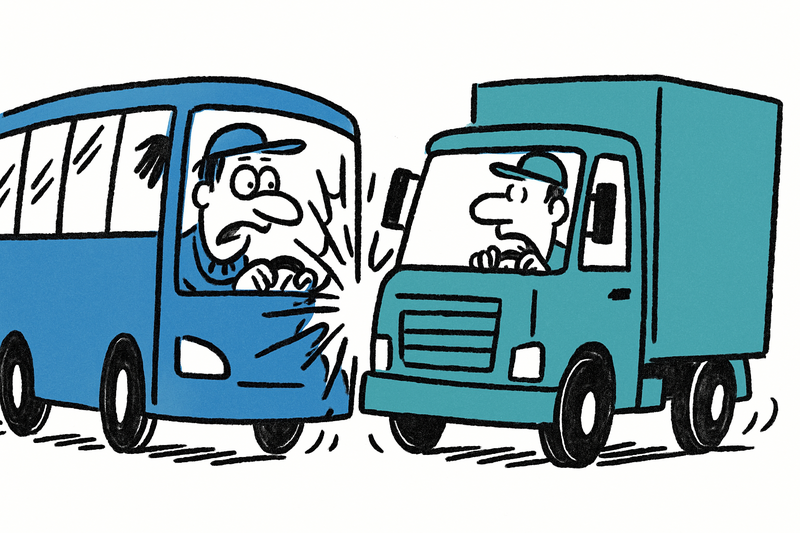
Crash on the Ma-10: Bus collides head-on with a truck — What does this say about our roads?
This morning between Esporles and Banyalbufar a regional coach and a food truck collided. Three people lightly injured, hours-long closure — and the question: Are Mallorca's narrow west coast roads still safe for mixed traffic?
Crash on the Ma-10 in the morning: Bus hits truck on a tight bend
It was one of those hot, buzzing mornings on the Ma-10: cicadas singing, the smell of coffee from the bar at the entrance to Esporles — and then suddenly a loud bang. Around 10 a.m. a head-on collision between an intercity bus and a delivery truck near Esporles occurred in a tight bend heading toward Banyalbufar. Eyewitnesses reported flying glass, a torn-off bumper and a windshield that shattered like a sheet of tin.
At least three people sustained minor injuries and were treated on site. According to rescue teams, no one was seriously injured and taken to hospital, but the shock ran deep — among passengers, the bus driver and the residents who soon stood at the scene with phones and damp brows. An elderly man from Esporles summed it up dryly: 'At such a narrow spot — a small mistake is enough.'
Key question: How safe are Mallorca's narrow coastal roads?
The collision raises a simple but uncomfortable question: Are roads like the Ma-10, celebrated as postcard routes along the west coast, still suitable for mixed heavy and passenger traffic? The answer is not only legal — it is everyday reality and affects commuters, tourists, delivery drivers and local service providers.
The Guardia Civil closed the road, recorded the accident and carried out routine alcohol tests on the drivers, as reported in Grave accidente en la Ma-10: Autobús interurbano choca con camión entre Esporles y Banyalbufar. Specialized vehicles lifted the bus and truck onto recovery trailers; the closure lasted several hours and led to long queues, blocked access roads and frantic phone calls in the bar at the entrance — scenes all too familiar on this route in high summer.
Aspects that are often missing in the debate
First: road width and visibility. Many of the old coastal sections were never designed for today's vehicle mix. Tight bends, missing pull-outs and cresting hills with limited sightlines significantly increase the risk when buses and trucks meet.
Second: usage rules and traffic management in summer. In peak season traffic often doubles, and inexperienced drivers rely on navigation routes not designed for narrow mountain roads. Third: load securing and vehicle maintenance. A fully loaded delivery truck behaves differently in a bend than a light commercial vehicle — this matters in a collision but is rarely publicly debated.
And fourth: the psychological component. Even minor collisions leave traces: passengers who may avoid bus travel in the future, local taxi drivers losing business, restaurateurs suddenly seeing fewer lunchtime guests — and the ongoing debate over safety versus accessibility.
Concrete solutions — what would make sense now
From a local perspective, there are measures that do not have to take years: speed reductions at particularly narrow spots, visible seasonal warning signs, the targeted installation of convex mirrors in blind bends and the creation of small pull-outs at critical sections.
In the longer term, a coordinated concept is needed: restrictions on heavy delivery vehicles at certain times of day, mandatory route planning for trucks transporting goods along the coast, increased checks by the Guardia Civil and targeted infrastructure investments — such as guardrails, improved surfacing and selective widenings.
Even small levers can help: information campaigns for tourists at rental agencies, better routing in navigation systems and training for bus and truck drivers who regularly use the Ma-10.
Turning shock into an opportunity
An accident like today's is an unpleasant wake-up call but also an opportunity. If communities like Esporles and Banyalbufar now work together with traffic authorities and the island government on pragmatic solutions, short-term measures could noticeably increase safety — without destroying the character of the route.
The Guardia Civil will continue to investigate the cause of the accident. Until then the reminder stands: on the Ma-10, courtesy, reduced speed and a little extra distance help — and maybe one less espresso before a sharp bend.
We are following the investigation and will report any new findings regarding cause or injuries; see also Colisión frontal en la MA-10: autobús interurbano choca con camión de alimentos.
Frequently asked questions
Are Mallorca’s narrow coastal roads like the Ma-10 safe for buses and trucks?
What should drivers do when driving the Ma-10 in Mallorca?
Why do accidents happen so often on Mallorca’s mountain roads in summer?
What happens after a road crash on the Ma-10 in Mallorca?
Is the road between Esporles and Banyalbufar in Mallorca difficult to drive?
What improvements could make the Ma-10 safer in Mallorca?
Should delivery trucks avoid certain roads in Mallorca during peak hours?
What precautions should tourists take when driving in Mallorca’s mountains?
Similar News

Up to €9,000 Fine in Inca: Why Wet Wipes Can Blow Up the Sewers — and What We Should Really Do
The municipality of Inca warns of blockages caused by wet wipes — fines of €300 to €9,000 are possible. A reality check:...

World Cup Trophy in Palma: Two Days Up Close
The World Cup trophy is coming to Palma at the end of October: two days on display at City Hall, and on 31 October photo...

End of October: Can you still swim in the sea in Mallorca?
The late-autumn sun still warms the air and the sea has retained its summer heat—many people don't pack away their swimw...
Years of abuse in Costa de la Calma – Neighbor calls Guardia Civil
In a villa in Costa de la Calma a neighbor alerted the Guardia Civil: a 19-year-old woman reported years of violence by ...

Schauinsland Takes Over Management of the Morito in Cala Millor – a Reality Check
From March 2027 the German tour operator Schauinsland will manage the Morito hotel in Cala Millor. The Batle Erikson fam...
More to explore
Discover more interesting content

Can Cap de Bou

Townhouse Lleo 72
