
MA-10 under scrutiny: Head-on collision between intercity bus and delivery truck near Esporles
Between Esporles and Banyalbufar an intercity bus collided head-on with a delivery truck. Three people sustained minor injuries, the road was closed for a long time — and the question remains: What needs to change on the narrow MA-10 so that incidents like this occur less often?
A loud bang in the morning: when the MA-10 reveals its narrow side
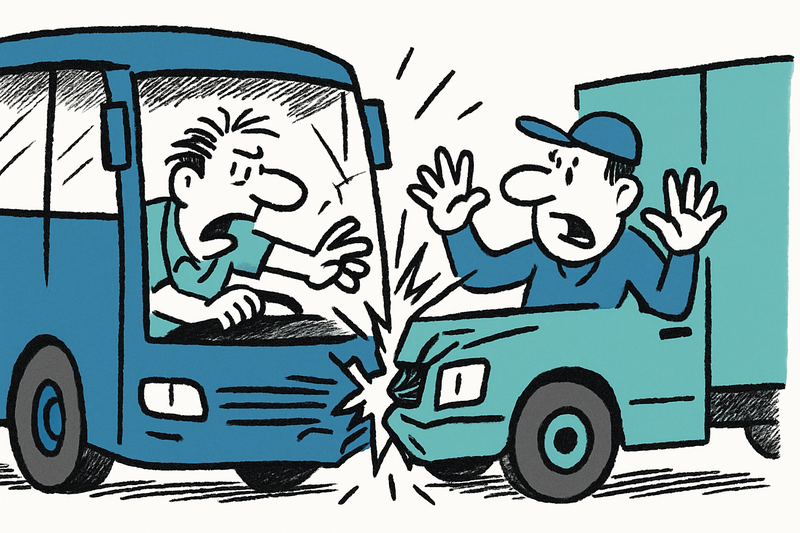
Around 10 a.m. a loud bang shattered the silence on the slope between Esporles and Banyalbufar. First screams, then the shrill sound of metal on metal — an intercity bus heading for Palma and a delivery truck from a local butcher had collided head-on in a tight left-hand bend, according to Crash on the Ma-10: Bus collides head-on with a truck — What does this say about our roads?. Three people suffered minor injuries. For everyone else, the question remained: How could this even happen?
Witnesses, heat and the narrow road edge
Witnesses report that the truck suddenly veered out, apparently taking the curve too widely and moving into the oncoming lane. The bus driver had no chance to avoid it. Residents say that on this August day the heat made nerves frayed, that there were few passengers on the bus, and that the impact was so severe that the windshield shattered and debris lay on the road. A local bus driver later summed it up matter-of-factly: “You have to drive very defensively here.”
The scenes at the crash site looked familiar: ambulances, fire brigade, the Guardia Civil, people waiting in the shade under olive trees and phones documenting everything. Because both vehicles blocked the entire carriageway, traffic backed up for kilometers. Only by late morning could specialist cranes recover the vehicles and reopen the road.
Less considered: economic pressure and technical shortcomings
The investigation is examining driving behavior, possible technical defects and ordered alcohol tests, as detailed in Colisión frontal en la MA-10: autobús interurbano choca con camión de alimentos – varios heridos. What often gets too little attention in immediate reports are the structural reasons: delivery drivers are under time pressure, vans are often scheduled more tightly than before. In high summer, fatigue, heat and increased tourist traffic add to the strain. The MA-10 is scenic, but in many places so narrow that small driving errors can have big consequences.
Vehicle technology also plays a role. Many delivery trucks and older buses on the island lack modern assistance systems such as lane departure warnings or autonomous emergency braking. If visibility is additionally impaired by sun, dust or spray, the risk increases.
The central question: How do we make the MA-10 safer?
That is the guiding question that remains after the crash. There is no simple lever, because the coastal road is geographically challenging. Nevertheless, concrete measures are conceivable and partly achievable in the short term:
Driving behavior and personnel: Stricter checks of driving and rest times, targeted training for delivery and bus drivers on driving on narrow coastal roads, and clear employer rules not to pass every time pressure on to drivers.
Technology: Promote instead of just control: subsidies or incentives for companies to retrofit assistance systems in delivery vehicles. Mandatory safety checks for buses before the season could help.
Technical infrastructure: Rumble strips before dangerous bends, better visibility markings, additional mirrors in narrow sections and defined lay-bys where geology permits. Mobile or temporary speed displays help to slow traffic down.
Enforcement and presence: More visible presence of the Guardia Civil during peak times, targeted checks of overtaking maneuvers and speeds, and occasional speed measurements as a visible signal.
These measures cost money and require coordination between municipalities, traffic authorities and companies. But after a bang like this in the morning it becomes clear that inaction can become more expensive.
What drivers and holidaymakers can do now
These are not new tips, but they save lives: plan journeys to avoid the hottest hours and the heaviest opposing traffic; keep distance and slow down in bends; when faced with oncoming traffic, better to stop briefly than to risk overtaking. And: those driving for work should not be pressured into risky maneuvers — a few seconds lost are not worth it.
The MA-10 remains one of Mallorca’s most beautiful but also most vulnerable roads. Following the accident between Esporles and Banyalbufar, investigations are still ongoing, as reported in Grave accidente en la Ma-10: Autobús interurbano choca con camión entre Esporles y Banyalbufar. For residents and commuters, the memory of a loud morning, swift help and the question whether we are doing enough to prevent the next bang remains.
Frequently asked questions
Is the MA-10 in Mallorca a difficult road to drive?
What should drivers do on Mallorca’s mountain roads in hot weather?
Can buses and trucks safely pass each other on the MA-10 in Mallorca?
What happens when there is a serious road accident on the MA-10 near Esporles?
Why is the road between Esporles and Banyalbufar on Mallorca considered risky?
What safety improvements could make the MA-10 safer in Mallorca?
Do Mallorca delivery drivers face extra pressure on rural roads?
What can holidaymakers do to stay safe on Mallorca’s coastal roads?
Similar News
First Day, First Consequences: What Palma's Rent Freeze Really Means
A new decree stops a planned eviction in Palma — but what really changes for tenants and landlords? A reality check with...
When Housing Becomes a Matter of Survival: Mallorca Between Rental Frenzy and Everyday Life
The case of 87-year-old Maricarmen showed that on Mallorca many people's lives are poised between affordable and uninhab...
Autumn in Mallorca: When Melancholy Gets a Window
Why autumn quietly tightens here — and how to make use of the mood: walks, culture, candles and the light from Palma to ...
Near-miss on Lanzarote: Landing Ryanair Jet and Iberia Takeoff — what really went wrong
On Lanzarote there was a dangerous incident: A Ryanair flight (FR5910) from Dublin landed on runway 03 while an Iberia E...
Eurowings introduces new Premium Business seats on Mallorca routes
From December 1, selected Eurowings flights to Palma and other destinations will feature eight particularly generous sea...
More to explore
Discover more interesting content

Can Cap de Bou

Townhouse Lleo 72
