
Porreres: How Neutering and Volunteers Change Cats' Lives
Porreres: How Neutering and Volunteers Change Cats' Lives
In Porreres a veterinarian and volunteers show how targeted neutering, microchipping and municipal support stabilize cat colonies and reduce animal suffering.
Porreres: How Neutering and Volunteers Change Cats' Lives
A village, seven colonies and a practical path to animal welfare
When the bells of Sant Pere ring at midday and the market in front of the town hall slowly quiets down, you can see volunteers at the edge of the plaza placing bowls of food while cat calls hang in the air. In Porreres this is not a postcard scene but everyday life: people here care for seven officially registered cat colonies – and behind this commitment is mainly a small veterinary practice that opened in 2018.
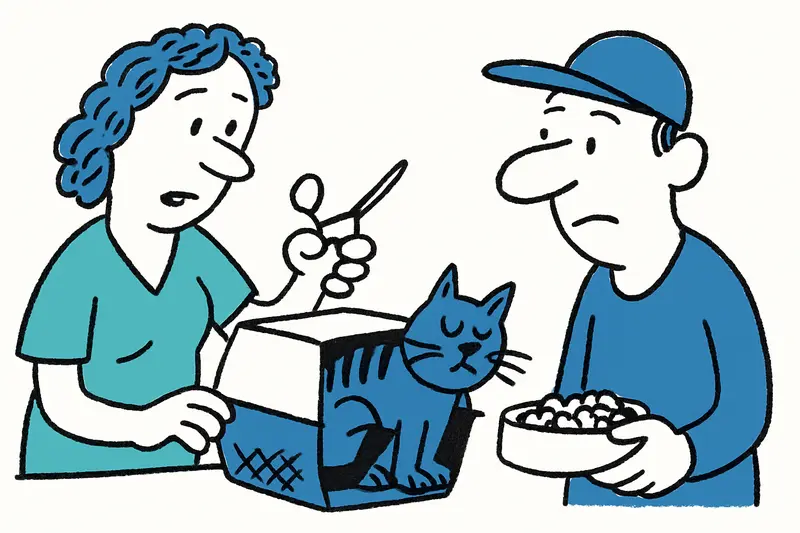
The veterinarian who runs the village practice also founded a local animal welfare organization, bringing together two things that often remain separate: medical care and volunteer engagement. The result is practical and visible: injured animals are treated, newly found cats are registered, and sterilized animals return to their colony after a short recovery period – with a microchip for tracing.
The idea is simple and effective. The regional regulation from 2023 gives municipalities responsibility for colonies and sets the framework: neutering from around six months of age and implantation of a microchip are now legally required. Medically, the procedures are quick: usually five to ten minutes. Price ranges common in Europe, cited in Porreres, are roughly €100 to €150 for females and €70 to €100 for males. These amounts are often a challenge for small organizations and private helpers; that is why cooperation with municipalities is so important, and some towns have introduced their own rules, as seen in Llubí sets limits — and raises questions: Three animals per apartment, neutering for outdoor cats.
The Balearic Islands currently record 1,759 officially registered cat colonies. Local authorities, however, estimate the actual number is significantly higher. On Mallorca, 26 of 53 municipalities currently run active neutering programs – a start, but not enough, say practitioners on site. The regional ministry has set an interim target of 50 percent sterilized animals in the colonies to move toward stable, so-called controlled colonies; experts say that ultimately far more than nine out of ten animals would need to be sterilized.
In practice this means: volunteers observe, report newcomers, catch animals, bring them to the clinic and accompany their return. Without these hands on the ground many colonies would continue to grow unchecked; the contrast with reports from busier tourist areas is stark, as illustrated by When the 'mümmels' are no longer manageable: Stray cats at Ballermann and what to do now. The relocation facility in the neighboring municipality of Vilafranca is an example of how local administrations can take responsibility: small kennels for acclimatization, a larger outdoor enclosure with shelters, feeding and resting areas – shade in summer, protection from rain in winter.
These steps have effects on multiple levels: fewer orphaned kittens, less suffering from disease, better monitoring of health and parasites, and relief for the neighborhood. On the street you then hear fewer desperate cries from young animals and more often the quiet rustle when someone sets down a bowl. It's not a big headline, but lived neighborhood help; it also helps prevent emergencies and tragedies like Sa Pobla: Escaped Shepherd Dogs Kill Several Cats — Who Takes Responsibility?.
What is encouraging in Porreres is the combination of medical know-how, volunteer engagement and growing municipal support. Associations remain dependent on grants, yet the joint work has already produced visible effects: more stable colonies, fewer emergencies, and improved traceability through microchipping.
The model can be transferred to other municipalities: clear registration of colonies, coordinated trapping and neutering actions, simple accommodations for acclimatization and financial participation by town halls reduce costs in the long run and protect animals. Those who want to help concretely can support local associations, offer available foster homes or register with municipal programs – often just a few hours a month are enough.
In the end it's about an attitude: seeing animals as living beings with needs and understanding responsibility not as a burden but as part of village life. When one evening on the plaza a kitten dozes calmly in a box after being briefly sterilized, it is not a triumph but a small, reassuring step in the right direction. And in Porreres that sounds a little like home.
Frequently asked questions
Why are cat colonies in Mallorca being neutered and microchipped?
What is the best age to neuter a stray cat in Mallorca?
How much does cat neutering cost in Mallorca?
How do volunteers help stray cats in Porreres?
What does a controlled cat colony mean in Mallorca?
How many cat colonies are registered in the Balearic Islands?
What is the cat relocation facility in Vilafranca used for?
How can I help stray cats in Mallorca if I do not have a lot of time?
Similar News

The Maricarmen Case: Why an Eviction Is Forcing Spain's Housing Debate
Images of an 87-year-old woman on a stretcher have sparked a debate in Spain that also runs deep in Mallorca. Who protec...

Parking dispute in Els Hostalets: When a gap leads to violence
A parking dispute on Calle Aragón escalated into a mass brawl at night. Why do trivial conflicts here turn bloody so qui...

Bodycams in Palma: More clarity needed so surveillance doesn't become the norm
Palma's local police equip UII officers with Axon Body 4 cameras. Useful for evidence collection — but specific rules on...
When the Bread Door Closes: Why Maria de la Salut Lost Its Last Bakery
The only bakery in Maria de la Salut, a sales outlet of Forn de ca'n Joan Terès from Palma, has permanently closed. What...
Ancient Piece Brought to Light: Guardia Civil Recovers Roman Anchor Fragment off North Coast of Mallorca
Divers from the Guardia Civil recovered a massive iron piece from Roman times off Mallorca's north coast. The roughly 35...
More to explore
Discover more interesting content

Can Cap de Bou

Townhouse Lleo 72
