
Fatal accident on the Ma-19 near Llucmajor: Why motorcyclists are repeatedly affected
Fatal accident on the Ma-19 near Llucmajor: Why motorcyclists are repeatedly affected
A motorcyclist died after colliding with a delivery van on the Ma-19 near Llucmajor. Key question: What is missing in how we deal with dangers on our roads?
Fatal accident on the Ma-19 near Llucmajor: Why motorcyclists are repeatedly affected
Key question: What is missing in how we deal with the dangers on our roads — and what needs to change locally?
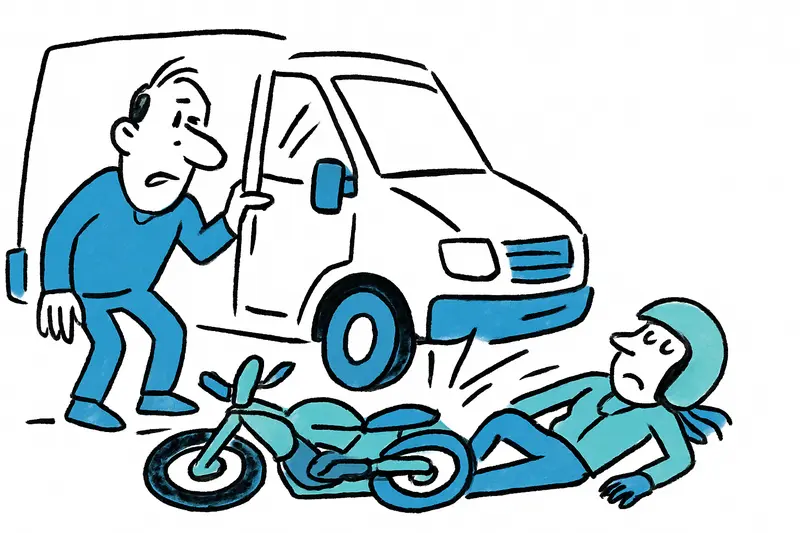
Last night on the Ma-19, just past the exit for Llucmajor: flashing lights, the smell of brakes in the cool air and a fluttering barrier tape beating against the wind. A motorcyclist was struck by a delivery van and died at the scene. The van driver was uninjured. The causes are still unclear; investigations are ongoing.
The question many people ask is simple and uncomfortable: Why are people on two wheels particularly vulnerable, even though the route is the same for all road users? An accident like this is not an isolated event — it joins the sad tally of crashes that happen on Mallorca, as reported in Why Are So Many Motorcyclists Dying on Mallorca? A Reality Check after the Llucmajor Accident, and that people discuss in families, among neighbors and at early-morning gas station shifts.
Critical analysis: Technical and human factors often interact. On the Ma-19 you meet morning commuters, evening tourists and truck drivers; road surfaces vary, lighting conditions change quickly, and there are entrances and exits with restricted sightlines. These patterns reflect broader trends in the islands, as outlined in More traffic fatalities in the Balearic Islands: Why are so many motorcyclists affected?. On such stretches, a split-second of inattention or a missing distance is enough — and the result can be fatal. Investigations will determine whether speed, lane changes, vehicle technology or external circumstances were decisive. From the available facts one can only say: the rider died, the van driver was uninjured, and the causes are unresolved.
What is often missing in public discourse is a sober look at infrastructure and routine processes: Where are dangerous junctions poorly marked? Where is glare-free road lighting lacking? How well are visible protective clothing and motorcycle lighting actually regulated and enforced? Instead of only assigning blame, the debate needs concrete information on accident clusters at certain stretches and on the performance of the rescue chain.
A small everyday scene: On Saturday morning, when the market in Llucmajor opens, you see bakers packing bread into bags, seniors with plastic shopping bags and a group of cyclists slowly crossing the Ma-19 to reach the side road. Motorcycles hum past, people talk about the weather — and nobody thinks about how quickly routine can become dangerous.
Concrete solutions that can be implemented locally:
1. Increase visibility: Better markings at entrances, additional reflective posts and LED lighting at critical points. A bright taillight alone is not always enough.
2. Speed controls and traffic monitoring: Mobile speed checks at known danger spots and targeted enforcement during peak times. Not all measures need to be permanently expensive; temporary controls are effective.
3. Targeted infrastructure checks: Road surfaces, ruts and drainage channels can become risky for two-wheelers in wet conditions. Repair priorities should focus on sections with many accidents.
4. Education and training: Practical workshops for car and delivery drivers on blind spots and interacting with two-wheelers. Small measures within company fleets could reduce risks.
5. Strengthen the rescue chain: Shorter access routes for emergency services, identifiable pull-off areas for helpers and clearer local coordination reduce the time to first aid.
Some of these proposals are technically unspectacular, cost less than expected and can be addressed locally: the municipality, island council and road operators can make cooperation agreements, set priorities with local craftsmen and arrange training with transport companies.
My impression as someone who travels the island often: People here respond when problems are named concretely. A resident of Llucmajor who regularly uses the Ma-19 said recently that he drives more cautiously since he lost a colleague. This personal involvement moves people more than general appeals.
Concise conclusion: A tragic accident like this is never just "luck" or "bad luck" — it is the result of many small decisions and structural gaps. We need fewer calls for culprits and more concrete steps to reduce risk for everyone. In the short term, visibility, enforcement and training help. In the long term, infrastructure must better accommodate different users. Llucmajor is not an exception — the answers lie in pragmatic, local solutions that can be started tomorrow, as discussed in Too Many Deaths on Motorcycles: How Mallorca Can Stop the Summer Trend.
Frequently asked questions
Why are motorcyclists so vulnerable on Mallorca roads?
What makes the Ma-19 near Llucmajor a dangerous stretch for traffic?
What should drivers watch out for when sharing the road with motorcycles in Mallorca?
What road conditions can be especially dangerous for motorcyclists in Mallorca?
Are speed checks effective on Mallorca accident hotspots?
What can Mallorca do to improve motorcycle safety on major roads?
What should emergency services consider after a serious accident near Llucmajor?
When is motorcycle traffic on Mallorca usually more risky?
Similar News
First Day, First Consequences: What Palma's Rent Freeze Really Means
A new decree stops a planned eviction in Palma — but what really changes for tenants and landlords? A reality check with...
When Housing Becomes a Matter of Survival: Mallorca Between Rental Frenzy and Everyday Life
The case of 87-year-old Maricarmen showed that on Mallorca many people's lives are poised between affordable and uninhab...
Autumn in Mallorca: When Melancholy Gets a Window
Why autumn quietly tightens here — and how to make use of the mood: walks, culture, candles and the light from Palma to ...
Near-miss on Lanzarote: Landing Ryanair Jet and Iberia Takeoff — what really went wrong
On Lanzarote there was a dangerous incident: A Ryanair flight (FR5910) from Dublin landed on runway 03 while an Iberia E...
Eurowings introduces new Premium Business seats on Mallorca routes
From December 1, selected Eurowings flights to Palma and other destinations will feature eight particularly generous sea...
More to explore
Discover more interesting content

Can Cap de Bou

Townhouse Lleo 72
