
Fake Driver's Licenses in Palma: Fifth Case – An Isolated Incident or a System?
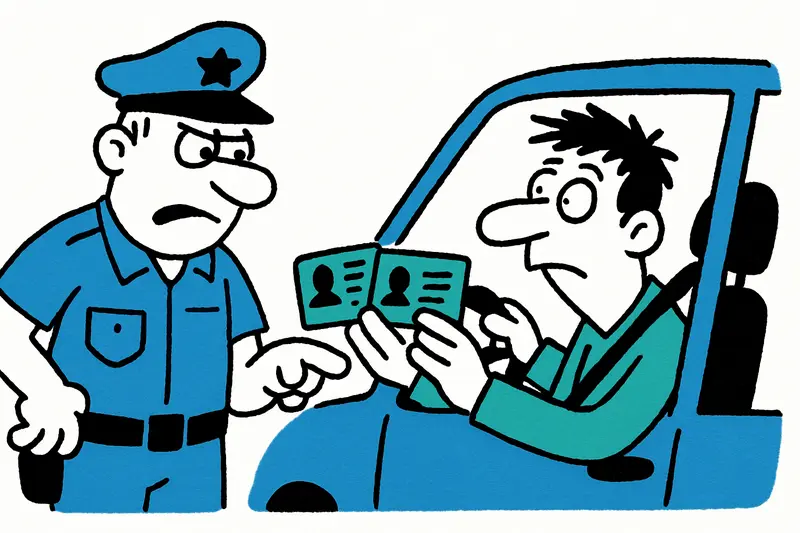
In Palma, police stopped a driver on Calle Aragón who had two clearly forged driver's licenses. This is already the fifth known case. Are these isolated incidents or part of an organized system?
Fake Driver's Licenses in Palma: Fifth Case – An Isolated Incident or a System?
In the afternoon on Calle Aragón, beneath the shrill beeps of scooters and the distant cries of seagulls, a car came to a halt. The scent of the sea mixed with exhaust. Neighbors had already complained during the day about drivers going too fast. The police stopped the vehicle — and found two documents that at first glance did not match: a driver's license with an odd issue year and another document full of English spelling mistakes and strange class combinations.
The Key Question: A Minor Isolated Case or a Sign of a Bigger Problem?
That this, according to investigators, is already the fifth known incident on the island is alarming; it even echoes wider enforcement actions, when over 350 drivers were stopped this year without a valid driving licence in the Balearic Islands. It would be too convenient to chalk it up to coincidence: similar defects across multiple documents, identical language errors, a comparable price level (the established purchase price: 1,080 euros) — these point more toward an organized supply chain than isolated individual acts. The central question remains: How deep do these structures run in Mallorca? Are they lone perpetrators or a network that connects documents, middlemen and buyers?
Why This Is More Than Just an Administrative Offense
Driving without a valid license is not a trivial matter; in fact, serious incidents occur when unqualified drivers are behind the wheel, as seen in an accident in Palma involving a driver whose licence had previously been revoked. In the event of an accident, questions arise immediately: Does insurance cover it? Who is liable if the driver's qualifications were never verified? In practice the answers are often complicated and costly — for victims as well as for municipal coffers. Residents in neighborhoods like Aragón or along the Passeig Marítim talk about nighttime speeding. The uneasy feeling when children walk to school or pensioners cross the market is real.
What Usually Gets Overlooked in the Debate
People talk about the driver, rarely about the supply chain — a pattern that shows up in other forgery cases, for example a forged disabled parking permit case in Palma. The errors in the documents — incorrect date sequences, English orthography mistakes — look like mass-produced items, not personalized products. This suggests: forgers produce standardized sheets, middlemen handle distribution and payment. Language barriers, temporary employment and the high number of tourists provide fertile ground: those who are new or only staying briefly are less likely to be rechecked.
Why the Police Do Not Always Arrest on the Spot
An on-the-spot arrest is not automatic. Without forensic confirmation of the forgery and without clear evidence of origin, an arrest is legally risky. International checks are often necessary. Investigators also want to document cases thoroughly so that prosecutions hold up. That means investigations take time, and in the meantime the impression of inaction remains. For affected neighbors it feels like standing still — especially if the sound of fast engines returns.
Concrete Measures for Mallorca
The island needs more than appeals. Some practical steps are obvious:
Targeted controls: Short-term but intensive control hotspots on known routes like Calle Aragón can deter and document cases.
Technical verification infrastructure: Digital verification methods, QR codes and a central database for foreign driver's licenses would make forgeries easier to detect than paper comparisons at the roadside.
Cross-border cooperation: Connections with countries of origin, banks and payment providers can reveal money flows and seller networks. Those who pay leave traces.
Mandatory checks by rental companies and employers: Car rental firms, intermediaries and employers should be more obligated and trained. An agent who only superficially checks documents is part of the problem.
A Real Ray of Hope
Already documented checks show: when cases are thoroughly processed and reports lead to convictions, the business becomes less attractive. Practice shows that cooperation works — between police, municipalities, employers and citizens. If residents provide tips and agencies and landlords seriously verify documents, the market for fake driver's licenses will shrink.
Conclusion: The man on Calle Aragón is not merely an isolated case; he is part of a problem that affects safety and everyday life in Mallorca. The island needs technical solutions, better international cooperation and more presence where engine noise and worries meet — on the early-morning school run and in the evenings on the promenade.
Frequently asked questions
Why are fake driving licences a concern in Palma and Mallorca?
How can police spot a fake driving licence in Mallorca?
Can you drive in Mallorca if your licence is fake or invalid?
What happens if a driver with a fake licence causes an accident in Mallorca?
Why do fake driving licence cases keep appearing in Palma?
What areas in Palma are affected by speeding and unsafe driving concerns?
What should car rental companies in Mallorca check before handing over a vehicle?
How can Mallorca reduce the number of fake driving licence cases?
Similar News
Why the Striped Breams in Cala Pí Should Be a Wake-up Call
Once again bathers in Cala Pí were surrounded while swimming by small, nippy fish — some wounds bled. Time for clear rul...
Daily from New York: How Palma's Air Traffic Is Growing — and What Must Change
United will increase the Newark–Palma service to daily flights in 2027 (Boeing, 231 seats). Strong tourist numbers clash...

When Love Ends in Shards: Destruction in Son Vida and the Questions That Remain
In Son Vida a relationship dispute escalated: a woman destroyed furniture in a luxury villa, later pressed a panic butto...
Who Bears the Burden? Mallorca Between Tenant Protection and Landlord Fears
Madrid's new housing decrees strengthen tenant rights — but on Mallorca concern is growing: will the law drive small lan...
On the Edge: What Mallorca's Airport Loses If a Major Low-Cost Carrier Falters
The company that operates numerous connections from Palma to France and domestically is negotiating with creditors to re...
More to explore
Discover more interesting content

Can Cap de Bou

Townhouse Lleo 72
