
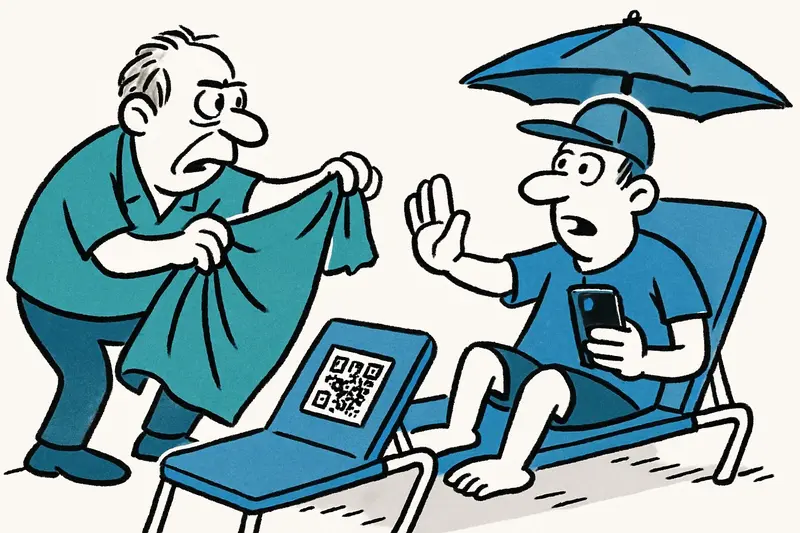
Calvià Tests Digital Beach Reservations – End of the Towel Blockade?
Calvià plans to test an online booking system for sunbeds and beach umbrellas from mid-September. A pragmatic trial, but questions remain about pricing, access for locals and data protection.
No more towels on loungers? Calvià launches a digital trial
On the Paseo Marítimo it smells of the sea and freshly brewed coffee in the morning; seagulls cry, and joggers make their rounds. In the coming weeks a new detail could change the typical beach scenes: instead of towels, small signs with QR codes on the loungers. The municipality of Calvià is planning a pilot project in which sunbeds and beach umbrellas can be booked and paid for online, as reported in Calvià prueba la reserva digital de tumbonas: ¿fin del bloqueo con toallas?. September 15 is being suggested as the start date, according to Calvià prueba la reserva online de tumbonas: ¿comodidad o fin de la espontaneidad?.
Key question
Will a digital reservation system sustainably change beach life in Calvià—and for whom? That is the question behind the initiative. At first glance the idea sounds pragmatic: fewer disputes, more predictability. On closer inspection, however, several debates that have so far received little attention open up.
What it specifically involves
The test is announced for heavily frequented sections: Palmanova, Magaluf, Santa Ponça and similar beaches where by half past eight there are already hardly any free spots left. Users should be able to select, pay and receive digital confirmation via an app or website. On site a QR code will show which lounger belongs to which time slot. Spontaneous day visitors and traditional “towel reservers” would be excluded in principle.
The advantages — and why the municipality is trying it
The town-hall arguments are convincing: order, fewer conflicts among beachgoers, transparent revenues for operators and better logistics—such as how many umbrellas need to be set up. For tourism businesses this sounds like another step toward service optimization. During weekend pressure at the beaches a reserved spot would undoubtedly be an advantage, especially for families who do not want to get up at five in the morning.
What is often overlooked
But behind the pragmatic narrative lie questions that have so far only been mentioned on the sidelines. Who will enforce it and how strictly? Will checks be carried out by municipal staff or private contractors? What about the established right to free access to the beach—will part of the area remain freely accessible?
Another point: the digital divide. Not all older residents or low-income seasonal workers use apps daily or have easy internet access. Will there be on-site options, reduced quotas for residents, or a simple call-in service? Without such measures there is a risk that beach spots become a purely online product with socially selective effects.
And then there's data protection: What data does the app collect, who can access it, and how long are usage data stored? In a time when smartphone apps combine GPS and payment data, clear rules are needed—not only after the launch, and local authorities should follow EU data protection guidance.
Economics and perspective for providers
For operators of loungers, rental companies and chiringuitos, predictable bookings mean better demand forecasting. Seasonal staff could be deployed more strategically and deliveries optimized. On the other hand, there are costs for implementation, transaction fees and possible technical support—who will bear these? If the municipality takes a share of the revenues, local small businesses could be burdened.
Practical operational questions
How will spontaneous visitors be handled? Will there be time slots with cheaper prices, dynamic pricing depending on demand, or separate quotas for locals? And what sanctions apply if someone occupies a reserved lounger for eight hours despite a booking? These operational questions will decide user acceptance or rejection.
Concrete proposals to keep the trial fair
Some improvements Calvià should consider:
1. Quotas for residents: Daily reservation slots at a reduced price or a limited quota without online requirement, verifiable by ID.
2. Offline alternatives: Kiosks on promenades, telephone booking and simple on-site payment options for non-smartphone users.
3. Transparent pricing: Clear information on whether fees go to operators or the municipality, and a ban on dynamic "deal and peak" prices that have socially selective effects.
4. Data protection rules: Minimal data retention, purpose limitation and transparent deletion periods—the users must know what happens to their data.
5. Test phases with evaluation: Short pilot phases, evaluation in cooperation with residents, operator associations and disability organizations—and clear criteria for when the test should be stopped or expanded.
Local reactions—between skepticism and relief
In chats along the Paseo opinions are mixed: an elderly lady from Portals Nous waves it off and worries about planning her siesta, a young father breathes a sigh of relief because he no longer has to wake his children at six, and a rental operator is already calculating what hardware he would have to acquire. This mix is typical for Calvià: practical, slightly skeptical and always looking for a pragmatic solution.
Conclusion
September 15 could become a symbolic date: the day the towel as an unofficial reservation tool becomes obsolete. Whether the pilot project will actually lead to more fairness and fewer disputes depends on details—pricing, access rules, data protection and enforcement. Without clear answers, the move toward digital reservation risks turning a piece of beach culture into a paid service.
As a neighbor and regular beach user, I hope Calvià designs the trial transparently, socially balanced and with the involvement of local people. Then the test could be more than a technical experiment—it could become a model for other municipalities caught between tourist pressure, everyday life and the right to free beaches.
Frequently asked questions
Are beach loungers in Calvià going to be bookable online?
Why is Calvià introducing digital beach reservations?
Which beaches in Calvià are part of the reservation trial?
Will you still be able to use Calvià beaches without booking a lounger?
How will the Calvià beach reservation system work?
What are the concerns about digital beach reservations in Calvià?
When could Calvià’s beach booking trial start?
Will digital reservations change beach life in Mallorca’s Calvià area?
Similar News

Release after bloody attack in Palma: Why the court's decision raises questions
An 18-year-old who allegedly inflicted a serious neck injury on a man at Plaza Gomila using a wristwatch wrapped around ...
Kidnappings in Inca: Three young men forced into car trunks and abused in the forest – a reality check
In Inca, three 18-year-old men were forced into car trunks by masked assailants at the Plaça des Bestiar, taken to a for...
Spreading Massification: The Brake That Still Has Much Work to Do
Marga Prohens announces limits on volume tourism. The measures sound harsh — but are they enough to save everyday life, ...

Through the Keyhole onto the Party Yacht: How Daniela Katzenberger Is Planning Her 40th on Mallorca
Daniela Katzenberger turns 40 and wants to celebrate it on the island — likely with a boat, cake and her mother. A relax...
By Boat Instead of the Road: Palma's Water Bus — a Reality Check
The 'Bus Nàutic' launches in two stages — but questions remain over interim operations, fares and environmental requirem...
More to explore
Discover more interesting content

Can Cap de Bou

Townhouse Lleo 72
