
Cement cloud on the Via de Cintura: Why a loose pallet load is more than just morning frustration
A truck lost bags of cement on the ring road in the morning — reduced visibility, long traffic jams and health concerns. Time to look at safety gaps, inspections and concrete solutions.
Second chance for the main access road? Cement, horns and collective waiting
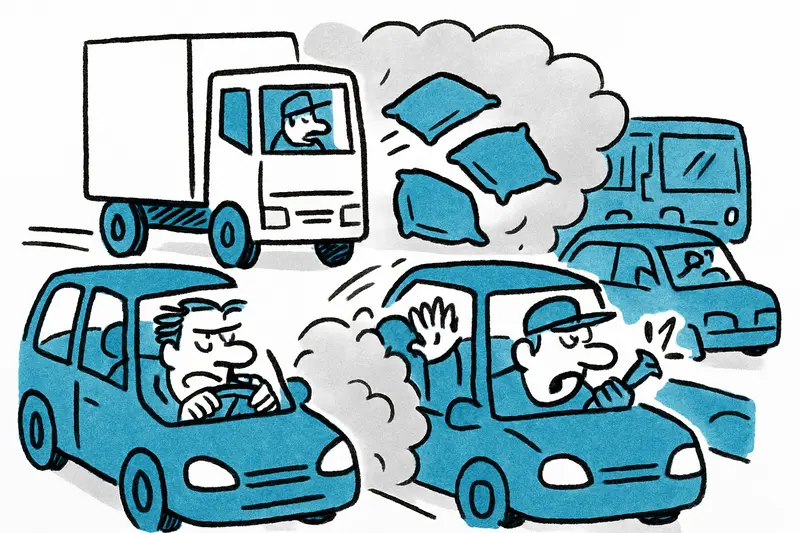
The morning started grey, not only because of the low sun over Palma, but because of a real grey cloud: around 08:15 a.m. several sacks of cement were scattered across the right lane on the Via de Cintura, at the junction to the airport motorway, a situation detailed in a report on the cement cloud after a loose pallet on the Via de Cintura. The fine dust rose up, drivers could barely see five metres ahead. Horns, screeching brakes, the distant rumble of buses — the usual morning concerto turned into a nervous staccato.
The result was predictable: the right lane was closed, commuters crawled at walking pace, the scheduled bus was 40 minutes late and travellers nervously checked their departure times. Taxi drivers from El Terreno reported visibility problems, pedestrians coughed, and residents later complained of mild throat irritation. Fortunately there were no injuries. But the question remains: was this just bad luck or a symptom of a bigger problem?
Who cleaned up — and what remained
Half an hour after the incident the Guardia Civil, the road maintenance crew and a tow service were on site. Workers scooped the sacks together, a street sweeper swept, and a machine sprayed water to bind the dust. Still, the affected lane remained closed until about 10:30. Traffic backed up in both directions; not only the Via de Cintura was affected, detour routes along Avenida Gabriel Roca and the port road quickly filled up as well, mirroring a report on long delays on the Vía de Cintura after a truck breakdown.
Hardest hit were commuters from Palma-Nord, delivery drivers under time pressure and tourists with tight flight schedules. One delivery driver summed it up dryly: “Meeting at nine? I was already out.”
Key question: How safe are our main access roads?
Today's incident raises a simple but urgent question: how good are the cargo securing standards in Mallorca really? Initial findings suggest a pallet was not secured properly. Such mistakes happen quickly — but their consequences are large. The Via de Cintura is a bottleneck with heavy traffic, lane changes and little reaction time for drivers. A loose bag of cement there is not just a breakdown, it is a system failure.
What is rarely mentioned in public debate is the link between small logistical errors and large economic consequences. Delayed deliveries, missed flights, overloaded detour routes — that costs time and money. And the load of fine cement dust in the air, which particularly affects vulnerable groups, is often only mentioned in passing.
Critical analysis and concrete proposals
Instead of reporting only on individual cases, it is worth looking ahead. Here are some concrete measures that could reduce the risk:
Stricter checks and regular audits: Frequent, unannounced inspections of haulage companies and loading sites — especially before departures towards the airport — would make negligent cargo securing more visible.
Use technology: Sensor-assisted load securing, camera surveillance at critical junctions and GPS geofence warnings if cargo or securing equipment on a vehicle loosens could raise early alarms.
Better infrastructure at the junction: Wider deceleration lanes or specific speed-reduction zones at bottlenecks would help prevent accidents. And real-time digital traffic information could direct detours better instead of clogging the port road.
Training and responsibility: Driver training on proper load securing, clear liability rules for carriers and tougher fines for gross negligence would create incentives to work more carefully.
What the Guardia Civil and the road maintenance crew should do now
The immediate measures were correct: closure, cleaning and documentation of the incident. In the medium term, however, authorities should systematically analyse the data from this and similar cases. Are there recurring patterns with certain companies, routes or times of day? Are safety standards being met?
And one more thing: a small sign on the Via de Cintura reminding drivers about proper load securing may seem harmless — but combined with inspections and sanctions it could have a big impact.
Conclusion: More than a morning traffic jam
The lost bag of cement brought Palma to a halt in the morning. It was annoying — and avoidable. Anyone who regularly travels to the airport should allow an extra half hour. And the authorities? They should take the incident as a wake-up call: bottlenecks on key access roads need more preventive measures, not just quick cleanup crews. Otherwise the chorus of horns may repeat — perhaps with more serious consequences.
Tip from experience: If possible, use public transport with dedicated lanes or allow extra buffer time for early flights. And when you check the rearview mirror, don’t just count the cars — also keep cargo securing in mind.
Frequently asked questions
What happens if there is a traffic incident on the Via de Cintura in Mallorca?
How much extra time should I allow for the airport road in Palma?
Can cement dust on a road in Mallorca affect your health?
What should drivers do if a lane suddenly closes on Mallorca roads?
Why does traffic on the Via de Cintura affect so many routes in Palma?
What can cause delays for buses and taxis in Palma, Mallorca?
How is spilled cargo cleaned up on a busy road in Mallorca?
What is the airport road connection like between Palma and Mallorca’s main access routes?
Similar News
The End of the Cheap Ride? Why Mallorca Is Hit Harder by the Fuel-Price Shock
Gasoline and diesel average close to two euros per liter. What this means for commuters, supply chains and renters in Ma...
Relaxed liquid rules in Munich: What Mallorca travelers will notice
At Munich Airport the 100-milliliter rule will be lifted at all checkpoint lanes — thanks to new CT scanners passengers ...

For 45 Years on Mallorca — and Then This: How a Market Visit in Santa Ponsa Became a Lesson
A woman who has lived on the island for decades lost money and important documents at the Mercat Setmanal in Santa Ponsa...
10 percent surcharge on the beach: How legal and transparent is the extra charge at Playa de Muro?
A German part-time resident noticed days after a restaurant visit in Playa de Muro that the bill included a flat ten per...

Body near the Llevant Market: What this death says about our city
A man was found dead on Sunday afternoon near the Llevant Market. Police say the death appears natural. The scene raises...
More to explore
Discover more interesting content

Can Cap de Bou

Townhouse Lleo 72
