
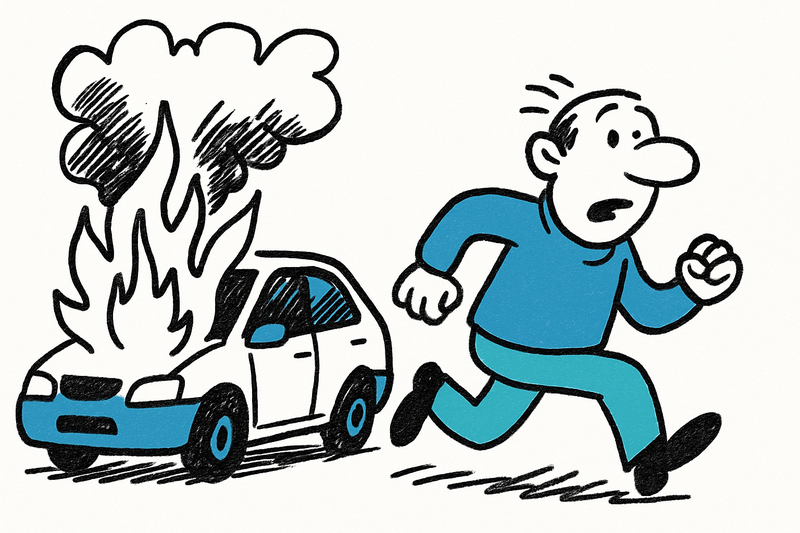
Flames on Camí del Far: Burning Car Raises Concerns in Sóller
A car caught fire on the Camí del Far. The driver was unharmed, but the incident raises questions about the safety of older vehicles and risk prevention in Sóller's popular beach areas.
Car burns on Camí del Far — driver uninjured, plume of smoke and questions remain
Late on Tuesday afternoon a quiet stretch of the Camí del Far in Sóller briefly turned into a scene like from a film: thick black smoke, the smell of burning plastic and the crackling of an overheated engine bay. At around 4:45 p.m., the driver of an older white Seat Ibiza suddenly noticed smoke and first flames under the hood, braked sharply, got out and moved to safety. He was unharmed, but many residents and visitors at the nearby beach looked on in shock at the column of smoke that was visible as far as the harbor area, as reported in Llamas en el Camí del Far: coche en llamas genera preocupación en Sóller.
Quick, routine help — nevertheless a total loss
The Sóller professional fire brigade arrived quickly. Residents describe the familiar siren, the stamp of firefighters' boots on the gravel of the Camí and the soft hissing as firefighters applied foam. Despite the rapid intervention, the vehicle burned out completely, leaving only a black frame and questions. Police cordoned off the road, diverted traffic and controlled onlookers — many pulled out their phones, some helped secure the accident site, similar to responses reported in Coche en llamas en el Paseo Marítimo: estallido, humo y muchas preguntas.
What it's really about: Why does this happen by the sea?
The obvious question is easily asked: what caused the fire? The driver reported there had been no warning light, no unusual noises. But that is only half the story. Such isolated incidents reveal several problem areas that often receive little attention: according to NFPA: vehicle fire safety, factors like age, corrosion and poor maintenance significantly increase the risk of vehicle fires.
1. Age and condition of vehicles: Many residents drive older cars — out of nostalgia, financial reasons or because repairs on the island are sometimes postponed. Corroded wires, porous hoses or forgotten traces of oil under the engine bay can lead to sparks or overheating.
2. Heat and tourism pressure: Summer temperatures heat engines and cooling systems more. Added to this are narrow roads, more frequent stop-and-go situations and extra strain from trailers or fully loaded trunks. On the Camí del Far, where beachgoers, cyclists and walkers come together, such technical problems can quickly become a safety risk for passersby.
3. Infrastructure and accessibility: Narrow access roads and proximity to tourist spots sometimes make extinguishing and recovering burning vehicles more difficult. Emergency services are experienced, but every second counts — especially if a fire breaks out near vegetation or parking areas. The question of how maintenance services and inspection centers on the island are accessible and whether they are sufficiently sensitized to older vehicles is also rarely discussed; see EU information on roadworthiness inspections for broader context.
What has been too little discussed so far
Public debate often focuses on the event itself — the column of smoke, photos, traffic disruption. Less attention is given to preventive measures: regular vehicle checks, visible notices at popular beaches about what to do in case of a fire, or the availability of small fire extinguishers in cars. The question of how maintenance services and inspection centers on the island are accessible and whether they are sufficiently sensitized to older vehicles is also rarely discussed.
Concrete measures that could help
Practical steps can be derived from the incident that could bring safety to both locals and tourists:
- Strengthen preventive checks: Refresher campaigns for brake, wiring and cooling system checks in workshops before the summer season. Simple checklists distributed at petrol stations and car rental agencies.
- Portable fire extinguishers in cars: A small, accessible extinguisher in the trunk can make a difference at the start of a fire — until the fire brigade arrives — together with basic instruction such as guidance on using a fire extinguisher.
- Information signs at beach access points: Instructions on how to behave in case of vehicle failure and emergency numbers, supplemented by pictograms for international guests, supported by practical tips like those in advice on what to do if your car catches fire (The AA).
- Better emergency route planning: For events and in busy bay areas, temporary stopping zones or parking bans for older, vulnerable vehicles could reduce risk.
One place remains untouched — the conversation continues
The fire on the Camí del Far did not result in any serious injuries, but it revealed something else: the vulnerability of a beautiful, often crowded coastal area to technical failures. While firefighters rolled up their hoses and the last wisps of smoke dispersed, voices were already rising again on the beach — some helpful, some merely curious. Authorities advise caution and regular maintenance. For many residents that is not quite enough: they want more sustainable prevention and visible measures before a single incident becomes a serious hazard.
In the end, the conclusion remains: a fortunate outcome this time — but the memory of the acrid smoke and the crackling engine will linger in local life for a while and hopefully spur concrete action.
Frequently asked questions
What should you do if your car starts smoking while driving in Mallorca?
Why do older cars seem more likely to catch fire in Mallorca's summer heat?
Can a small car fire spread quickly near Mallorca's beaches?
Is Camí del Far in Sóller difficult for emergency vehicles to access?
What should drivers do after a car fire on a road in Sóller?
Should you keep a fire extinguisher in your car in Mallorca?
What kind of car checks are important before driving in Mallorca in summer?
What does a car fire near the beach in Mallorca mean for visitors and locals?
Similar News

Maribel: Five Decades of Service – Housekeeper from Peguera Celebrated with a Special Honor
Over 50 years in the hotel business: María Isabel “Maribel” Molinos was honored in Palma at the Nit del Turisme by Unive...

Orange Alert over Parts of Mallorca: Are We Prepared?
Dark clouds and an announced wet spell have triggered an Orange alert in parts of Mallorca. A reality check: what's miss...

Sundair & Co.: Sale speculation and what it could mean for Mallorca
Rumors about a possible sale of the airlines Sundair and Fly Air 41, which belong to Schauinsland-Reisen — and whether b...
Anne Wünsche in Mallorca: A job offer with a catch — who fits the role of personal assistant?
Influencer Anne Wünsche has left Berlin and is urgently looking for a full-time personal assistant in Mallorca. Why the ...

Daily from New York: Palma Between Boom and Strain
United will increase the Newark–Palma route to daily flights in 2027 using Boeing aircraft (231 seats). What does the in...
More to explore
Discover more interesting content

Can Cap de Bou

Townhouse Lleo 72
