
Cars and Motorcycles Vandalized: Why Does This Happen in Central Palma?
Cars and Motorcycles Vandalized: Why Does This Happen in Central Palma?
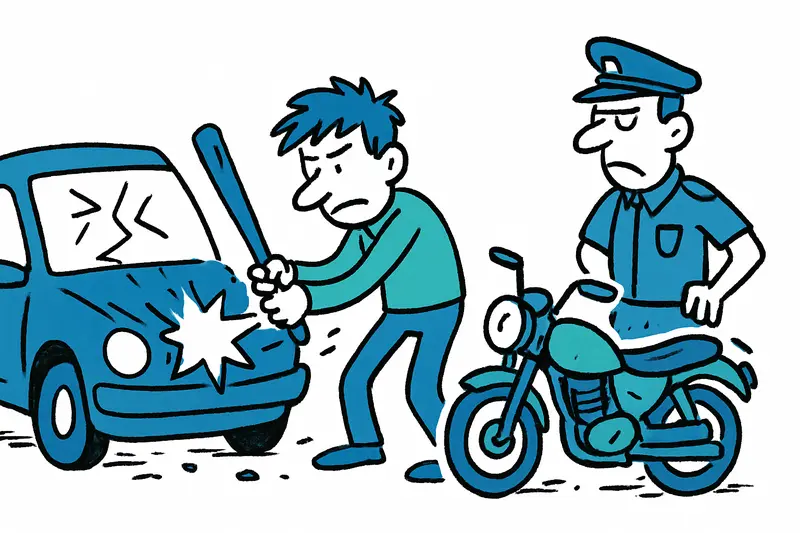
A 21-year-old was arrested on Calle Aragón in Palma after allegedly damaging several parked vehicles. The incident raises questions about prevention, safety and how to deal with repeat offenders.
Cars and Motorcycles Vandalized: Why Does This Happen in Central Palma?
Arrest on Calle Aragón on December 21, 2025
On the evening of December 21, police stopped a 21-year-old on Calle Aragón who, according to eyewitnesses, is accused of damaging several parked cars and motorcycles. According to reports, a witness alerted the authorities after seeing a man strike vehicles. Officers detained the young man; they report aggressive behavior, resistance and insults. It is also known that the accused has a prior criminal record. The case is now with the court.
Key question: How can Palma prevent individuals from rioting in residential streets at night — and how should the city deal with people who repeatedly offend?
At first glance, the events on Calle Aragón are a typical case of nighttime crime: parked vehicles as easy targets, an outburst of rage, random witnesses. But there are several layers behind this that often do not appear in the flash reporting. The police do their job: they arrest a suspect and hand the matter over to the justice system. What is missing are answers to why such escalations happen and how they can be prevented in advance.
A sober analysis reveals three problem areas: First: protection of public spaces. Many side streets are poorly lit, cars are parked close together, residents feel exposed when vandalism recurs. Second: repeat offenders. If a suspect has a prior record, the question arises whether suspended sentences, social work or therapy offers were sufficient or whether the system failed. Third: immediate measures and community resilience. A single witness statement was enough this time to call for help, and similar incidents, like Sleeping in a Stolen Car Outside the Police Station: What Does the Playa de Palma Case Say About Prevention?, highlight how timely reports can change outcomes.
What is often missing from the public debate are concrete figures and local context. It is reported that a suspect was arrested — but not whether such incidents occur more frequently in the area, whether there are patterns in time or location, or what role alcohol, drugs or social hopelessness play. Without this data the discussion stays on the surface and makes targeted prevention harder.
A picture from everyday life: It is a cool December evening, the Christmas lights on Avenida José Antonio flicker, a delivery van is parked on the corner, an EMT bus rumbles along the Via Cintura. On Calle Aragón cars stand close together; residents pull their jackets tighter and listen for every clink. A dog barks. Everyone here knows such scenes — and they are the moments in which a situation can tip over if no one intervenes early enough.
Concrete proposals that are more than mere calls for tougher penalties:
1) Night patrols and foot patrols: Increased police visibility in residential areas strengthens the sense of security and deters opportunistic crimes. Not just blue-light vehicles, but officers on foot who talk to residents.
2) Better street lighting and targeted video technology at problem spots: Sensitivity is required here. Cameras must be used in a data-protection-compliant manner, with clear rules, limited storage duration and transparency toward the neighborhood.
3) Early social interventions: For people with prior convictions there need to be binding offers — local contact persons, access to addiction counseling and help finding work. Repression alone does not solve the problem if the causes are ignored.
4) Simplified reporting channels for citizens: An uncomplicated way to report observations immediately to the municipal police (also via WhatsApp or an app) can prevent escalations. This should include feedback to the reporter so that engagement does not vanish into nothing.
5) Local neighborhood projects: Street festivals, sponsorships for particularly affected streets or joint clean-up actions after vandalism create social bonds. People who feel their street is more than "just parking space" are less likely to shout in rage.
All of this costs money, planning and patience. It also requires a change of perspective: safety is not only the task of police and justice, but the result of many small decisions on the ground — better lighting, a look out the window, a quick phone call.
Conclusion: The arrest on Calle Aragón is not an isolated incident but a mirror of how urban life and social support interact — or fail to, as seen in cases such as Avinguda de les Palmeres in Llucmajor: Eight vehicles destroyed — Was it arson, and what should be done now? and Why the Parking Lot in Cala Millor Can't Find Peace: Renewed Vandalism Sparks Anger in Son Servera. Palma needs measures that complement criminal prosecution: preventive presence, social programs for those at risk of reoffending and neighborhoods that do not look away. If this succeeds, more motorcycles will remain intact in the future and fewer neighbors will lie awake with their hearts pounding at night.
Frequently asked questions
Why do parked cars and motorcycles get vandalized in central Palma?
What should I do if I witness vandalism on a street in Palma?
Are residential streets in Palma more at risk of nighttime vandalism?
What can Palma do to prevent repeated vandalism in the same area?
Does better street lighting help reduce vehicle vandalism in Palma?
What happens after police arrest someone for vandalizing cars in Palma?
Why do repeat offenders matter in Palma vandalism cases?
How can neighbors in Palma help prevent vandalism on their street?
Similar News
Injured captain, big plans: Germania Mallorca before the away match in Consell
The newly founded FC Germania Mallorca travels to Consell on Saturday. Captain Bastian Müller is out injured, but coach ...
Palma, Palma de Mallorca, Palma‑Mallorca: What is it really about?
The debate over the city's name is more than grammar: it concerns identity, law and branding policy. A sober reality che...

Warning to Bathers: Nipping Fish in Cala Major and Other Coves — a Reality Check
In Cala Major and several beaches around Mallorca, bathers report painful “nips”. Who are the animals, why are they gett...

Rental Car Theft in El Arenal: What This Incident Reveals About Our Gaps
A teenager steals a running rental car in El Arenal, flees on foot, climbs over walls and is caught by the Guardia Civil...

Red Rope in Palma's Library: What Helps Against Selfie Tourism — and What's Missing
Palma's city library cordoned off an area with a red rope to keep selfie tourism away from reading and working activitie...
More to explore
Discover more interesting content

Can Cap de Bou

Townhouse Lleo 72
