
Celebrities, Padel and Pressure: What Lies Behind the Glitz in Mallorca
Between film premieres, padel coaches and runway demands: why Mallorca's glittering celebrity world exposes problems that concern us all — from safety in Port Adriano to fair conditions for aspiring models.
Celebrities, Padel and Pressure: What Lies Behind the Glitz in Mallorca
Key question: Does tabloid glamour conceal the structural problems that are exhausting our island?
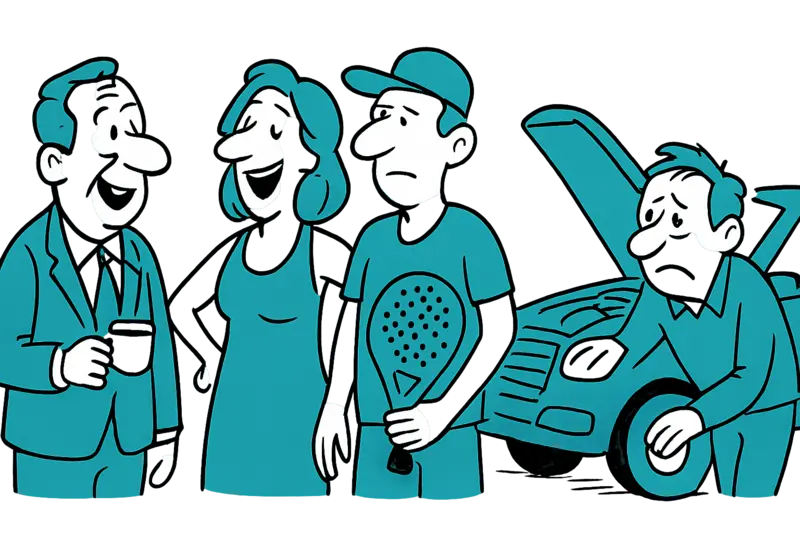
On the Passeig Mallorca the espresso cups clink in the afternoon, scooters hum by, and a light sea breeze moves through the pine trees along the harbor promenade. Exactly where people with time and money like to be seen, several small dramas are currently unfolding: an actor with a new companion at a film evening in Marratxí, a presenter returning after a long illness, a padel lesson with a tennis legend, a car breakdown in the middle of the highway, and a model casting that resembles a sales event.
That is the scattered surface: glasses, laughter, photos. Underneath, however, questions arise: How safe do residents really feel in luxury marinas? How fair are production and casting models when young talents are expected to pay for a chance? And how much pressure does constant spotlighting produce for people who are returning from a personal crisis?
Let's start with safety. A breakdown on the motorway and an attack on a dog — reported from Port Adriano — are no longer just celebrity anecdotes when they cause neighbors to feel that the area is no longer safe. In a place with high property prices and increased visitor numbers, a single incident is enough to breed mistrust. Public safety concepts for marinas and access roads are often fragmented: municipality, port operator, police — who is responsible for night patrols, prevention work and road maintenance?
Then the model business: an organizer speaks openly about minimum measurements, about buying runway spots and about privately flying in a “special unit” because the local casting was “meager.” This is typical of a market where dreams become commodities. Young women and their families pay, hope and risk disappointment — while organizers and agencies profit from the margins. What’s missing are clear rules, transparent contracts and support offers for those affected.
The sports photo with a former Grand Slam player shows another side: enthusiasm, expertise, and the chance for hobby players to learn something new. But even that is not purely romantic. Course fees, promotional events and the commercialization of leisure activities can create barriers to access. For some, padel is a luxury, not a village community activity.
What is often missing from public discourse is the view of structures rather than isolated incidents. We talk about “celebrity relationships” and “wedding guests,” but less often about working conditions behind castings, about responsibilities for safety in marinas, or about reliable aftercare for people after serious illnesses. Everyday perception — the conversation in the café, the dog owner at the harbor, the club coach — provides clues, but these are too rarely translated into regulations.
A very ordinary Mallorca scene helps to fill the gap: early in the evening a pub owner sits on Plaça Weyler, wipes a glass, hears the complaints of model mothers who talk about opaque offers; bike couriers discuss evening insecurity at the harbor; older residents worry about peace and order. These scenes are not glamorous, but they show how closely celebrity events and everyday problems are linked.
Concrete proposals that could make a difference: first, binding transparency rules for castings and model agencies on the island — published costs, written contracts, age and consumer protection. Second, a coordinated safety initiative for marinas and access roads with clear responsibilities between the council, port administration and police as well as more visible prevention patrols. Third, a local industry forum for event organizers, hotels and associations that develops voluntary standards for working conditions, fees and refunds. Fourth, a support network for people re-establishing themselves after illness or public strain — from a medical directory to psychological counseling.
For the culture itself: celebrity advertising remains a business — but good production also needs good rules. Those who organize young models, paid appearances or pop-up events should be measured against minimum standards. An island that lives off its reputation has an interest in the spotlight not only dazzling, but also protecting.
My conclusion: glamour and problems are not opposites, they belong together. If we see the stories behind the headlines — the contracts, the shutters in Port Adriano, the training prices, the canceled match days — then we can turn anecdotes into policy. Then there will be more than the photo on the terrace: an island that takes care of its people.
Short, clear, local: More transparency in castings, coordinated security responsibility for harbors, industry standards and a network for returnees could turn celebrity snippets into real improvements. And yes: on the Passeig Mallorca you can hear the clinking of cups — time to ask why it sometimes gets quieter.
Frequently asked questions
What safety concerns are raised around Mallorca's marinas and luxury harbor areas?
How could Mallorca improve transparency in castings and model work?
What should aspiring models in Mallorca know about castings and paid appearances?
Is padel in Mallorca accessible or mostly a luxury activity?
What kind of support network could help people re-establish after illness or public strain in Mallorca?
How can Mallorca turn celebrity-focused stories into real policy?
What role do everyday public spaces play in Mallorca's sense of community?
What steps could Mallorca take to balance a glamorous economy with residents' safety and fair work?
Similar News
Water shortage in Sant Llorenç: Why a desalination plant alone is not enough
The municipality of Sant Llorenç plans a desalination plant in S'Illot. A technical intervention — but what's missing fr...

594 pallets stolen from supermarket warehouse – suspended sentence, but what lesson does Mallorca draw?
A man admitted in January 2025 to loading 594 pallets from a supermarket's outdoor warehouse in Palma. The court handed ...

Who Books Our Dream? When TUI, Alltours & Co. Bring AI to Holidays
Artificial intelligence simplifies booking and operations — but who bears responsibility when algorithms decide? A reali...
Golden October: Island pleasures instead of a winter coat – Mallorca stays warm
A late-summer remnant in October: Up to 27 °C, pleasant water temperatures around 22–24 °C and sunny days – ideal for be...

Son Sant Joan Control Center: What Questions Remain When the Island's 'Brain' Relocates
The air traffic control center in Palma manages the airspace over the Balearic Islands. With the planned move to Son Bon...
More to explore
Discover more interesting content

Can Cap de Bou

Townhouse Lleo 72
