
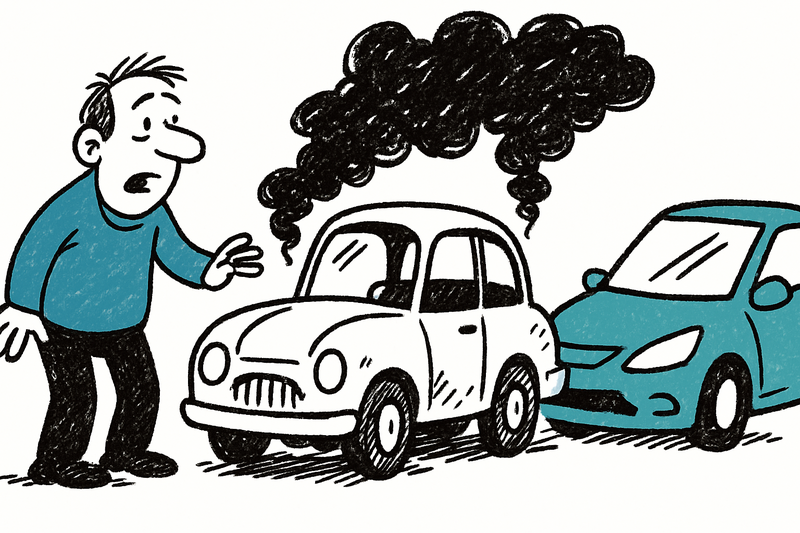
Too Many Old Cars in Mallorca: Why the Problem Runs Deeper Than the Exhaust
The Balearic Islands have one of the oldest vehicle fleets in Spain. What that means for air, noise and the island economy — and which solutions beyond simple subsidies could help.
Old cars, noisy streets: an island-specific problem
When, early in the morning, the fisherman from Portixol stands on the harbor wall and the cry of the seagulls echoes off the Paseo Marítimo, the usual island sounds are increasingly mixed with another noise: a deep, slightly rough engine hum from cars that are visibly past their prime, as described in Demasiados coches viejos en Mallorca: por qué el problema va más allá del escape. On the Balearic Islands, the average age of a passenger car is over 14 years. The number alone is striking — the question is: how much does this burden our air, our health and the future of the islands?
More than just statistics: why old cars feel different in Mallorca
That used cars dominate is visible not only in the repair shops in Inca or at the used car dealer in Manacor. You can feel it in the emissions in narrow old-town alleys, in the oil stains in parking bays under the hot sun and in the discussions at the bus stop in Son Gotleu. Older vehicles are usually less efficient, have outdated emission control and tend to break down more often — a problem that becomes a challenge more quickly in an island system with limited disposal and recycling capacities than on the mainland.
Economic reality meets sustainability ambitions
Most residents choose an old car for a simple reason: price. A used vehicle costs significantly less than a new one and is for many families the means to stay mobile — to get to work in Palma, do the shopping or drive craft jobs between Santanyí and Alcúdia. But the economic logic has a downside: higher emissions, higher maintenance costs in the medium term and a slower transition to clean mobility.
Aspects that are often overlooked
Two points are sometimes missing in the public debate: first, the sector of commercial vehicles and rental fleets, which are topped up seasonally and often use older diesel models. Tourist peak periods strongly burden air quality in the short term. Second, the local repair shop industry: many jobs depend on repairing older vehicles. A rapid replacement with new cars without accompanying retraining and upskilling offers would indeed reduce emissions but could endanger local livelihoods.
Concrete levers — beyond the usual calls for subsidies
Of course, purchase incentives for electric cars help. But on an island, layered solutions are needed: mobile vehicle inspection/emissions-check stations that regularly test roadworthiness and emissions in rural communities; targeted exchange premiums for lower-income households; and subsidies for retrofitting particulate filters on older diesel commercial vehicles. Equally important is the expansion of charging infrastructure not only in Palma, but along access roads to beaches and in industrial areas so that craftsmen and delivery services can travel electrically.
A proposal: pilot projects with local added value
Instead of blanket subsidies, the government could start pilot programs in municipalities like Calvià or Alcúdia: car-sharing pools with small electric vans for craftsmen, discounted short-term leasing offers for locals and a program for cooperation between dealerships and scrap yards that ensures the environmentally sound disposal of old vehicles. At the same time, mechanic training should be promoted so that workshops can repair electric and hybrid vehicles — this way value creation remains on the island.
The role of the tourism industry
Last but not least, rental car companies and tourism operators must be held accountable, as discussed in Límite de coches de alquiler: entre la pacificación del tráfico y el estrés vacacional — lo que Mallorca debe plantearse ahora. When holidaymakers cruise around the island in outdated cars, the temporary burden rises sharply. A binding minimum standards regulation for renters — for example a maximum age of ten years or certain emission standards — would be a sensible step. Easier said than done, but practical when combined with phased timelines.
Outlook: hope through pragmatism and local solutions
The Balearic Islands have shown in other areas that they can achieve change: from clean beaches to efforts in water management to a gastronomy scene that focuses on regional products. The mobility transition now needs the same local pragmatism — not blanket condemnations, but measures that consider social reality, economic dependencies and environmental protection together. If island municipalities, workshops and tourism businesses start pilot projects together, Mallorca could not only phase out older vehicles but also create new, greener jobs at the same time.
Frequently asked questions
Why are there so many old cars in Mallorca?
How do older cars affect air quality in Mallorca?
Is it worth buying an older car in Mallorca?
What can Mallorca do to reduce pollution from old cars?
Why is the old-car problem harder to solve on an island like Mallorca?
Are rental cars and tourist traffic part of Mallorca's old-car problem?
What support do Mallorca residents need to replace old cars?
Which Mallorca towns are being mentioned as possible pilot areas for cleaner mobility?
Similar News

First Day, First Consequences: What Palma's Rent Freeze Really Means
A new decree stops a planned eviction in Palma — but what really changes for tenants and landlords? A reality check with...

When Housing Becomes a Matter of Survival: Mallorca Between Rental Frenzy and Everyday Life
The case of 87-year-old Maricarmen showed that on Mallorca many people's lives are poised between affordable and uninhab...

Autumn in Mallorca: When Melancholy Gets a Window
Why autumn quietly tightens here — and how to make use of the mood: walks, culture, candles and the light from Palma to ...
Near-miss on Lanzarote: Landing Ryanair Jet and Iberia Takeoff — what really went wrong
On Lanzarote there was a dangerous incident: A Ryanair flight (FR5910) from Dublin landed on runway 03 while an Iberia E...

Eurowings introduces new Premium Business seats on Mallorca routes
From December 1, selected Eurowings flights to Palma and other destinations will feature eight particularly generous sea...
More to explore
Discover more interesting content

Can Cap de Bou

Townhouse Lleo 72
