
Container fire in La Vileta: Two cars burned out, investigations ongoing
Container fire in La Vileta: Two cars burned out, investigations ongoing
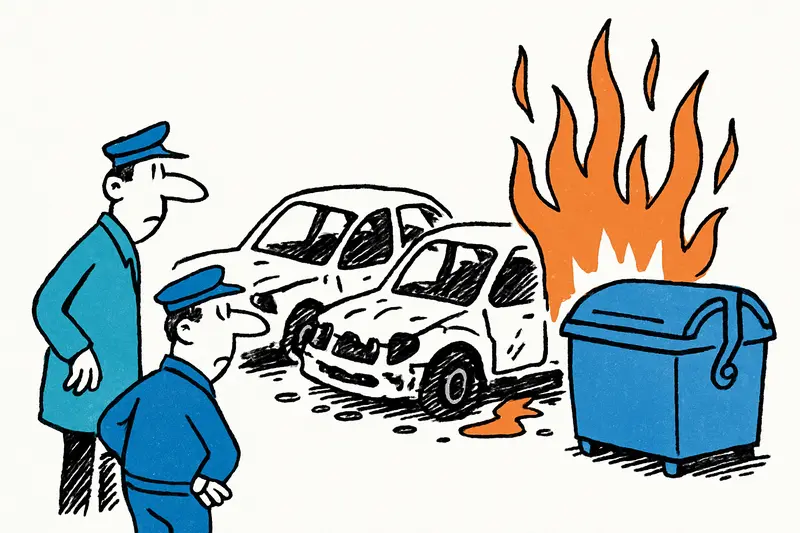
During the night, two cars on Massanella Street in Palma were completely destroyed by fire, three others were damaged and four waste containers were destroyed. Local police and the fire department extinguished the blaze. The cause is being investigated.
Container fire in La Vileta: Two cars burned out, investigations ongoing
Main question: How vulnerable are streets with waste containers — and what needs to change so that a burning container does not become a danger to neighbors?
In the early hours of a winter morning, shortly after 3:00 a.m., residents alerted the night patrol: dense smoke rose on Massanella Street in the La Vileta neighborhood, and flames shot up from a collection point for waste containers. Local police and the fire department responded. In the end, two vehicles were completely reduced to rubble and ash, three others were damaged by heat and radiant heat, and four containers were destroyed. No people were injured.
In short: a local fire with major consequences. For many residents the scene was at once familiar and suddenly alien: the smell of burning plastic, the rumble of the fire engine in the quiet street, neighbors standing in jackets and slippers watching the orange flames; similar incidents have been reported elsewhere, such as a car fire on the Paseo Marítimo near the conference center.
Critical analysis: Why do container fires escalate so quickly? Two factors are often decisive. First: combustible materials in the waste — batteries, solvent residues, remnants of household chemicals — can strongly fuel flames. Second: the spatial proximity of parked cars and tightly placed containers facilitates spread through radiant heat and flowing liquids. This exact interaction occurred on Massanella: an initial ignition in a container, then a burning film of fuel or flammable residues that transferred the fire to a parked car. Nearby areas have seen even larger incidents, including eight vehicles destroyed on Avinguda de les Palmeres in Llucmajor, which underline the risks of close container placement.
What is often missing from public debate: a clear discussion about preventive infrastructure and everyday practices. It is not enough to merely speculate about arson or react to individual cases. In Palma there are neighborhoods where containers stand in narrow residential streets; cars are parked close together everywhere. This is not only about technical investigations — it is about planning, disposal habits and control mechanisms. Other incidents on the island have even led to injured emergency workers, for example a firefighter injured in a field fire near the Constància football pitch in Inca, which highlights the human cost.
Everyday concrete picture: The morning after the fire in La Vileta you meet older women with shopping baskets, young people on their way to work, the garbage truck doing its rounds, and caretakers checking whether bins are locked. Many say that disposable batteries and electronic devices too often end up in household waste. In several houses along Massanella I imagine people will be more careful in the future when disposing of an old charger or a battery.
What investigators do: After extinguishing operations are completed, the investigation into the cause of the fire begins. Forensic work means: taking samples, reconstructing the fire‘s course, checking for visible accelerants. Whether negligence, a technical defect or deliberate arson is involved will only be answered after laboratory tests and witness statements. Until then, statements are often only assumptions.
Concrete measures that could be implemented quickly: 1) Relocate container sites to less exposed spots so that parked vehicles are not immediately adjacent. 2) Use more fire-resistant containers or containers with metal covers and ventilation that make it harder for fires to grow. 3) Visible notices and small information campaigns for residents: no lithium batteries in residual waste, return electronic waste separately. 4) Regular night inspections, increased presence of culturally sensitive outreach teams that explain why certain items must be disposed of separately. 5) Technical measures: CCTV at critical collection points, sufficient hydrant spacing and regular checks of hydrant functionality.
At political level, further steps are conceivable: the municipality could review which container locations in residential areas are problematic and set up a funding program for fire-safe equipment. At the same time, simple behavioral rules are effective: if a battery smokes or glows, close windows and doors, call emergency services, keep a distance — and inform the operators, following guidance on battery fire safety from the NFPA.
What is now missing: a public, easily accessible list of collection points for particularly hazardous waste. If people know where to hand in old batteries or defective chargers safely, the risk of the same incidents decreases; for general rules and collection advice see EU guidance on batteries and waste batteries. There is also often a lack of a visible monitoring and reporting system for damaged containers, overflowing bins or hazardous substances someone has disposed of carelessly.
For the neighborhood on Massanella a nagging unease remains. Paths, short conversations over morning coffee — the lived Palma — will now be accompanied by the awareness that the seemingly harmless (household waste) can become a major danger. Authorities are working; investigations are ongoing. But acting preventively also means changing small habits.
Concise conclusion: A burning container is often the visible expression of a quiet failure — in disposal habits, in the choice of locations for containers and in local prevention. Technical investigations will clarify how exactly this incident occurred. Until then, it would be advisable to review container locations, strengthen information offers for residents and opt for fire-safe containers when replacing equipment. That protects cars, houses and, above all, human lives.
The investigations by the local police and the follow-up work by the fire department continue; anyone in the neighborhood who made observations should come forward. For many in La Vileta the admonition remains: waste is not just trash — sometimes it is fuel.
Frequently asked questions
Why can a container fire in Mallorca spread so quickly to nearby cars?
What should I do if I see a burning waste container in Mallorca?
Can old batteries cause fires in household waste in Mallorca?
How are police and firefighters investigating a container fire in Palma?
Why are container sites in narrow Mallorca streets a fire risk?
What can municipalities in Mallorca do to prevent container fires?
Where should I throw away old chargers and electronic waste in Mallorca?
Was anyone injured in the La Vileta container fire in Palma?
Similar News
Who Benefits from the Half‑Hourly Flight on the Edge? Aena, Investments and the Island's Interests
Almost one billion euros is flowing into Son Sant Joan. The figures show the scale of investment and expected beneficiar...
Are the Balearic Islands the Southern Border of Europe? A Reality Check on Immigration
The Balearic Islands are again calling for EU aid after a sharp rise in arrivals by sea. Conflicting priorities between ...

"Expensive chaos" and many open questions: What clients can do when a lawyer suddenly stops responding
Several clients complain that a well-known German lawyer in Mallorca has been unreachable for months. Key question: What...
TV tip: 'The Last Problem' — Mallorca as the setting of a classic crime
A classic whodunit on Mallorca: A new miniseries set in spring 1959 brings storm, an isolated hotel and a dense web of s...
Nipping Sea Creatures: Why Bathers in Cala Major and Elsewhere Should Be Cautious
In Cala Major, bathers have reported being nipped by small fish. What is behind it, how can problems be avoided — and wh...
More to explore
Discover more interesting content

Can Cap de Bou

Townhouse Lleo 72
