
Travel Anxiety Instead of Sea View: How Fuel Uncertainty Could Threaten Mallorca's Summer
Travel Anxiety Instead of Sea View: How Fuel Uncertainty Could Threaten Mallorca's Summer
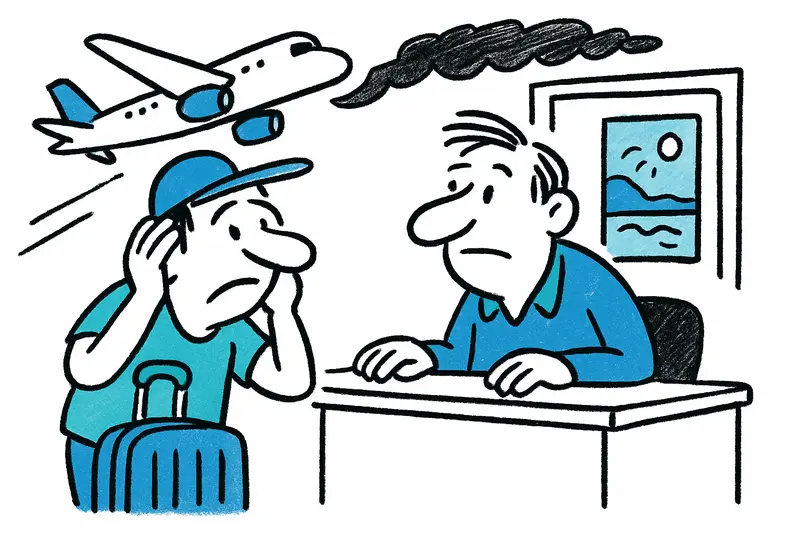
At travel agency counters the same question is heard again and again right now: Will my flight take place? Concerns about jet fuel and detours around safe airspaces are weighing on bookings — and on the island's economy.
Travel Anxiety Instead of Sea View: How Fuel Uncertainty Could Threaten Mallorca's Summer
Leading question: What consequences does the current uncertainty over aviation fuel have for holidaymakers, airlines and the island's economy?
On Paseo Mallorca at half past eight in the morning you see the usual scenes: taxi drivers heaving suitcases into trunks, a barista balancing three espressos on a tray, and in the travel agency opposite a queue of people going over their bookings one more time. The question almost always asked there appears in various forms: "Can I even take my trip?"
The worry does not come out of nowhere. Problems in supply chains for aviation fuel, for example the jet fuel shortage in Hamburg, longer detours to avoid conflict-affected airspaces and rising kerosene prices are real factors forcing airlines to recalculate routes and capacities. In Mallorca, where tourism relies on air connections as a lifeline, this calculation has a direct effect on hotels, restaurants and taxi drivers.
Critical analysis
The situation is ambivalent. On the one hand there are buffers: most of the kerosene used in Spain is refined domestically, and major carriers have reserves and flexible fleet plans. On the other hand a flight does not end at its departure point: international hubs also need to be supplied. If regional shortages occur, supposedly safe routes can also be affected. Airlines are already calculating higher operating costs and are reviewing which connections remain economically viable, as seen when Ryanair cut millions of seats in Spain.
For Mallorca this means concretely: reduced frequency on peripheral routes, possible price increases for long-haul trips and an increased likelihood of last-minute cancellations or diversions. Travel agencies report that revenues are currently noticeably below expectations — customers book more cautiously, even though the willingness to take a holiday remains.
What is missing from the public discourse
The debate remains superficial. Public discussions focus on headlines about rising prices or isolated cases of flight cancellations. Missing topics include: transparent information on national fuel reserves, how airports and refineries set their priorities, and what short-term contingency plans airlines have for affected destinations. It is also not clearly discussed how insurance situations and refund rules would work in a major incident.
Another omitted point: the social divide during disruptions. Coastal businesses, seasonal workers, car rental companies and small family-run hotels feel price and frequency fluctuations more strongly than large chains. Local coverage even highlights that fewer bookings for sunbeds are causing revenue losses. This perspective is missing from many public statements — and without it, political measures are difficult to target effectively.
Everyday scene in Mallorca
At the Mercat de l'Olivar the topic becomes concrete during a chat between a fruit seller and a waiter: a German couple prefers to cancel their flight, a man in his mid-thirties tries to avoid rebooking fees. In cafés at the Plaza del Mercado travel insurances are compared like menu cards used to be. These small conversations show that uncertainty spills over into everyday actions — and does not remain just abstract numbers in economic tables.
Concrete solutions
There is no silver bullet, but practical steps: first, authorities and airports should provide clearer, regularly updated information on fuel stocks and supply routes; that would reduce speculation. Second, airlines and tour operators could agree on standardized goodwill rules for affected flights so customers can act more predictably. Third, flexible booking conditions and good travel insurance are now more important than ever — industry information campaigns could strengthen customer confidence.
Fourth, local measures are needed: hoteliers and tourism offices should put together short-term packages that are bookable and affordable at short notice to capture domestic demand. Fifth, politicians and port operators should develop contingency plans for prioritised fuel distribution so that essential connections — including main tourist routes — do not suffer disproportionately.
Punchy conclusion
The current uncertainty is real but manageable. In Mallorca it already costs trust and planned revenues, but it is not a harbinger of a widespread collapse of air traffic. Transparency is decisive: the clearer authorities, airlines and refineries communicate, the less room there is for rumours and panicked snap decisions. For the island's economy this means: act instead of just hope. And for travellers: stay calm, check insurance terms and talk to your provider if in doubt — preferably over a coffee on the Passeig.
Frequently asked questions
What is the weather like in Mallorca in spring?
Is Mallorca warm enough to swim in early summer?
What should I pack for Mallorca in autumn?
Is Mallorca a good destination outside the summer months?
Is Palma de Mallorca worth visiting for a short stay?
What can you do in Sóller besides go to the beach?
Is Valldemossa a good place to visit in Mallorca?
When is the best time to visit Mallorca for walking and sightseeing?
Similar News

More water than last year: Mallorca's reservoirs breathe easier
September rain refilled the Tramuntana's reserves: overall fill around 35 percent, Cúber at 40.42 percent, Gorg Blau at ...

Three Luxury Hotels in Banyalbufar: Lots of Money, Many Questions
A Danish investor plans three exclusive accommodations in Banyalbufar — including the historic Son Valentí. The announce...
2.1 tonnes of cocaine on sailing yacht off Spain's coast – a reality check for the coastguard
A 14-metre yacht was seized with 2.1 tonnes of cocaine. Who monitors the ports, how does the international hunt succeed ...

Heat Bonus in Mallorca: 100 Euros Extra for Outdoor Staff at MarSenses
MarSenses pays employees who worked outdoors in August an extra €100 as recognition. Lighter uniforms, reduced hours for...
Renovating in Mallorca: What You Really Can Do Without Neighbour Consent
Many think they can do whatever they want in their apartment. That's partly true — but only as long as structural elemen...
More to explore
Discover more interesting content

Can Cap de Bou

Townhouse Lleo 72
