
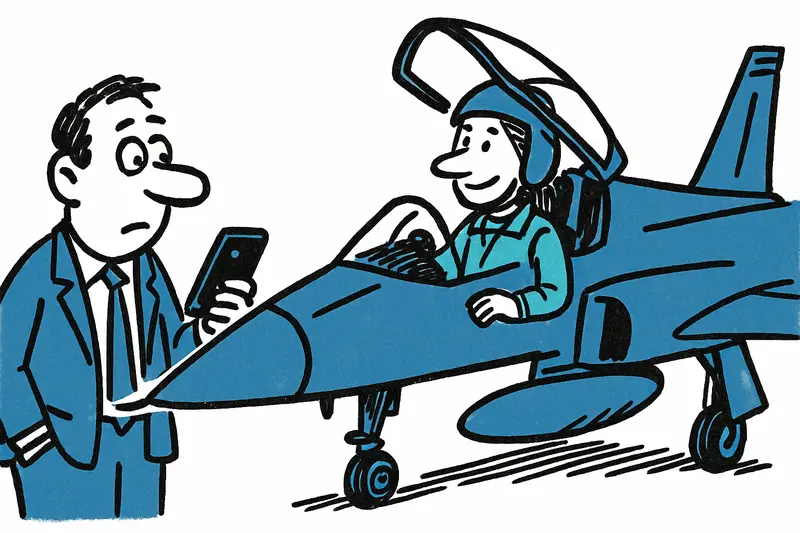
Crown Princess in a Fighter Jet – What Lies Behind the Images?
Crown Princess in a Fighter Jet – What Lies Behind the Images?
A photo in the cockpit, a few visits to military bases and the debate begins. What does the crown princess's military training mean for the public — and what isn't being said?
Crown Princess in a Fighter Jet – What Lies Behind the Images?
Key question: Would a training aircraft be sufficient — or is this about symbolism, security and public responsibility?
When the images of the heir apparent in the cockpit of an F-5 surfaced, people in a café on the Plaça Major in Palma sat with cups of espresso on a Tuesday morning and stared at their phones. An older man shook his head and said, "Nice to look at, but what does it actually cost?" This simple, Mallorcan question hits the core: staging military training has a public dimension that we should look at more closely, as discussions about Aircraft carriers off Mallorca: When the sea becomes a political stage have shown.
The facts are sparse: training visits to air force bases, a short training flight in the twin-engine F-5 and insights into Eurofighter missions were on the agenda. For those involved, especially aspiring officers, such days are part of practical training. For the public, however, the photo in the cockpit reads like a statement — about narratives of masculinity and heroism, about the stability of the state and about the connection between the monarchy and the armed forces.
First observation: images of this kind operate on several levels at once. They are a personal record of training, propaganda for military readiness and a means of normalizing royal proximity to the military. That is legitimate, but not automatically harmless. Public acceptance does not arise from aesthetics alone. It requires transparency: who pays for which flights? How are security risks minimized when members of the royal family participate in flight exercises? Concerns about in-flight security, highlighted by reporting such as When a Female Martial Artist Strikes On Board: Security Gaps We Must Not Overlook, are relevant here. What rules apply to media access and the publication of such images?
What is often missing from the debate are hard numbers and practical explanations. In most conversations in Palma you hear either praise or outrage, but rarely information about costs, insurance arrangements or the training benefit for the general public. The role of regional institutions also remains unclear: do Balearic representatives have a say when national armed forces plan such public actions, as debates over Aircraft Carriers in the Bay: What Role Should Mallorca Play in the New Mediterranean Game? suggest?
An everyday scenario shows the effect: on the Paseo Marítimo, during a mild evening, some boats were accompanied by the noise of an overflight. Tourists looked up, children waved, locals discussed purpose and meaning at the kiosk. Such moments connect private life with the state — and make clear that military presence in public space does not remain without consequences.
Concrete suggestions to make the discussion more factual: first, a public cost breakdown for special flights and accompanying measures, published by the responsible authority. Second, binding safety protocols and an independent third-party review before members of the royal family take part in flight activities. Third, clearer information flow: local authorities in the Balearics should be informed about dates and impacts so that residents are not taken by surprise. Fourth, education instead of staging: if military aspects are part of royal training, this could be linked to publicly accessible workshops or partnerships with universities — then young people would truly benefit.
One final point: it's not just about cost or image. Social legitimacy arises from comprehensibility. People in Mallorca do not only ask whether the crown princess may fly, but why this form of training is necessary, what message it sends and how public interest and responsibility fit together. Nice photo or not — citizens have the right to be better informed about what really lies behind the pretty picture.
Conclusion: the cockpit shots are more than an anecdote. They are an occasion to demand transparency, to clarify security issues and to discuss the military component of royal representation more openly. Anyone sitting in Palma with a horchata at the market wants one thing above all: to know what really lies behind the beautiful image.
Frequently asked questions
What is the weather like in Mallorca in spring?
Can you swim in Mallorca in May?
What should I pack for a trip to Mallorca in shoulder season?
Is Mallorca a good destination for hiking in spring?
Why is Sóller popular with visitors to Mallorca?
What is special about Valldemossa in Mallorca?
Is the Tramuntana good for a day trip in Mallorca?
What is the best time of year to visit Mallorca for mild weather?
Similar News

More water than last year: Mallorca's reservoirs breathe easier
September rain refilled the Tramuntana's reserves: overall fill around 35 percent, Cúber at 40.42 percent, Gorg Blau at ...
Three Luxury Hotels in Banyalbufar: Lots of Money, Many Questions
A Danish investor plans three exclusive accommodations in Banyalbufar — including the historic Son Valentí. The announce...
2.1 tonnes of cocaine on sailing yacht off Spain's coast – a reality check for the coastguard
A 14-metre yacht was seized with 2.1 tonnes of cocaine. Who monitors the ports, how does the international hunt succeed ...

Heat Bonus in Mallorca: 100 Euros Extra for Outdoor Staff at MarSenses
MarSenses pays employees who worked outdoors in August an extra €100 as recognition. Lighter uniforms, reduced hours for...
Renovating in Mallorca: What You Really Can Do Without Neighbour Consent
Many think they can do whatever they want in their apartment. That's partly true — but only as long as structural elemen...
More to explore
Discover more interesting content

Can Cap de Bou

Townhouse Lleo 72
