
Aircraft carriers off Mallorca: When the sea becomes a political stage
An American aircraft carrier is set to lie in the port of Palma — everyday life for residents and a warning sign for politicians. Why this is more than a PR photo and which questions we should be asking now.
When a warship lies off the quay
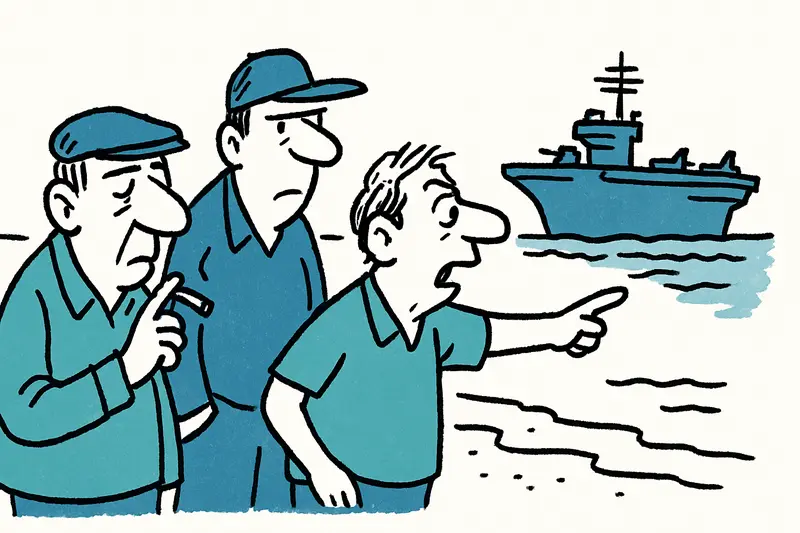
It is not yet war, some say. A clear signal of geopolitical tensions, others say. In early October a large US aircraft carrier is scheduled to be stationed in Palma, as noted in coverage of aircraft carriers in the bay, and suddenly a port call becomes a political event. On the Passeig Marítim at nine in the morning it smells of coffee. Dogs pad along, vendors prepare fruit, and a group of men stare across the harbor entrance. 'Freighters used to come, now carriers arrive,' says Joan from Portixol as he takes a drag on his cigarette. A sentence that sounds harmless and yet says it all.
Between routine and unease
Military presence in the Mediterranean is nothing new. But the timing is delicate: international rhetoric, media cycles and the proximity to peak season turn every stay in port into a political statement. Practically speaking this means: more uniforms on the quay, temporary exclusion zones, altered routes for leisure boats. Port and police authorities respond with increased checks. For hotels and many restaurateurs business usually remains unaffected — but the mood changes.
There are two sides to this: part of the population is relaxed and finds the presence reassuring. Another part feels alienated. Older people remember times when foreign policy seemed more distant. Younger conversations in tapas bars suddenly revolve around deterrence, alliances and the question whether European coasts will more often become the stage for such power plays.
The quiet consequences that are hardly discussed
Public debates focus on defense, security and symbolic messages. Rarely do we talk about the side effects for everyday life. Fishermen like Joan experience practical annoyances: changed fishing routes, additional checks and the fear of accidents at the harbor entrance. For operators of small boat tours it means reshuffling schedules, for dockworkers more safety measures and for environmentalists concern about increased fuel consumption and noise.
The psychological component is also little noticed. Visible military presence influences the sense of security of residents and guests. Children chasing seagulls on the quay suddenly see armored vehicles or military reconnaissance patrols — that changes the perception of a familiar place. Such shifts are not loud, but they are lasting.
Key question: How do we turn symbolic presence into local resilience?
Arguing pro or contra is not enough. The central question is: how do we ensure that such events do not damage trust, the economy and the environment? Here are some not radical but concrete proposals:
Transparency and information: Port authorities should communicate early and clearly — closure times, affected routes, emergency contacts. A digital information point on the Passeig Marítim would be a simple, visible step.
Dialogue platforms: Short-term citizen forums with fishermen, boat operators, hoteliers, environmentalists and security authorities. You can set up protest spaces next to information stands instead of only trying to prevent conflicts.
Social and environmental accompanying measures: Noise measurements, monitoring of marine pollution and a fund for affected small businesses — all implementable quickly and manageable locally.
Cultural mitigation: Instead of reading the presence only as a threat, harbor offices could organize talks, readings or small exhibitions that promote exchange. This would take some of the one-sided staging out of the situation.
Why this matters for Mallorca
Because foreign policy does not remain abstract here; the local impact has been discussed in analysis of Mallorca's role in the new Mediterranean game. It lands on the market, on the quay and at the bar. Mallorca's strength is the ability to link everyday life and the bigger picture: cafes, churches, neighborhoods that keep their rhythm. If authorities, civil society and business cooperate now, the symbolic impact can be translated into manageable forms — and conflicts can be avoided.
Of course questions remain open: What political messages lie behind such port visits? How long will accompanying measures last? Who bears the costs? Such debates belong in public spaces, not just in boardrooms and consulates.
For the moment the scene on the Passeig Marítim remains ambivalent: the smell of coffee, the cries of seagulls, and somewhere a siren because a boat is taking the detour. An aircraft carrier on the horizon is more than a photo-op. It is a gauge of how much global tensions are reaching our coast — and how well we as a community deal with them, a point brought into public view by the report on the expected US carrier visit to Palma.
Observed on site, noted and questioned — a view from Palma.
Frequently asked questions
Why would an aircraft carrier in Palma be seen as a political signal in Mallorca?
Does a military ship visit affect everyday life in Mallorca?
Is it still possible to go boating near Palma when a warship is in port?
What should visitors in Mallorca expect around Palma harbour during a naval visit?
How does a naval presence affect fishermen in Mallorca?
Why do some people in Mallorca feel uneasy about military ships in the harbour?
What kind of information should port authorities share during a military visit to Palma?
What does a warship visit mean for the atmosphere in Palma, Mallorca?
Similar News
Palma under the microscope: 87 arrests over forged passports – what now?
The National Police stopped 87 people at Palma airport this year with allegedly forged documents. Why are controls alone...

When a Taxi Fare Dispute in Magaluf Turned Bloody: How Safe Are Passengers and Drivers?
In Magaluf a dispute over the fare escalated: a tourist, now 18, is accused of having seriously injured a taxi driver in...

Why Mallorca Has Become So Terribly Expensive — A Reality Check
Rents are exploding, staple food prices are rising, wages are lagging behind. A look at the causes, what is missing from...
When Paradise Becomes Unaffordable
Hotel rooms, paella and the weekly grocery shop: Mallorca is becoming more expensive for many. Who pays the bill — guest...
End at Ballermann: What Is Lost with the Dino Mini Golf at Playa de Palma
On October 25 the dinosaur mini-golf course at Playa de Palma will close after more than 30 years. Why the city is recla...
More to explore
Discover more interesting content

Can Cap de Bou

Townhouse Lleo 72
