
Death on board: Woman found in sleeping cabin of a superyacht in Palma harbor – Who protects the crew?
Death on board: Woman found in sleeping cabin of a superyacht in Palma harbor – Who protects the crew?
A woman in her 40s was found dead in the sleeping cabin of a superyacht in Palma harbor. The Guardia Civil is investigating, and an autopsy should clarify the cause of death. We ask: How safe is working on board really?
Death on board: Woman found in sleeping cabin of a superyacht in Palma harbor – Who protects the crew?
Key question: How could an employee die on board without initial signs of third-party involvement – and what protection gaps does the case reveal for people who work on yachts?
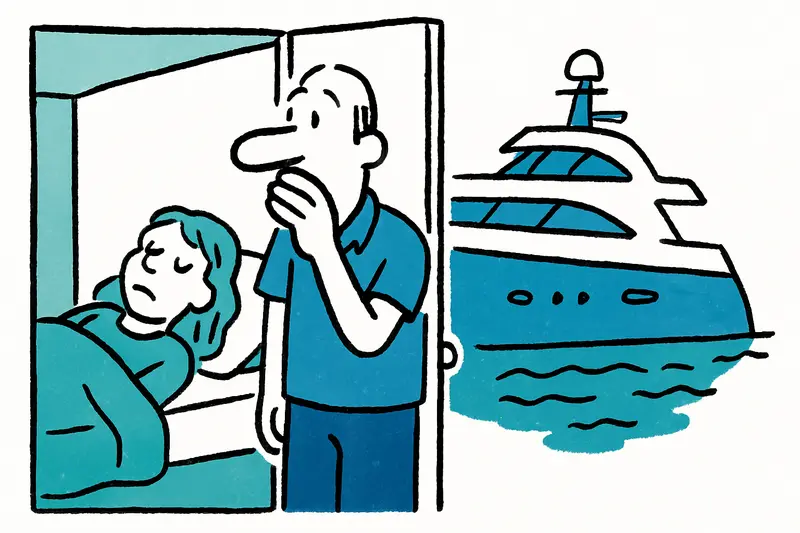
On Monday night, a woman of around 40 was found lifeless in her sleeping cabin on a superyacht moored in the harbor of Palma. Colleagues who had not heard from her for hours finally opened the door and alerted emergency services and authorities after they could not detect a pulse. Paramedics confirmed the death shortly thereafter. The Guardia Civil has taken over the investigation; a forensic pathologist and officers secured the scene. After initial examinations, investigators found no visible signs of third-party involvement. An autopsy is expected to clarify the cause of death in the coming hours.
As sober as the facts sound, many questions remain. On a winter evening, when the harbor lights shimmer over the Passeig Marítim and the distant sounds from Moll Vell drift across the water, a direct explanation is rarely immediate. People on superyachts often work around the clock, in tight teams, with split shifts, in confined spaces and with limited access to medical care. That a death on board is initially diagnosed without signs of third-party involvement does not exclude internal causes, accidents or medical emergencies.
As for the range of possibilities, the autopsy is now the central element. It will show whether it was a natural death, an accident, an overdose or something else. Until the results are available, neither speculation nor quick judgments should dominate the narrative. Nevertheless, one should not wait only for forensic results without looking at structural questions: working conditions on board, medical emergency plans, mandatory checks before starting duty, access to first aid equipment and the psychological burden on crew members are often not in the spotlight.
The perspective of those who live and work on these boats is frequently missing from public discourse. Conversations about luxury yachts often focus on owners, insurers or spectacular incidents. Rarely is there discussion about routine matters: how long shifts last, when breaks are taken, whether there are regular medical check-ups, who can provide medical advice in an emergency. Local reporting of other maritime incidents, including Patera Capsizes Near Portopetro — One Dead, Three Missing and Many Unanswered Questions and Shipwreck at Cala Millor: One Dead, Many Questions — How Can We Better Protect People?, shows how lapses affect vulnerable people at sea.
An everyday scene helps make this tangible: it's two in the morning, the lights along the promenade flicker and a lone crane beeps softly. On the upper deck a seaman in a thick parka drinks strong coffee and stares at the water. Cabin doors are locked, the ship breathes mechanically: air conditioning, generator, pumps. Colleagues exchange quiet messages. If someone does not answer, there is first a checking glance, then the cautious opening of a door. That silence that lies between work and private life on a ship can cost critical minutes before help arrives.
Concrete solutions we should address now: First, mandatory medical check-ups for crew members before longer assignments and at regular intervals during the season. Second, clear protocols for night watches and check-ins: daily reports via short message or an alarm button if there is no response. Third, better equipment: automatic external defibrillators (AEDs) on board, easily accessible first aid kits and regular crew training in life-saving measures. Fourth, access to telemedicine: 24/7 medical advice via satellite connection or mobile networks so decisions can be made more quickly. Fifth, a serious debate about working hours and mental health among crew members, including anonymous counselling services.
On an institutional level, authorities should examine whether port administrations and those responsible at charter and ownership companies need to issue clearer requirements. The Guardia Civil is investigating this case; the autopsy will provide facts, but preventive measures will not automatically follow unless they are actively pursued. Everyday failings are not always reflected in a forensic report, and past coverage such as Body Recovered off East Coast: A Sign of Larger Problems at Sea? has already prompted calls for clearer requirements.
Conclusion: The discovery of the woman in the cabin is a tragic wake-up call for everyone involved in the world of superyachts – not only for authorities and owners, but for crews and port institutions. We should await the autopsy while keeping the broader safety questions in view. A harbor like Palma, with its constant comings and goings, deserves clear rules to protect the people who live and work on the water. When the forensic results bring clarity in the coming days, the response must be: not only investigation, but prevention.
Frequently asked questions
What happens when someone is found dead on a yacht in Palma harbor?
Why might a death on board a superyacht show no signs of third-party involvement at first?
What safety risks do crew members face when working on yachts in Mallorca?
What medical safety equipment should be on a superyacht?
Do yacht crew in Palma have access to medical advice at sea?
What should yacht companies check before assigning crew to long contracts?
How can night watch routines on a yacht help prevent emergencies in Palma?
Why is Palma harbor a sensitive place for yacht incidents?
Similar News
Carriages Without Horses: Palma Plans E-Carriages – a Reality Check
Palma plans to switch to electric carriages in 2027. The prototype was shown near the cathedral. What is the technology ...
Record season, empty coffers: Who really benefits from the tourism boom?
Full hotels and more flights: the numbers sound impressive — yet many locals feel no benefit. A reality check with an ev...
Pool ordered for €46,000 – €23,000 paid, no work carried out: A fraud case in Palma
A homeowner in Palma transferred €23,000 for the construction of a pool. Weeks later it emerged that no building applica...
Summer greetings from the Pitiusas island: Gottschalk and Krüger enjoy the sun on Ibiza
A friendly photo of Thomas Gottschalk and Mike Krüger on Ibiza evokes memories of their shared film years and shows that...
Occupied in a Few Days: When Property in Mallorca Turns into a Dispute
Six young men were arrested in Palma after homeowners returned and could no longer open their own door. A case that rais...
More to explore
Discover more interesting content

Can Cap de Bou

Townhouse Lleo 72
