
Playa de Palma in Sticker Fever: Sticker Culture at Ballermann Causes Trouble
Playa de Palma in Sticker Fever: Sticker Culture at Ballermann Causes Trouble
A long line of German-language stickers has formed on the promenade by Ballermann 6. The action on the ground divides tourists, residents and business owners. Who cleans up — and who pays for the cleaning?
Playa de Palma in Sticker Fever: Sticker Culture at Ballermann Causes Trouble
On the promenade at Ballermann 6 a kilometer-long trail of stickers is growing — and with it the questions
Key question: Who will remove the adhesive marks by the sea, and how should the island deal with such small-scale actions?
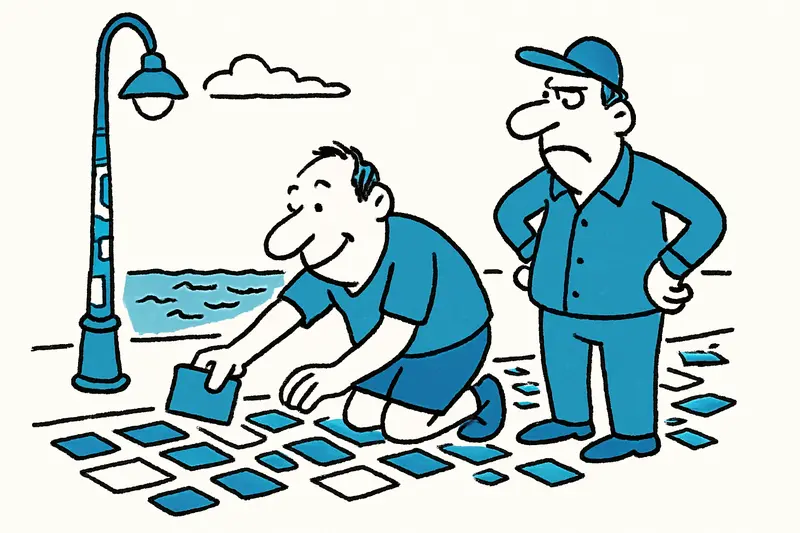
Since the start of the season a new attraction has appeared on the floor of the seaside promenade at the height of Ballermann 6: an almost continuous row of stickers, mostly German-language. Football logos, cycling club emblems, slogans and political sticky notes form a kind of unofficial "sticker mile" right on the edge of the Playa de Palma. People stop, photograph the spot with their smartphones, and some even add more stickers themselves.
If you jog along the promenade in the morning, you know the scene: seagulls scream, a delivery van beeps softly, somewhere the scent of coffee and freshly grilled fish drifts by. Tourists don't really stumble, they take out their phones. A shopkeeper in front of the Megapark snorts because customers gather at the sticker column and block the entrance area. In the evening you then see groups posing between lampposts and the new streetlights — the lights themselves now also carry stickers.
Those who think it's harmless fun overlook two aspects: on the one hand, the patchy pollution changes the appearance of the promenade and can disrupt business operations. On the other hand, costs arise for cleaning and maintenance, without anyone having taken responsibility so far. Whether the stickers will remain on the asphalt for a long time or whether the municipal cleaning teams will remove them quickly is still open.
Critical analysis: What appears here as a trivial holiday prank is part of broader lines of conflict. The practice of putting stickers on public furniture or signs is not new in Mallorca — lifeguard huts, lampposts, walls in Palma and even areas of the airport have already been stickered. Such interventions are an expression of identity marking: tourists want to leave traces. At the same time they are a form of visual environmental pollution that often impairs public space and the everyday life of residents.
In the public discourse the question of responsibility and proportionality is often missing. People talk about "fun" versus "vandalism", but rarely about the concrete consequences: How much cleaning staff must be deployed? Which cleaning agents are used, and do the chemicals harm the marine environment? What does this cost the municipalities annually? And last but not least: who is allowed to decide which places can be used and which cannot?
Another gap is the voice of those directly affected. Business owners along the promenade report everyday problems such as customer congestion, delivery difficulties and a changing street image. Residents describe that the promenade used to be a quiet promenade; now it has localized hotspots. These perspectives rarely appear in discussions about tourist freedoms.
Concrete solutions that could work: First: designated sticker areas. Anyone who wants to leave a souvenir should do so on designated plates or a stable "sticker wall" — weatherproof, easy to clean and placed intentionally. Second: short information and awareness campaigns in several languages at the entrances to the playa, explaining that sticking on public facilities is not permitted and what alternatives exist. Third: a clear cleaning plan with transparent cost information so the municipality can communicate the financial consequences. Fourth: sanctions as a last resort — if voluntariness and infrastructure are lacking, fines for deliberate sticker placement should be considered.
On Mallorca you have to stay sober: many visitors behave respectfully, and small subcultures like this arise spontaneously. But without rules harmless gimmicks turn into lasting disturbances. A pragmatic approach would not start with bans but with offers: places where stickers are welcome, and a clear line where public space must be protected.
Conclusion: The sticker mile at Playa de Palma is more than a photo motif. It is a symptom of how tourism repurposes public space — often without dialogue and without clarification of costs. Anyone who wants to leave the promenade clean in the morning should ask: do we want to create memories in parks or just on private photos? The island needs practical solutions, not campfire debates. Otherwise the promenade will remain a patchwork rug of stickers and frustration.
Frequently asked questions
Why are there so many stickers on the promenade at Playa de Palma?
Is it allowed to stick stickers on public surfaces in Mallorca?
What problems do stickers cause for businesses on Playa de Palma?
Who is responsible for removing stickers from Playa de Palma?
When is the best time to walk or jog along Playa de Palma?
Can tourists take photos of the sticker trail at Ballermann 6?
What does the sticker problem in Mallorca say about tourism in public spaces?
Are designated sticker areas a solution for Mallorca?
Similar News

Four goals, heart-stopping moments, a message: Germania Mallorca takes three points in Consell — questions remain
The new German club on the island won its first away game in Consell 4:3. Celebration, a 4:0 lead, then a nervous finish...

Mueller continues expanding in Mallorca: Artà in 2026, Can Picafort in early summer 2027
The drugstore chain Mueller is opening two new stores in Mallorca: a 1,400 m² shop in Artà on 5 November 2026 and a bran...
The Painter Who Lived Mallorca: Franz Taussig and His Century-Old Secret
A hundred years ago a young Viennese arrived in El Terreno, sketched the island and called himself Francis Caron. Today ...

Airport dispute: Bridge, forecasts and the question of responsibility
A video by the Spanish transport minister has ignited the dispute over DORA figures, capacities and local governance pow...

The Painter Who Invented Himself: How a Young Viennese Drew Mallorca
A hundred years ago a 19-year-old draftsman arrived in El Terreno. His diary and sheets, long known under the pseudonym ...
More to explore
Discover more interesting content

Can Cap de Bou

Townhouse Lleo 72
