
'Ghost Squadron' on Majorca: Luxury cars between the Tramuntana and conservation — what remains besides noise?
'Ghost Squadron' on Majorca: Luxury cars between the Tramuntana and conservation — what remains besides noise?
Koenigsegg's Ghost Squadron Tour brings Jesko & co. to the Serra de Tramuntana. A show of force on narrow mountain roads — and a wake-up call for protection and rules.
'Ghost Squadron' on Majorca: Luxury cars between the Tramuntana and conservation — what remains besides noise?
Key question
Is Majorca the right stage for a caravan of hyper-expensive supercars, or are we sacrificing public space, quiet and UNESCO protection for a short show of engines and brands?
Critical analysis
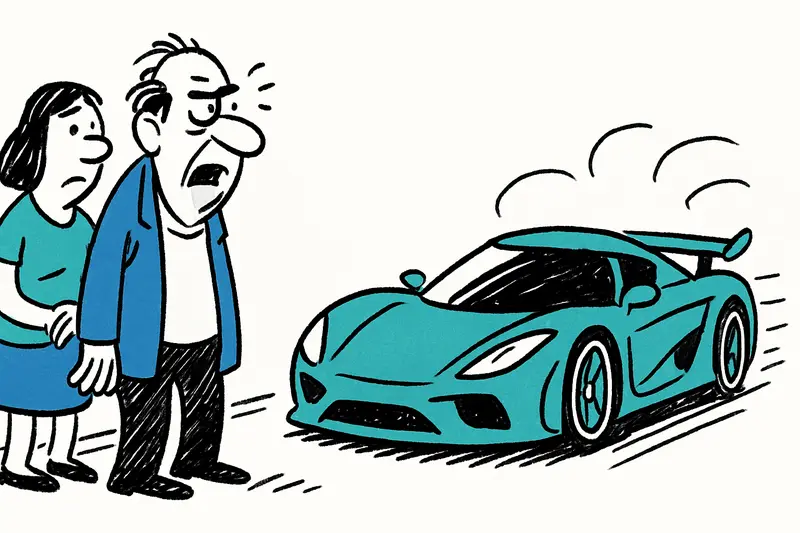
Wednesday midday in Palma, 22°C, a few clouds over the bay and suddenly the familiar soundscape is broken: instead of buses and construction noise there's a deep rumble moving through alleys and squares. These are not tourist shuttles but a procession of high-performance cars − Koenigsegg's 'Ghost Squadron Tour 2026', featuring models like the Jesko Attack and the Regera. The facts are clear: individual cars with around 1,600 hp, prices in the millions, a convoy whose estimated total value runs into double-digit millions. This is no longer a car meet, it's brand staging with international reach. This is similar to 550 Challenge in Mallorca: A Treat for Petrolheads, a Burden on Everyday Life.
Technically the machines are impressive: multiple clutches, LST transmissions, biturbo powertrains, special interiors. But technically impressive does not automatically mean locally sensible. In the narrow hairpins of the Tramuntana, a Serra de Tramuntana UNESCO listing, two interests clash: the spectacle for wealthy owners and the public use of the roads by residents, cyclists and holidaymakers. Particularly sensitive are event locations like Port de Sóller or the proximity to restaurants in Palma — these are tourist spots, not closed racetracks.
What is missing from the public debate
1) An honest accounting of noise and air pollution caused by such events. 2) Clear rules on who grants permits for convoys on narrow country roads, a debate echoed in Rental Car Cap: Between Traffic Calming and Holiday Stress – What Mallorca Must Consider Now. 3) Transparency about fees or compensations for municipalities that suffer short-term restrictions. 4) The perspective of the people who live with the consequences every day: commuters, restaurant owners, hikers.
Everyday scene on Majorca
Imagine the palm trees of the Passeig in the morning, people seeking shade, children licking ice cream, and the bell of a church in Sóller. Suddenly a pearl-yellow Jesko tears around the corner, the hood gleams, the exhaust growls, a cyclist holds his breath. For a brief moment: amazement, photos, then anger about blocked traffic. This small snapshot repeats itself in villages and bays along the route. Local advice on calm driving on these roads can be found in Mallorca's Curves without a Racing Heart: Staying Safe on the Tramuntana & Co..
Concrete proposals
- Tighten permitting rules: time windows, noise limits, maximum route lengths for supercar convoys on public roads. - Introduce an environmental levy: organizers pay a dual-use fee that goes into local infrastructure or nature protection. - Oblige alternative routes and coordination with law enforcement: pedestrian zones and narrow village through-routes must be off-limits. - Limits on night operations: noisy events only during daytime, with prior resident notification and alternative routes in place. - Public monitoring: measure noise and emissions during the tour and publish the results.
Why this is not just nitpicking rhetoric
Majorca lives off its image: nature, quiet, good food, varied roads for cyclists and day-trippers. If the island becomes a backdrop for pompous product presentations, perceptions change permanently. Not every target group feels welcome, and not every community benefits economically from such events. Often the immediate profit stays with organizers and a few restaurateurs.
Concise conclusion
The Ghost Squadron Tour is fascinating to watch, but it must not become the norm without accompanying rules. Majorca must decide what role it wants to play as a stage for luxury marketing. Short-term spectacle must no longer override the rights of residents, the protected status of the Tramuntana and the quality of life in towns. A few measures, sensible permits and binding compensations would turn a mere show of force into a regulated event that also respects the island itself.
Frequently asked questions
What is the weather like in Mallorca in spring?
Can you swim in Mallorca outside the main summer season?
What should I pack for a trip to Mallorca in spring?
Is spring a good time to visit Mallorca?
What is Port de Soller like in spring?
What is the weather like in Palma de Mallorca in spring?
Are Mallorca beaches busy in spring?
Can you do outdoor activities in Mallorca in spring?
Similar News

Magaluf: Watchtower Alarm – Lifeguards Pull Unconscious Beachgoer from the Water
After a drama in the late afternoon, two lifeguards at Magaluf beach rescued an unconscious 44-year-old man. He was stab...

Turquoise in the City: How dangerous is the color play of the Sa Riera?
The Sa Riera in Palma suddenly turned turquoise — a pretty motif, but behind the effect lies a discharge of saline waste...

Jeckliner at Sunnesching: Cologne spirit sets sail from Palma
In September 2027 the Mein Schiff 2 briefly becomes a floating carnival stage: four days with Cologne bands, comedy and ...
Finally Home: Mike and Leyla Heiter Buy Villa with Sea View in Mallorca
The reality TV couple Mike and Leyla Heiter have bought a house in Mallorca with a roof terrace and sea view. An Instagr...
Arrest after series in Palma: Who protects apartments from repeat offenders?
The National Police arrested a man in Palma who investigators say may have broken into several apartments. In one incide...
More to explore
Discover more interesting content

Can Cap de Bou

Townhouse Lleo 72
