
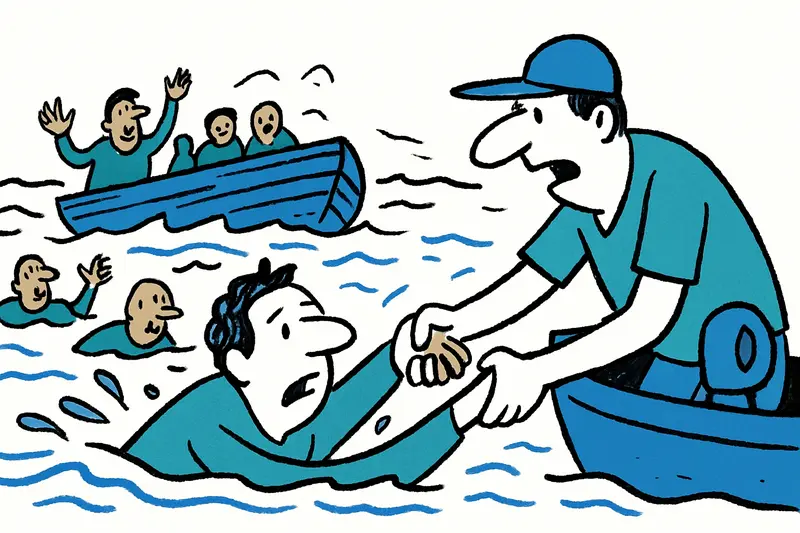
Shipwreck at Cala Millor: One Dead, Many Questions — How Can We Better Protect People?
A refugee boat capsizes off Cala Millor: one person dies, several seriously injured. Why does this keep happening — and what needs to change now?
Shipwreck off Cala Millor: One Dead, Several Injured
Yesterday around 3:30 p.m. the Cala Millor pier suddenly turned into an operation site. The cicadas' chirring was drowned out by the roar of engines, the clatter of nets and the beeping of radios. I stood there and watched fishermen with headlamps and fast rescue boats head out toward the open sea. Not a Sunday scene anymore – blue lights, blankets, people seeking shelter.
One person died, the emergency services reported. Around 20 people were taken to hospitals with sometimes severe injuries; three people are still missing. A similar incident was reported earlier: Patera Capsizes Near Portopetro — One Dead, Three Missing and Many Unanswered Questions Survivors report the boat was already damaged and then suddenly capsized. According to witnesses the sea was slightly choppy – no storm, but enough for an overload, a malfunction or an unlucky current to have fatal consequences.
Who responded — and what gaps became visible?
Guardia Civil, Policía Nacional, Salvamento Marítimo, the Red Cross and local volunteers from neighbouring harbors worked hand in hand. The cooperation functioned — but not without visible problems: interpreters were missing in the first minutes, communication between sea rescue and land-based emergency services stalled, and medical first aid had to be improvised on board. Such moments decide between life and death.
The authorities are securing traces on board and questioning witnesses. Investigations will need to clarify whether overload, technical defect or currents were the cause, as happened in Fishing boat accident off Portopetro: One dead, many unanswered questions. But the central question is bigger than this single case: how can we prevent such voyages or increase the chances of survival before people reach our coasts?
The central question: protection or deterrence?
The island now faces the hard question: should resources be strengthened primarily for deterrence — or should we invest specifically in measures that protect lives? Both are politically charged, as seen after Boat tragedy off Mallorca: Between grief, legal battles and the question of a Plan B The answer many demand here is: we must consider both, but with a clear priority on rescue and prevention.
Aspects that are hardly discussed
First: the burden on small coastal towns. Cala Millor and similar places are not only tourist destinations but also reception points, often with limited medical capacities. Second: the role of local sea rescuers and fishermen — voluntary, emotionally burdened, often without sufficient protective gear. Third: the communication channels for relatives — WhatsApp messages from overcrowded boats, desperate calls to local aid groups, lack of a central identification office.
Concrete, practicable proposals
What needs to be done now should be concrete and quickly implementable:
1. Faster first aid on board: mobile emergency kits in harbors, regular training for fishermen and port staff to start life-saving measures immediately.
2. Better communication: a central coordination point on the islands with interpreters and clear radio protocols between sea rescue and hospitals.
3. Equipment and personnel: more rescue boats, night-vision devices, thermal blankets and specially trained maritime medics stationed at critical points along the east coast.
4. Local reception points: temporary intake centers in ports with psychosocial support and rapid identification to inform families more quickly.
5. Prevention and international cooperation: stronger cooperation with regions of origin, information campaigns about risks and legal alternatives as well as targeting smuggling networks.
A sad day — and the duty to learn from it
The people rescued yesterday and those still missing are not statistics. They leave behind families and networks who call, ask, hope. On the Cala Millor pier a smell of diesel, blankets and sea remained after the operation – and the feeling that our island community acted. That is not enough.
Politics must now provide answers that go beyond press releases. Practical measures, better protection, more capacity on site: these are not populist demands but human necessities. And until the big questions are resolved, every minute counts. For the three missing people, for the survivors and for the volunteers, quick, clear steps are needed now.
It is a heavy day for Mallorca's east coast — and a wake-up call to recalibrate the balance between security, humanity and pragmatic policy.
Frequently asked questions
What happened off Cala Millor in Mallorca?
Why do boat accidents off Mallorca happen even when the sea is not stormy?
What should local rescue teams in Mallorca have ready for maritime emergencies?
Are coastal towns in Mallorca prepared for large emergency arrivals?
What role do fishermen and volunteers play in sea rescues around Mallorca?
How are missing people identified after a boat disaster in Mallorca?
What can be done in Mallorca to prevent dangerous migrant boat crossings?
What support do survivors and families need after a sea rescue in Mallorca?
Similar News
Release after bloody attack in Palma: Why the court's decision raises questions
An 18-year-old who allegedly inflicted a serious neck injury on a man at Plaza Gomila using a wristwatch wrapped around ...
Kidnappings in Inca: Three young men forced into car trunks and abused in the forest – a reality check
In Inca, three 18-year-old men were forced into car trunks by masked assailants at the Plaça des Bestiar, taken to a for...
Spreading Massification: The Brake That Still Has Much Work to Do
Marga Prohens announces limits on volume tourism. The measures sound harsh — but are they enough to save everyday life, ...
Through the Keyhole onto the Party Yacht: How Daniela Katzenberger Is Planning Her 40th on Mallorca
Daniela Katzenberger turns 40 and wants to celebrate it on the island — likely with a boat, cake and her mother. A relax...
By Boat Instead of the Road: Palma's Water Bus — a Reality Check
The 'Bus Nàutic' launches in two stages — but questions remain over interim operations, fares and environmental requirem...
More to explore
Discover more interesting content

Can Cap de Bou

Townhouse Lleo 72
