
Fishing boat accident off Portopetro: One dead, many unanswered questions
A small fishing boat capsized off Portopetro with about 23 people aboard. One person died, around 20 were injured — and questions remain about why such journeys are still possible. A look at rescue efforts, causes and concrete solutions for Mallorca's east coast.
Fishing boat accident off Portopetro: One dead, many unanswered questions
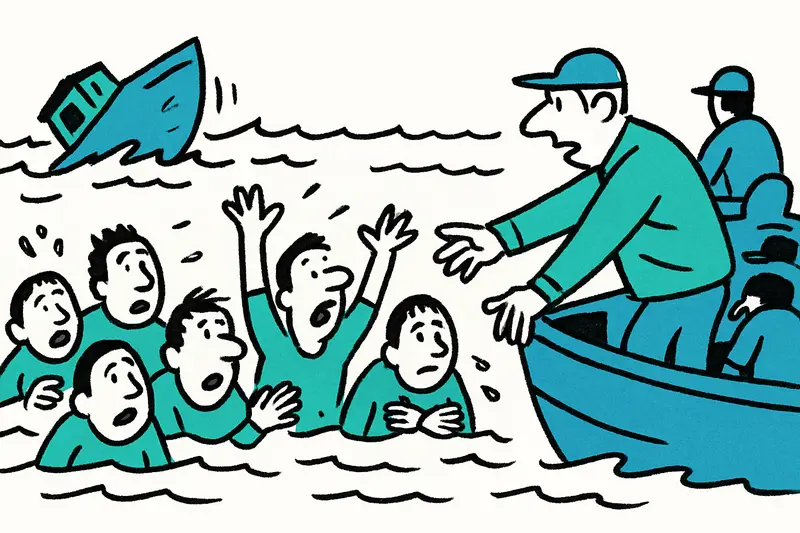
It was an afternoon when the harbor of Portopetro normally smells of nets and fried fish, but today the scent of diesel and wet blankets blew over the quay. Around 2:00 p.m. several emergency calls came in: a small fishing boat with people on board had capsized three nautical miles south of the town. Strong winds, rain and sudden, violent gusts had churned the sea; seagulls screamed, the noise of engines mixed with desperate shouts. At the end of these dramatic hours there was one dead, around 20 injured and many unanswered questions. More details were reported in Patera Capsizes Near Portopetro — One Dead, Three Missing and Many Unanswered Questions.
Rescue under difficult conditions
Guardia Civil, the coast guard and the rescue helicopter Helimer 222 rushed to the scene. SAMU 061 activated the multiple-casualty protocol. Eyewitnesses reported chaotic scenes: people were pulled from cold, foaming water, some swam to rescue boats despite exhaustion. Blankets, rescue lines and rapid first aid helped many who were brought ashore shivering.
According to authorities about 23 people were on board, several very young. In the port of Portopetro helpers took over first aid. At least 20 people received medical attention: roughly 15 on site for minor injuries, three seriously or critically to Son Espases, others to Manacor hospital. An adult man died at the scene, a detail reflected in Naufragio de un barco frente a Portopetro: Un muerto, muchas preguntas. Translators and social services were on hand while helpers handed out blankets and registered the patients.
What is often missing in the public debate
Such operations are often reduced to numbers, to "arrival" or "deportation". On the ground, however, you see practical problems that are rarely discussed: the limits of local rescue capacity on windy days, the question of timely alerting and the distribution of resources between Son Espases, Manacor and smaller ports like Portopetro. Then there is the weather: short-lived, intense storms leave little time for safe navigation — an effect that could become more frequent due to changing weather patterns.
The role of smuggling networks also remains a shadow issue. Small, often unsuitable boats are deliberately used to avoid controls. At the same time first aid and accommodation in the following days again fall to local services and volunteers — people who swing between compassion and exhaustion. Legal and administrative procedures for identity checks and reception take time, which increases pressure on infrastructures.
Concrete opportunities and solutions
The sea around Mallorca is unpredictable, but not helpless. Several measures could help make similar tragedies less frequent:
1. Better early-warning and monitoring systems: More buoys, improved weather warnings specifically for the east coast and closer lines of communication to fishermen and leisure skippers.
2. Strategic positioning of rescue resources: Short response times are crucial — helicopters, ships and rescue boats should be coordinated so that quick action is possible even in storms.
3. Stronger support for volunteer helpers: Regular training, equipment and psychological aftercare for the many volunteers who provide first aid ashore.
4. Humanitarian and administrative acceleration: More interpreters, faster identity checks and adequate accommodation reduce chaos and suffering at landing sites.
5. Prevention and international cooperation: Without safe, legal alternatives people remain dependent on smugglers. Regional dialogues, targeted police action against traffickers and programs addressing root causes are needed. Further reporting on the wider implications is available in Patera vuelca en Portopetro — un muerto, tres desaparecidos y muchas preguntas abiertas.
Between mourning and everyday life
On the quay of Portopetro fishermen, helpers and journalists remained long after the operation. Some smoked, others stared at the sea as if they could find answers there. Many were relieved that most of those on board came ashore alive — yet sadness over the deceased prevailed. The scene was a reminder: Mallorca is not only a holiday paradise; it is also a place of longing and transit where people take risks because often they have no other perspective.
The central question remains: do authorities and society learn enough from such operations to act preventively? Or is the next storm only a matter of time? Portopetro and its helpers will be prepared — but without systemic changes the sea remains unpredictable and merciless.
Frequently asked questions
What happened in the fishing boat accident near Portopetro, Mallorca?
How dangerous is the sea around Mallorca during sudden storms?
Is it safe to swim or go boating near Portopetro when the weather turns bad?
What should you pack or prepare for a boat trip in Mallorca?
Which emergency services respond to sea rescues in Mallorca?
What happens to injured people after a boat capsizes near Portopetro?
Why are rescue teams in Mallorca sometimes stretched on windy days?
What are the main safety issues around Portopetro for boats and fishermen?
Similar News
First Day, First Consequences: What Palma's Rent Freeze Really Means
A new decree stops a planned eviction in Palma — but what really changes for tenants and landlords? A reality check with...
When Housing Becomes a Matter of Survival: Mallorca Between Rental Frenzy and Everyday Life
The case of 87-year-old Maricarmen showed that on Mallorca many people's lives are poised between affordable and uninhab...
Autumn in Mallorca: When Melancholy Gets a Window
Why autumn quietly tightens here — and how to make use of the mood: walks, culture, candles and the light from Palma to ...
Near-miss on Lanzarote: Landing Ryanair Jet and Iberia Takeoff — what really went wrong
On Lanzarote there was a dangerous incident: A Ryanair flight (FR5910) from Dublin landed on runway 03 while an Iberia E...
Eurowings introduces new Premium Business seats on Mallorca routes
From December 1, selected Eurowings flights to Palma and other destinations will feature eight particularly generous sea...
More to explore
Discover more interesting content

Can Cap de Bou

Townhouse Lleo 72
