
Body Recovered off East Coast: A Sign of Larger Problems at Sea?
A heavily decomposed corpse was recovered about 25 nautical miles off Cala Rajada and brought to Portocolom. While the autopsy is underway, questions arise about what the find reveals about safety, migration and environmental risks off Mallorca's coast.
Body Recovered off Portocolom: More Than Just a Tragic Find
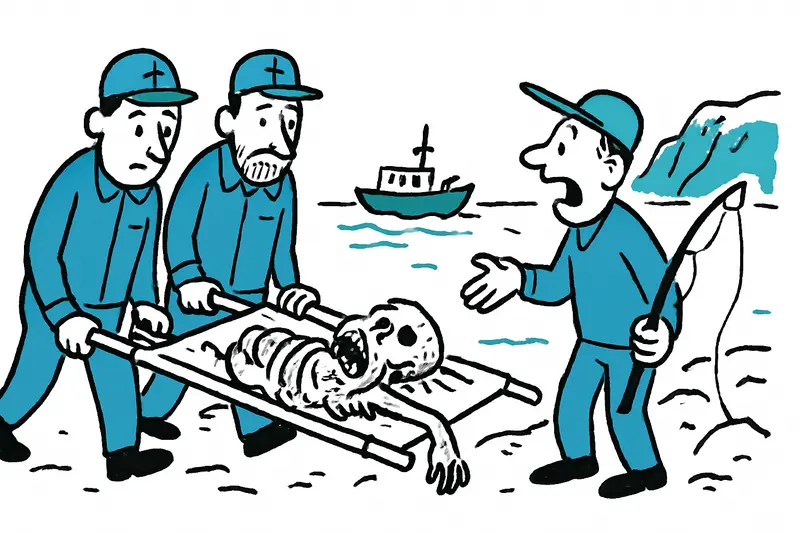
On Tuesday morning the crew of a fishing boat spotted a lifeless body in the water about 25 nautical miles northeast of Mallorca. The crew alerted the authorities at approximately 11:15 a.m., and a few hours later a rescue vessel from the Salvamento Marítimo and the diving unit of the Guardia Civil reached the site off Cala Rajada.
What the emergency teams found was distressing: a severely decomposed corpse whose condition made immediate identification impossible. The boat with the discovery headed to Portocolom, where the on-duty medical examiner and the criminal police from Manacor took over the investigation (reported in Cadáver en avanzado estado de descomposición frente a la costa este de Mallorca, recuperado cerca de Portocolom). An autopsy is expected to clarify who the deceased was and how long the body had been drifting at sea.
The Key Question: What Does the Find Reveal About Our Coasts?
The incident raises a central question: was this a tragic boating accident, a victim of a failed migrant crossing, or is something else at play? Authorities urge caution — until forensic results are available, speculation is harmful. Still, it is worth looking beyond the individual case: how prepared is the island for such incidents, and which systems fail when people or bodies drift outside immediate coastal areas?
In Portocolom, quiet conversations took place along the quay. Fishermen, who are usually used to the sound of engines and seagulls, stood together, unsettled. Such scenes are not entirely new here: in recent months there have been several discoveries of bodies off the island (Dos cadáveres en las costas de las Baleares encontrados: hallazgo cerca de Ciutadella y frente a Alcúdia) and other shore finds like the one near Palma (Cadáver en la playa de Es Carnatge: cuerpo varado, investigan). This accumulation is not a natural occurrence, but a mirror of the social, political and ecological conditions shaping the sea around Mallorca.
What Is Often Overlooked?
Three aspects are frequently overlooked in public debates about finds like this: first, the forensic challenge. Decomposition at sea accelerates decay, reduces traces and makes DNA identification more difficult. Second, the role of fisheries: often it is — as in this case — fishermen who discover bodies. They are eyes at sea, but they lack the equipment and guidance for forensic initial assessments. Third, the ecological dimension: an increase in nets, ghost nets and marine litter raises the likelihood that people will be placed in mortal danger — or that marine animals, like the rescued turtle, will suffer harm.
During the recovery operation a sea turtle was also found, entangled in fishing nets and subsequently secured. A small bright spot on an otherwise grim day, but it also serves as a reminder of how interconnected the marine environment and human tragedies are.
Concrete Options for Action — What Could Help Now
It is not enough to return to business as usual after the autopsy. The sad discovery points to concrete measures:
1. Better coordination and equipment for fishermen: Training for boat crews, clear reporting channels and an emergency kit on board could help document finds more professionally and save lives.
2. Faster forensic procedures: Expanding mobile labs, prioritizing DNA matches and improving networking between Mallorca's medical examiners and national databases would accelerate identifications and provide families with answers sooner.
3. Stronger monitoring and rescue presence: More patrols on critical routes, satellite signals for small vessels and enhanced cooperation with NGOs could detect and prevent accidents earlier.
4. Environmental measures: Systems to remove ghost nets, stricter controls on fishing gear and support programs for rescuing injured marine animals would benefit both people and nature.
Such steps cost money and require political will — both are scarce. But every time a person dies at sea and the circumstances remain unresolved, society pays a higher price: in grief, in uncertainty and in lost trust.
A Gloomy Day at the Harbor — and a Quiet Hope for Change
In Portocolom the usual scenes were visible at the quay: boats rocking, voices talking about weather and catches. Amid the everyday noises there was a heavy silence that day. The rescued turtle was handed over to experts at Palma Aquarium as a small positive outcome — it will be treated and, if possible, rehabilitated.
Investigations are ongoing. Once the autopsy is complete, police and the medical examiner will announce the results. Until then, the most important task remains to make more of this discovery than just a piece of news: to ask which systems are failing and to act concretely so that such finds become rarer.
Frequently asked questions
Why are bodies sometimes found off the coast of Mallorca?
How long can a body float at sea before it is identified?
What happens when fishermen in Mallorca find a body at sea?
Is it common to find ghost nets around Mallorca?
What does a body recovered near Portocolom mean for the investigation?
Why is Cala Rajada often mentioned in sea rescue cases off Mallorca?
What should I know about swimming or boating safely around Mallorca?
What support exists in Mallorca for injured marine animals found at sea?
Similar News

After Being Admitted to Hospital Again: Heinz Hoenig and the Questions We Should Ask in Mallorca
Long-time Mallorca resident Heinz Hoenig was admitted to hospital again. A clear “what next?” is missing from the covera...
Yellow Alert: Is Mallorca Prepared for the Next Rain Band?
Aemet has issued a yellow alert for the south, southwest and the island's interior. Thunderstorms and heavy rain are for...
Kegel brothers trial postponed: Why Mallorca must wait for a verdict
The trial of 13 German holidaymakers will not begin until May 2028. The long wait raises questions — for victims, defend...
Chaos on Palma's Runway: Why the Summer at the Airport Was So Disrupted
This summer laid bare where Palma airport is faltering: only just over half of departures were on time and seven percent...
Cocaine Offer on Ham Street: Why the Open Trade Should Ring Alarm Bells
In the middle of Pare Bartomeu Salvà a tourist was offered a packet of cocaine as part of a sunglasses deal. A short int...
More to explore
Discover more interesting content

Can Cap de Bou

Townhouse Lleo 72
