
Cardiac Arrest on the Ma-3333: What the Rescue Reveals About Our Emergency Care Gaps
Cardiac Arrest on the Ma-3333: What the Rescue Reveals About Our Emergency Care Gaps
A 73-year-old cyclist suffered a cardiac arrest on the Ma-3333 near the Ermita de Betlem. Resuscitation succeeded — but the operation exposes clear weaknesses.
Cardiac arrest on the Ma-3333: What the rescue reveals about our emergency care gaps
Key question: Are Mallorca's mountain roads and rescue chains prepared for aging cycling tourists?
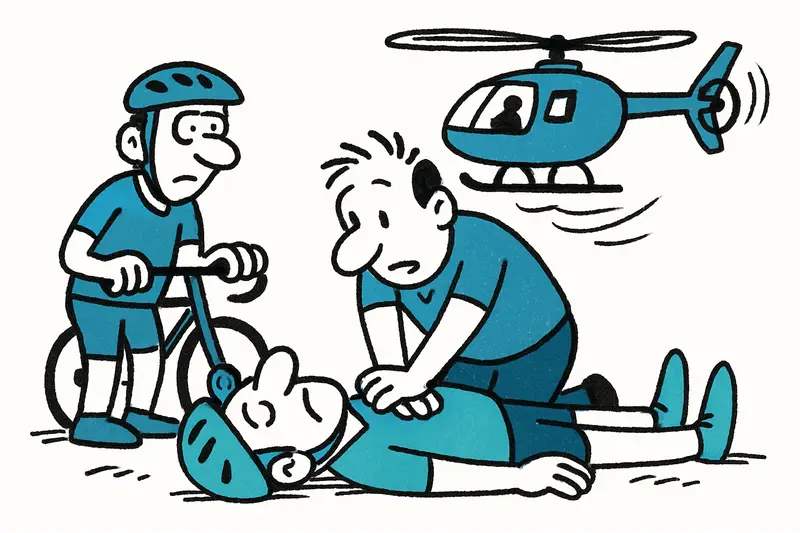
On Friday morning a 73-year-old cyclist in a group was suddenly pulled out of everyday life on the Ma-3333 near the small chapel Ermita de Betlem. After a short spell of dizziness he sat down on a stone by the path and collapsed. The clock showed around 11 a.m.; a companion called the emergency number 112. On site, officers of the local police of Artà initially carried out resuscitation; later, emergency doctors and paramedics took turns. A semi-automatic defibrillator delivered a weak heartbeat after several shocks, the man was stabilized and flown by helicopter to the University Hospital Son Espases. His condition is still described as critical. The evacuation echoes questions raised by other helicopter rescues, for example Emergency on Board the Aidamar: Why a Helicopter Medical Evacuation Raises Questions.
The story ends — for now — with a rescue and a helicopter takeoff over a narrow country road. But it raises concrete questions. Here are the ones that kept running through my head as I climbed to the Ermita: How quickly can help and equipment reach such spots? How well informed are cycling groups? And how often do we consider the combination of aging recreational cyclists, narrow mountain roads and sparse infrastructure?
Critical analysis: It is right to acknowledge the successful rescue. But the operation also shows that we relied on good fortune: a group that helped immediately; responders with endurance; an available defibrillator; a landing spot for the helicopter that the police first cleared. What remains is the image of a rescue that reached its limits in several places.
Missing from the public debate: In conversations on the island I often hear praise for fast responses — but rarely the question why popular routes like the Ma-3333 have no fixed AED locations or designated rescue corridors. Similar concerns about AED visibility and responsibility have been highlighted in incidents such as Sudden death at Balneario 2: What the incident in Arenal reveals about our emergency preparedness. Also rarely discussed is the responsibility of tour operators and cycling clubs to inform participants about cardiovascular risks and to run through emergency plans; this responsibility has been debated after cases like Collapse on the Boulevard: Resuscitation in Peguera – Are Our Tourist Resorts Well Prepared?. And: mobile coverage gaps. A call to 112 must get through — not only in towns, but also when the wind blows pine needles across the asphalt.
A commonplace scene many island regulars know: a sunny morning, groups leaving from Port de Pollença, the first bells mixed with the rustle of olive trees. Riders with saddle bags and GPS-mounted computers. A chat at a fountain, then up the Ma-3333 toward the Ermita. The route is beautiful and good for you — but it is not designed as a medical zone. This is exactly where emergencies happen, between olive groves and stone walls, far from urban care centers. Similar issues were noted in coastal incidents such as Cardiac Arrest on Can Picafort Beach: Questions Remain and Ideas for the Future.
Concrete, feasible solutions: First: expand the AED network. Publicly accessible defibrillators should be installed at hubs such as the Ermita de Betlem, municipal buildings and parking areas along popular routes and registered on a central map (for emergency services and tourists). Second: plan rescue corridors and landing zones. Municipalities and the Guardia Civil can, together with fire brigades and air rescue, designate small, fixed areas that can be quickly accessed in emergencies. Third: require tour operators and cycling clubs to briefly inform participants before each tour about emergency numbers, meeting points and basic resuscitation measures; a second participant with basic skills can prolong life. Fourth: identify mobile coverage gaps and flag them in the 112 system so dispatchers know if a caller is in a dead zone and can use alternative location methods (SMS coordinates, emergency apps). Fifth: training drive for local services. Police officers, municipal workers and volunteers need regular refreshers in CPR and AED use.
Some ideas are inexpensive to implement: visible signs with GPS coordinates at every junction, a small box with basic first-aid material at popular viewpoints, and a simple checklist for guided tours. Other measures require planning and funding — but no one is calling for an airfield construction in mountain villages, just intelligent prioritization.
Concise conclusion: The rescue on the Ma-3333 was impressive — and at the same time a wake-up call. Mallorca has committed responders and many people who act quickly in emergencies. Yet the incident shows: our island is not as advanced in decentralized emergency preparedness as the growing cycling offer and demographic changes require. More AEDs, clear landing spots, better information for tour groups and a serious assessment of mobile coverage would help ensure that such operations rely less on luck and more on planning.
The image stays in the mind: a quiet path above Artà, the ringing of a chapel bell, cleated shoes in the gravel — and people whose correct actions turned a bad hour into a chance of survival. We should make that systematically possible, not just hope that it goes so well again.
Frequently asked questions
What should cyclists in Mallorca do if someone collapses on a mountain route?
Are Mallorca’s mountain cycling routes well prepared for medical emergencies?
Do I need to worry about heat and exertion when cycling in Mallorca?
What emergency equipment should be available on popular cycling routes in Mallorca?
Where is Ermita de Betlem in Mallorca, and why do cyclists stop there?
Why is the Ma-3333 near Artà considered challenging in an emergency?
How reliable is mobile coverage on rural Mallorca roads for calling 112?
What should cycling clubs in Mallorca tell participants before a ride?
Similar News

Fewer Airlines, Fewer Destinations: What Palma's Winter Flight Schedule Means for Mallorca
Analysis shows: Winter at Son Sant Joan Airport will be quieter, with significantly fewer airlines and destinations. Who...
German tourist dies in Sa Calobra – a reality check for emergencies on Mallorca's beaches
A 40-year-old tourist died at the Torrent de Pareis. The emergency call, a doctor who happened to be present, a defibril...
Deadly Tractor Accident in Bunyola: What Needs to Be Done Now
In a work accident on an estate near Bunyola, a roughly 40-year-old man lost his life. His wife and a small child were o...
Head-first dive into the shallow part of Cala Fonoll: An accident and the unresolved question of responsibility
A young tourist dove into Cala Fonoll and was seriously injured. Key question: Why are clear warning signs missing at da...
Mistaken identity with fatal consequences: Brutal assault in S'Aranjassa — what's missing in the follow-up?
At S'Aranjassa a visitor to a finca was tied up, beaten and thrown out of a van. Three men have been arrested, including...
More to explore
Discover more interesting content

Can Cap de Bou

Townhouse Lleo 72
