
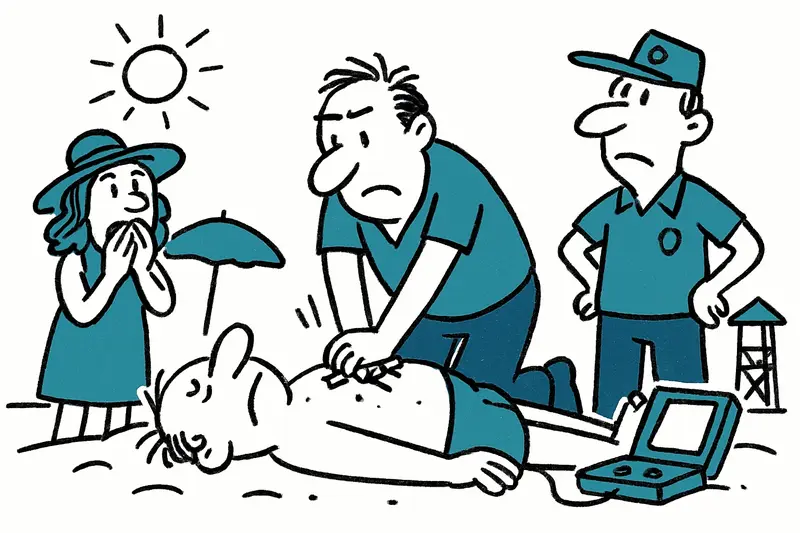
Cardiac Arrest on Can Picafort Beach: Questions Remain and Ideas for the Future
Late on Sunday afternoon a tourist died after a cardiovascular arrest near the beach bar in Can Picafort. Emergency teams performed prolonged resuscitation, but the man passed away. The incident leaves not only grief but also urgent questions about emergency preparedness on Mallorca's beaches.
Shock on the Beach: Response at Tower 2
It was one of those late-summer afternoons: the sun soft, children's laughter mixed with the shrill cries of seagulls, and the air smelled of saltwater and sunscreen. Around 16:44 the popular Can Picafort beach just behind the beach bar turned into an emergency scene. A visitor found a man motionless in the sand near Tower 2 and alerted the station. The event is covered in Can Picafort: Death on the Beach – Was There Enough Protection Against Water Hazards?.
Immediate measures – but a tragic outcome
Rescue personnel and the on-duty emergency officer rushed to the scene. After an initial examination, a cardiovascular arrest was diagnosed. Teams immediately began cardiopulmonary resuscitation, used a semi-automatic defibrillator and, according to witnesses, administered a total of four electric shocks; official guidance on how to perform CPR explains the aims of these measures. Additional ambulances and a SAMU-061 vehicle arrived within twelve minutes. Despite about 27 minutes of intensive resuscitation and a brief return of pulse, the man was pronounced dead at 17:35.
Key question: Could greater protection have been possible?
This question sits like a stone in the stomach of beachgoers: would faster access to medical information or different equipment have changed the outcome? We do not question the competence of the rescuers – many bystanders praised their rapid and professional actions. But the incident raises systemic questions that are often not discussed enough; similar cases such as Dead Tourist at Playa de Palma: An Accident Raises Many Questions further illustrate recurring concerns about beach safety.
Analysis: Availability and visibility of defibrillators
Semi-automatic defibrillators (AEDs) are available at many beaches, but their locations are not always clearly marked. An AED only helps if it can be found quickly. At Can Picafort, sand, umbrellas and people can obscure signs. A clear, standardized location per beach section and conspicuous, robust signage would save seconds. Equally important: regular maintenance and a visible indicator showing whether the device is operational, and clear instructions on how to use a defibrillator.
Communication and medical history
Tourists often lack information about pre-existing conditions or allergies. An internationally understandable emergency info card in a wallet or a medical emergency app that securely shares data could give helpers valuable minutes. Hotels, landlords and tour operators should more actively remind guests to carry such a card or to make emergency contacts visible on their smartphones.
Staff and local training
Alert lifeguards and trained rescue personnel are indispensable. Rescue teams in Mallorca usually do excellent work, but additional training for sudden large-scale incidents and more frequent first aid refreshers—especially during peak tourist seasons—could help. Local preparedness varies across the island, as discussed in Cardiac Arrest in Caimari: Are Mallorca's Villages Prepared for Medical Emergencies Involving Tourists?. Bystanders often take action, but uncertainty can hold people back. Refresher courses for hotel staff, beach service teams and frequent visitors would increase the number of helpers with basic skills.
Technical solutions and networking
Apps that show AED locations and link emergency calls to precise GPS positions already exist. What is missing is a unified system that connects local rescue services, lifeguards and volunteers. An easily accessible digital map of all operational AEDs on official Mallorca municipal sites and a hotline for lifeguard stations would be concrete steps forward.
Concrete proposals
1. Visible, standardized signage at every lifeguard tower with an AED symbol and maintenance date.
2. Emergency info card for travelers, bilingual and kept visibly in the room or wallet.
3. Regular AED checks and publicly accessible readiness lists.
4. Refresher courses for hotel and beach staff during the high season.
5. Networked app platform that displays AED locations, available rescue resources and the nearest SAMU units.
The imperative of the hour: learn from every response
Of course these proposals do not replace grief for the deceased. The municipality has expressed its condolences and the police are investigating the cause of death. Still: every incident is also an opportunity to review procedures and improve. The rescuers on site deserve respect and support—as do Mallorca's beaches, which need to become safer.
Our sympathy goes out to the relatives of the deceased. And an appeal to everyone: a small step for each of us—a clearly visible info card, a short first aid course—can make the difference in a critical moment.
Frequently asked questions
How well prepared are Mallorca beaches for a medical emergency?
Are defibrillators easy to find on Mallorca beaches?
What should tourists in Mallorca carry for a medical emergency?
Is it worth learning CPR before going to Mallorca?
What happened at Can Picafort beach?
How fast did emergency services respond at Can Picafort?
What could make beaches in Mallorca safer in medical emergencies?
Do hotels and landlords in Mallorca remind guests about emergency information?
Similar News
Neighbor Dogs Kill Family Dog Binta – Who Is Responsible?
In Santa Eugènia, five German Shepherds mauled the family's dachshund Binta. The owner demands responsibility instead of...
End of the Sánchez Era? A Reality Check from Mallorca
After the failure of two housing decrees, Spain's government stands at a crossroads. Protests are visible in Mallorca, b...
Mallorca researcher urges simple beach habit: take litter, provide data
Ananda Pascual from IMEDEA asks visitors to collect and record small pieces of litter during beach walks. On Mallorca, s...
New lift on the Passeig Marítim brings El Terreno closer to the seafront promenade
In Palma the city is building a lift between Calle Patrimoni and the Passeig Marítim at Parc de la Quarentena. The proje...
Drama at Cala Agulla: 45 Minutes of Resuscitation — What the Rescue Tells Us
On Wednesday afternoon lifeguards pulled an unconscious tourist out of Cala Agulla. Resuscitation lasted 45 minutes befo...
More to explore
Discover more interesting content

Can Cap de Bou

Townhouse Lleo 72
