
Can Picafort: Death on the Beach – Was There Enough Protection Against Water Hazards?
A 62-year-old German tourist was recovered dead from the sea off Can Picafort in the morning. The incident raises questions about beach patrols, readiness and prevention measures.
Sad discovery in the morning: A man dies off Can Picafort
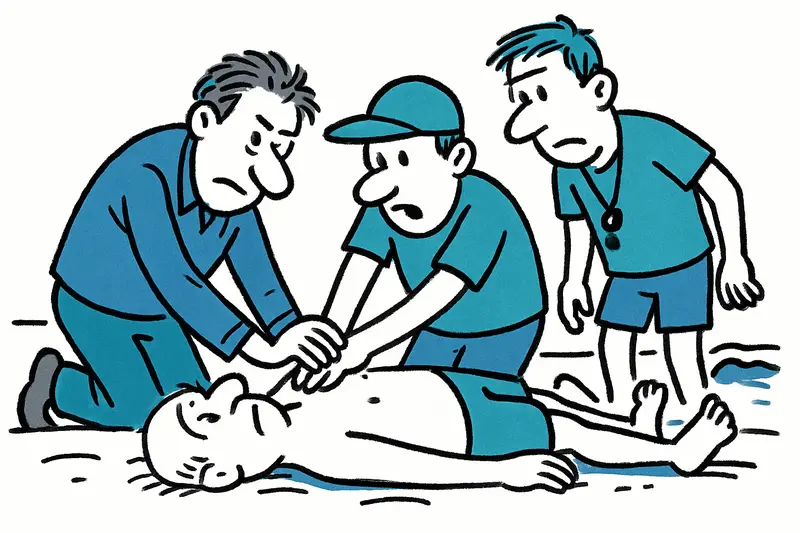
On a late summer morning, when the sun was already beating down and seagulls circled above the promenade, walkers found a lifeless body in the water off Can Picafort. Around 10:15 a.m. they pulled the man ashore — he was a 62-year-old German tourist, as reported in Cardiac Arrest on Can Picafort Beach: Questions Remain and Ideas for the Future. The usually lively promenade was still quiet, the small cafés were just opening their shutters, and motorboats hummed in the distance.
Could the death have been prevented?
That is the central question many on the spot asked: could professional vigilance have changed the outcome? Eyewitnesses reported that the regular lifeguard service for this section was not on duty. Instead, bathers and an off-duty lifeguard immediately began resuscitation efforts until emergency doctors from SAMU 061, teams from the private ambulance service Falck and the local police arrived. For more than half an hour they performed cardiopulmonary resuscitation (CPR) and assisted ventilation. Despite these efforts, death was pronounced at the scene.
Analysis: personnel, duty times, responsibilities
Public discussion often reduces the issue to a single accusation: "Why was nobody in the tower?" The answer is more complex. Many areas in Mallorca are managed by private companies that must follow duty rosters, budget constraints and contractual terms. Gaps often appear during fringe hours or early in the morning — shift changes, break rules or simply reduced staffing outside the high season. The fact that an off-duty team member intervened shows both the professionalism of individuals and a systemic problem: does safety rely too much on the commitment of individuals instead of continuous structures? Similar debates have arisen after other local incidents such as Dead Tourist at Playa de Palma: An Accident Raises Many Questions.
Aspects that are often overlooked
First: the medical history. Whether the man had prior complaints or suffered a cardiac event is still under investigation. Second: the availability of defibrillators. Not every beach section and hotel has AEDs accessible to the public, and their locations are often not clearly visible to guests. Third: the training of holiday staff. In this case a lifeguard from a hotel also helped — many hoteliers train staff in first aid, but this is not mandatory and course quality varies.
Concrete improvement options
There are practical steps that can save lives in the short term: extended presence times at towers during the summer months, better coordinated shift schedules between municipal services and private providers, mandatory marking and registration of AED locations along the coast, and regular, publicly communicated drills in which police, SAMU and private providers train together. In addition: information campaigns in German, English and Spanish that specifically address older holidaymakers — for example, notices about currents and the importance of not swimming far out alone.
Bystander CPR and the role of society
It is positive that passers-by and holiday staff intervened immediately. Bystander resuscitation can be crucial — studies on early CPR show that early CPR significantly increases chances of survival. On Mallorca, where many tourists are older, first-aid knowledge should not be left to chance: free courses on promenades, in hotels and communities would be a realistic step. Small measures like more visible signage for rescue routes and emergency numbers are quick to implement.
What the authorities are doing now
Local police and health authorities are investigating the circumstances; the personal data of the deceased have been forwarded to consular offices. The official debate will focus on two points: short-term measures to improve beach patrol and long-term contractual terms with private rescue services. It also remains open how the costs will be distributed — a question often overlooked but decisive if comprehensive safety is to be achieved.
An appeal to bathers and those responsible
The incident in Can Picafort is bitter and a reminder of how quickly a calm morning can turn into a life-threatening situation. Pay attention to the flags, swim where there is supervision whenever possible, and look out for one another. For those responsible: review duty rosters critically, make AEDs clearly visible and invest in preventive education. On Mallorca, where the sound of the waves and the chatter of the promenade are part of everyday life, safety should not be left to chance.
Our thoughts are with the bereaved. The authorities ask for respect for the family's privacy during the ongoing investigation.
Frequently asked questions
Is it safe to swim in Mallorca early in the morning before lifeguards start duty?
What should I do if someone collapses in the water on a Mallorca beach?
Are lifeguards always on duty at beaches in Mallorca?
How visible are defibrillators on Mallorca beaches and hotels?
Why can beach safety be uneven in Mallorca?
Is Can Picafort a supervised beach area in Mallorca?
What beach safety tips should older holidaymakers follow in Mallorca?
What can hotels in Mallorca do to improve guest safety on the beach?
Similar News
Rent explosion in the Balearic Islands: Why prices rose so sharply between 2020 and 2025
New data from the Observatori show: the average rent for new contracts in the Balearic Islands was €1,390 in 2025 — almo...
First Day, First Consequences: What Palma's Rent Freeze Really Means
A new decree stops a planned eviction in Palma — but what really changes for tenants and landlords? A reality check with...
When Housing Becomes a Matter of Survival: Mallorca Between Rental Frenzy and Everyday Life
The case of 87-year-old Maricarmen showed that on Mallorca many people's lives are poised between affordable and uninhab...
Autumn in Mallorca: When Melancholy Gets a Window
Why autumn quietly tightens here — and how to make use of the mood: walks, culture, candles and the light from Palma to ...
Near-miss on Lanzarote: Landing Ryanair Jet and Iberia Takeoff — what really went wrong
On Lanzarote there was a dangerous incident: A Ryanair flight (FR5910) from Dublin landed on runway 03 while an Iberia E...
More to explore
Discover more interesting content

Can Cap de Bou

Townhouse Lleo 72
