
Dead Tourist at Playa de Palma: An Accident Raises Many Questions
An 80-year-old French tourist died after a resuscitation attempt at Balneario 15. The incident raises questions about beach safety, prevention and the limits of routine emergency responses.
Playa de Palma: Between everyday noise and sudden silence
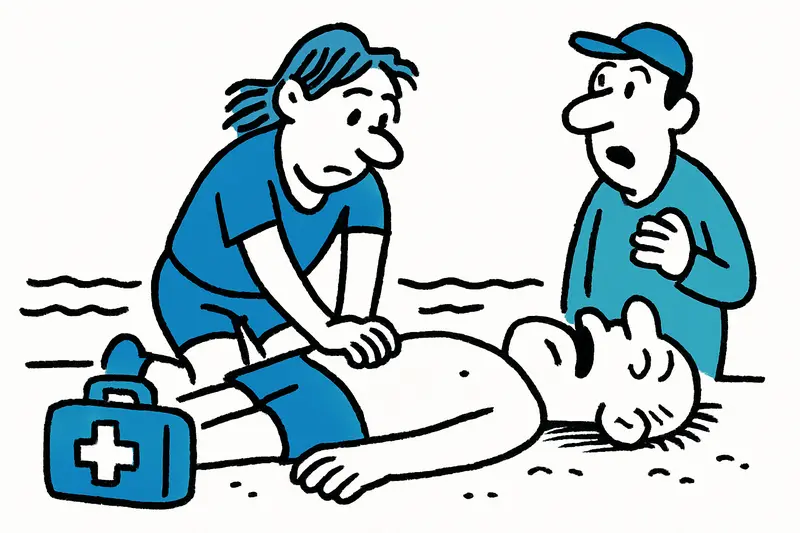
In the early evening, when the promenade still smells of seawater and chilled drinks and voices in several languages drift over the asphalt, routine and danger easily blur. Around 6:10 pm it was different at Balneario 15: a lifeguard discovered a man floating face down in shallow water. Shortly afterwards, not only the calls of the seagulls filled the air, but also the frantic clatter of rescue equipment.
Quick help — but in the end not enough
The first responders acted swiftly: a lifeguard, colleagues from the beach station, an ambulance and finally an emergency doctor performed resuscitation together. Eyewitnesses reported repeatedly weak pulse signals and long minutes without signs of life. Measures lasted almost an hour; at 7:05 pm the emergency teams documented the death of the 80-year-old French holidaymaker.
For the crowd of tourists on the beach it was a shock. People who had been talking minutes earlier now stood crouched, some with a hand over their mouths. An elderly Mallorcan couple whispered about known heart problems; others quietly wondered whether alcohol or exhaustion might have played a role. The police have so far ruled out foul play. Other recent incidents, such as Brawl at Playa de Palma: Why a verbal exchange could have ended fatally, have also drawn police attention.
The central question: Is our beach preparedness sufficient?
Such an incident not only puts immediate helpers to the test, but also the whole debate about beach safety. Are rescue teams sufficiently funded and fully staffed, even in the so-called off-season? Are the clearly visible posts and the few AEDs often hanging on promenades enough when an emergency happens in the middle of bathing fun? And: do holidaymakers even know how to act in an emergency — between language barriers, alcohol and sun-induced recklessness?
What is often missing in the public debate: not the media sensation, but the everyday details. Many older guests arrive with pre-existing conditions and medications that act differently in the heat. Some mix medication with alcohol or overestimate themselves in the water. Fatigue from too much sun and sudden circulatory collapses add to this, making it difficult to separate internal causes from external influences.
Concrete approaches instead of feelings of helplessness
The incident at Balneario 15 is an occasion to think about pragmatic improvements. Some possible measures:
More AEDs and better access: Automated external defibrillators visible on promenades and in beach kiosks, accompanied by clear signs in several languages.
Stronger focus on prevention: Hotels and landlords could inform guests at check-in about risks — short notices about sun, medications and the danger of swimming alone.
Linguistic and visual information: Pictograms, short notices in several languages and audio announcements on busy days.
Expansion of layperson training: More free courses for tourism staff, beach vendors and interested locals in basic first aid and lay defibrillation, supported by official resources such as CPR guidance from the Red Cross.
Working conditions for rescue personnel: Better break regulations and psychological aftercare — those who save lives daily also need support themselves.
A serious wake-up call for locals and visitors
Playa de Palma thrives on proximity: short distances, many people, children's laughter and street music late into the evening. It is precisely this closeness that makes fates visible and moves neighbors, tourists and employees alike. The death of the French guest is a reminder that routine does not protect against tragedy; other local accidents, including the fall covered in Early-Morning Fall at Playa de Palma: German Tourist in Critical Condition and the crash reported in Rollover at Playa de Palma: One Accident, Many Unanswered Questions, underscore the range of emergencies authorities handle.
For the bereaved, any analysis remains secondary; for the island it means: awareness and pragmatic steps can save lives. It is not witchcraft, but organization, information and a little consideration — in a place where the traffic of rolling suitcases, the clatter of parasols and the distant roar of the sea set the rhythm at all hours.
The authorities continue to investigate, the questions remain. And perhaps, if the summer turns hot again, one will more often hear between the voices on the promenade phrases like: "Don’t swim alone", "Don’t forget to drink" and "Be mindful of pre-existing conditions" — simple sentences that can mean a lot in such moments.
Frequently asked questions
Is Playa de Palma safe for swimming?
What should I do if someone collapses on a beach in Mallorca?
Are AEDs available at Playa de Palma?
What are the main health risks for older tourists at Mallorca beaches?
When is Playa de Palma busiest and most important for beach safety?
How should I prepare for a beach day in Mallorca if I have heart problems?
Is it a good idea to swim alone at Playa de Palma?
What beach safety tips should Mallorca hotels give guests at check-in?
Similar News

Maribel: Five Decades of Service – Housekeeper from Peguera Celebrated with a Special Honor
Over 50 years in the hotel business: María Isabel “Maribel” Molinos was honored in Palma at the Nit del Turisme by Unive...
Orange Alert over Parts of Mallorca: Are We Prepared?
Dark clouds and an announced wet spell have triggered an Orange alert in parts of Mallorca. A reality check: what's miss...

Sundair & Co.: Sale speculation and what it could mean for Mallorca
Rumors about a possible sale of the airlines Sundair and Fly Air 41, which belong to Schauinsland-Reisen — and whether b...
Anne Wünsche in Mallorca: A job offer with a catch — who fits the role of personal assistant?
Influencer Anne Wünsche has left Berlin and is urgently looking for a full-time personal assistant in Mallorca. Why the ...
Daily from New York: Palma Between Boom and Strain
United will increase the Newark–Palma route to daily flights in 2027 using Boeing aircraft (231 seats). What does the in...
More to explore
Discover more interesting content

Can Cap de Bou

Townhouse Lleo 72
