
Sudden death at Balneario 2: What the incident in Arenal reveals about our emergency preparedness
A 63-year-old German woman died in the evening at Balneario 2 in Arenal. The incident raises questions about first-responder culture, AED visibility and coordination between emergency services, hoteliers and municipalities.
Sudden death at Balneario 2: What the incident in Arenal reveals about our emergency preparedness
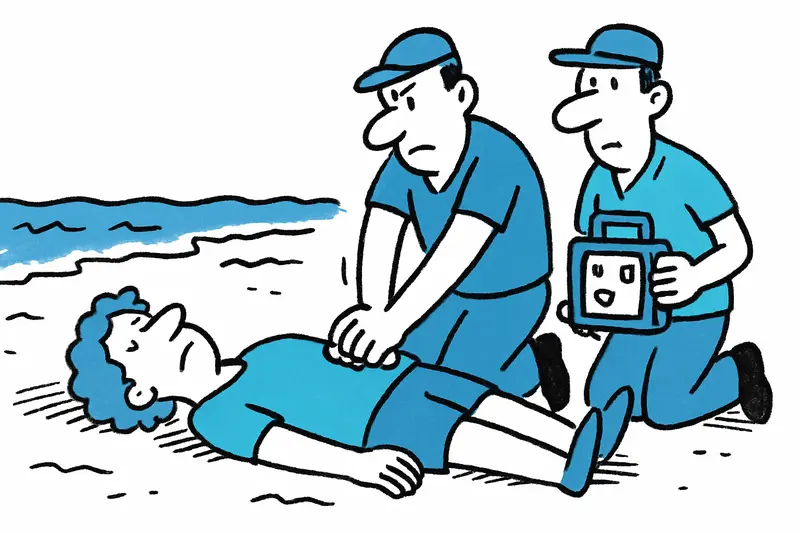
Yesterday evening at around 8:30 pm the usually relaxed atmosphere on the Arenal promenade changed abruptly. The clinking of ice cream scoops, distant children's laughter and the sound of the surf were overlaid by sirens as paramedics, an emergency doctor and the Policía Local arrived near Balneario 2. A 63-year-old German holidaymaker had collapsed by the water; despite immediate resuscitation efforts and the use of a defibrillator, her life could not be saved. A 63-year-old woman dies at Balneario 2 in El Arenal. The rapid response of the rescue teams was not enough.
The immediate response: praise and questions
First responders – bathers, hotel staff, and later the emergency doctor – began resuscitation measures immediately. That people reacted without hesitation is one of the positive impressions of that evening. At the same time, questions remain: How fast are the rescue chains in reality? Where are the AED devices located, and are they clearly visible to an international crowd of holidaymakers? The Guardia Civil and the Policía Local stated that there is no suspicion of foul play; determining the exact cause of death remains the task of the forensic authorities.
A central question: Are we prepared — for locals and visitors?
Majorca lives off tourism, and beaches like Playa de Palma are full of people of different ages, languages and health conditions. The key question is: Are our structures sufficient to reliably treat sudden medical emergencies? The incident at Arenal shows that quick action is present — but also that there are gaps that few notice directly: missing signage for AED locations, unclear responsibilities between private hotel rescue teams and municipal rescue services, and less visible information for holidaymakers in multiple languages. Dead Tourist at Playa de Palma: An Accident Raises Many Questions
What is often missing from the public debate
People quickly think of ambulances and emergency doctors – but three aspects are often overlooked: First, the role of the hotel industry. Receptions and animation teams are often first points of contact. Second, the accessibility and maintenance of publicly available AEDs. It is of little use if a device exists but is poorly visible or out of service. Third, language barriers. In the hecticness of an emergency, communication costs time if there are no clear pictograms or multilingual instructions.
Concrete opportunities and proposals
From the event on the promenade, concrete steps can be derived that could increase survival chances:
- AED map and better signage: A clearly visible, centrally updated map of all publicly accessible defibrillators on beaches and in hotels – online and as an information board at the balnearios.
- Training for hotel staff and beach vendors: Regular, free basic resuscitation courses (Check–Call–Compress) in several languages. Most people are willing to help if they receive simple guidance.
- Cooperation between municipalities and the hotel industry: Standardised procedures for emergencies at Playa de Palma so it is clear who brings an AED quickly, who coordinates first aid and how information is relayed to emergency services.
- Visibility and maintenance of AEDs: A digital reporting system that allows citizens to report faulty devices immediately, as well as fixed maintenance intervals for all publicly accessible units. Critical Bathing Incident at Arenal: Call for Better Protective Measures
What neighbours and tourists can do
Everyone can contribute: Remember the number 112, check the hotel information on arrival to see where the nearest AED is located, and do not hesitate to act. If you help, follow simple steps: shout for help, check breathing, start chest compressions and, if available, fetch the AED. There are already some publicly accessible AEDs in Arenal – but they must be findable and operational.
A quiet appeal
The evening at Balneario 2 was distressing for many people. Respect is due to those who helped immediately. But respect alone is not enough — we need visible structures and a small piece of everyday preparedness: better signage, more training, clearer procedures between hotels, police and emergency services. These are not big miracles, but practical improvements that can save lives.
My thoughts are with the relatives of the deceased. Investigations are ongoing; authorities will inform as soon as the cause of death is clarified. I will follow up and report as soon as there is new, confirmed information.
Emergency note: In an emergency always call 112. In the event of a sudden cardiac arrest every minute counts: Check – Call – Compress – Use an AED if available.
Frequently asked questions
How safe are Mallorca beaches when someone has a medical emergency?
What should I do if someone collapses on a beach in Mallorca?
Are AEDs easy to find in Mallorca hotels and beach areas?
How prepared is Mallorca for sudden cardiac arrest near the beach?
What is the emergency number in Mallorca?
Should tourists in Mallorca know where the nearest AED is?
What can Mallorca hotels do better for beach emergencies?
What happened at Balneario 2 in El Arenal?
Similar News
First Day, First Consequences: What Palma's Rent Freeze Really Means
A new decree stops a planned eviction in Palma — but what really changes for tenants and landlords? A reality check with...
When Housing Becomes a Matter of Survival: Mallorca Between Rental Frenzy and Everyday Life
The case of 87-year-old Maricarmen showed that on Mallorca many people's lives are poised between affordable and uninhab...
Autumn in Mallorca: When Melancholy Gets a Window
Why autumn quietly tightens here — and how to make use of the mood: walks, culture, candles and the light from Palma to ...
Near-miss on Lanzarote: Landing Ryanair Jet and Iberia Takeoff — what really went wrong
On Lanzarote there was a dangerous incident: A Ryanair flight (FR5910) from Dublin landed on runway 03 while an Iberia E...
Eurowings introduces new Premium Business seats on Mallorca routes
From December 1, selected Eurowings flights to Palma and other destinations will feature eight particularly generous sea...
More to explore
Discover more interesting content

Can Cap de Bou

Townhouse Lleo 72
