
Dancing Instead of Complaining: The Viral Duty‑Free Artist and the Payment Gap at Palma Airport
Dancing Instead of Complaining: The Viral Duty‑Free Artist and the Payment Gap at Palma Airport
An actor dances through the duty‑free area in Palma, goes viral — and speaks of unpaid bills. Who is responsible, and what is missing from the discussion?
Dancing Instead of Complaining: The Viral Duty‑Free Artist and the Payment Gap at Palma Airport
How a cheerful performance became an example of precarious pay
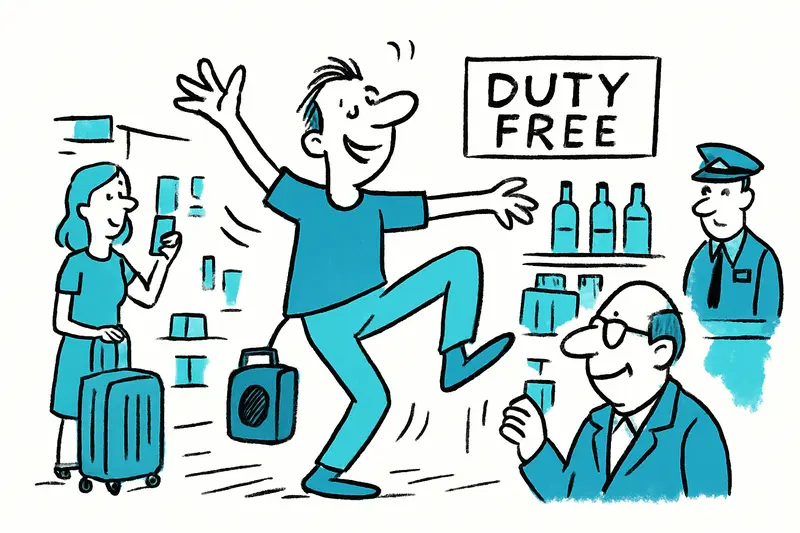
It’s that moment when rolling suitcases click on the tiled floor of the duty‑free corridor, the shops’ speakers get a bit louder and someone starts dancing between cosmetic shelves and boxes of spirits. Moritz Bonin — actor, father, and in recent weeks the recognizable face of the departure hall — carries a small speaker, engages passersby, smiles, and swings his arms. Travelers pull out phones and film. The scenes spread online, and suddenly the airport is no longer just a transit space but a stage, even briefly becoming a film set at Palma Airport.
Key question: What does this viral appearance tell us about working conditions, payment obligations and the invisibility of solo artists on Mallorca? This is not a small question. Behind the smile is the fact that Bonin, according to his own account, still has roughly €15,000 in outstanding payments. He has taken jobs that do not fit his artistic career just so the family can get by. The dance in the departure hall is part of a personal survival strategy, not a PR stunt.
The critical analysis starts here: On Mallorca many artists and solo self‑employed people work on a project basis. Contracts run through agencies, promoters or subcontractors. When a payment fails to arrive, it immediately affects personal living expenses: rent, electricity, childcare — everything gets tight. An outstanding sum of €15,000 is not just a number, it is a chain of problems that goes far beyond a missed fee check.
What is often missing in public discourse is the connection between virality and vulnerability. A clip that transmits cheerful entertainment generates positive attention. But likes do not replace regulation. Many viewers only see the dancing performer, not the reminders, the phone calls, the late breakdown hours after weddings. Those layers remain invisible, just like the contracts that often exist only in e‑mails.
Everyday scene: In the late afternoon, when the sun lies low over Passeig Mallorca and announcements call travelers to the gates, the duty‑free trolley rolls by. A mother with two children stops and laughs, an older gentleman pats him approvingly on the shoulder. A security officer glances over, nods and moves on. That is Mallorca: loud, sunny, sometimes warm and always a bit improvised. It is precisely this mix that makes the story so tangible.
Concrete solutions cannot be solved with a dance, but they can change structures: First, airports and larger clients should require binding payment deadlines for subcontractors and freelancers. Those who buy services have a duty of care toward those who work on site, as issues such as the empty canteen at Palma Airport show. Second, independent clearinghouses would be helpful — a kind of mediation and compensation fund that provides short‑term help until disputes are resolved. Third: more transparency in the client chain. When a job runs through several companies, claims often vanish into questions of responsibility.
More pragmatic ideas: a central register for short‑term assignments at the airport that documents name, client and agreed deadline; binding minimum standards in tenders, such as number of working hours, break regulations and verification procedures; and easily accessible legal advice for solo self‑employed people — also in plain language and with flexible telephone or online consultation hours.
At the municipal level Palma could play a stronger mediating role: the airport is an ecosystem connecting traditional trades, tourism and artists. Contact points in city administration or specialized island advisory centers could maintain closer ties to artist networks so that emergencies are recognized early. A local network of theatres, associations and social services can help create transitional offers — such as short‑term engagements, childcare for single parents or grants to bridge liquidity gaps.
There is also a cultural dimension. Reactions online are twofold: they celebrate the carefree mood while also displaying a form of voyeurism. Many clips are shared without asking whether the dancer wants this exposure or whether he is thereby revealing his precarious situation. Awareness is needed: not every humorous scene is advertising; sometimes it is existential need in disguise.
What Bonin does not want is public finger‑pointing at an individually named responsible party. He is not turning this into a drama against the airport or his current employers. That deserves respect. Nevertheless, the issue must not remain personalized. It is systemic: whoever passes on work orders must be held accountable. Virality must not become a substitute for proper payment.
Conclusion: The dancing artist has a talent — and he uses it to get through difficult times. From a societal perspective his example reveals a weakness: contracts and payments are too insecure for those without substantial reserves. Mallorca can either tolerate this contradiction or address it. I advocate clear rules, more transparency and practical on‑the‑ground help so that people like Moritz are not torn between viral applause and unpaid bills.
One last look into the departure hall: the hum of the air conditioning, occasional laughter, the small speaker still playing music. A man dances because he can. The question is whether, in future, we want to watch that dancing without the risk of financial collapse.
Frequently asked questions
What does the Palma Airport dancing artist story reveal about freelance pay in Mallorca?
Why are payment delays for artists in Mallorca often tied to contracts through agencies?
What practical steps could improve payment reliability for freelancers working at airports or large venues in Mallorca?
How can Palma's local government support artists facing payment issues?
Why isn't online virality enough to secure fair pay for Mallorca's performers?
What practical supports could help self‑employed artists in Mallorca reduce liquidity gaps?
How does multiple-client contracting affect payment accountability for Mallorca artists?
If a freelancer in Mallorca faces late payments, what steps should they take?
Similar News

"As a diver I felt helpless": Many dead sea urchins off Calvià — what this means for the sea
At one spot off Calvià a diver found hundreds of dead sea urchins. It is clear these animals are important for the seabe...

Robotaxis on Majorca? Why the DGT approval in Madrid also affects us
The Spanish traffic authority has approved tests for driverless level‑4 taxis in Madrid. What this means for Majorca — i...

Why Soller is sinking into traffic jams again — Who pays the price?
Kilometre-long lines toward Soller annoy residents and taxi drivers. Key question: Are social media to blame — or are st...

Who pays 11 euros for coffee? A reality check from the island gastronomy scene
An espresso and a water for 11 euros: a debate erupted on Ibiza. What does this say about price perception, transparency...

Missing in Palma: 32-year-old Finn missing for days – search focuses on Son Ferriol
A 32-year-old holidaymaker from Finland has been missing since September 2. He was last seen in Son Ferriol and appears ...
More to explore
Discover more interesting content

Boat Tour with BBQ along Es Trenc Beach

Private transfer from Mallorca Airport (PMI) to Pollensa
