
Woman Found Dead in Pere Garau: When Domestic Violence Ends at the Doorstep
Woman Found Dead in Pere Garau: When Domestic Violence Ends at the Doorstep
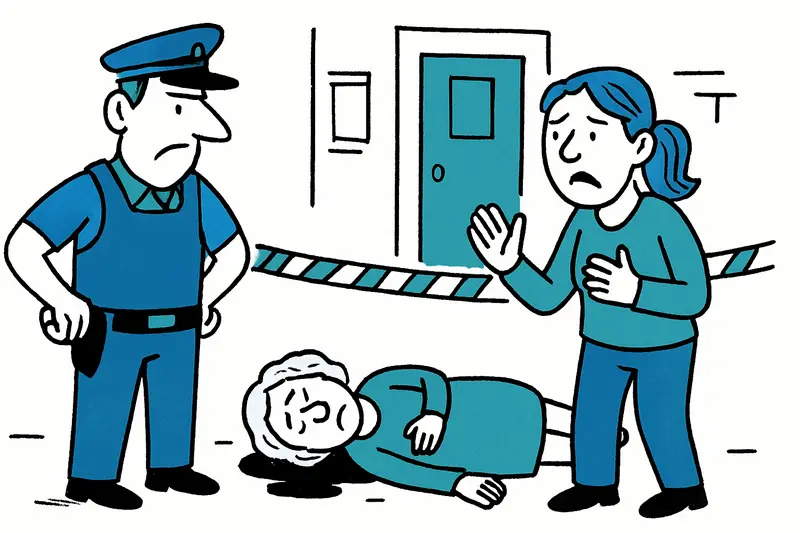
In Palma, a 73-year-old woman was found dead in an apartment in the Pere Garau neighborhood. A 36-year-old woman, reportedly the daughter-in-law, was arrested by the local police. The homicide squad is investigating.
Woman Found Dead in Pere Garau: When Domestic Violence Ends at the Doorstep
A neighborhood, a shock — and many unanswered questions
Yesterday afternoon a 73-year-old woman was found dead in an apartment in the Pere Garau neighborhood. The local police arrested a 36-year-old woman at the scene; initial findings indicate she was related to the victim. For previous reports on violence in the area see Arrest after knife attack in Pere Garau: How safe is Palma's neighborhood?. The homicide squad is conducting the investigation. Help arrived too late for the victim.
Key question: How is it possible that such an outbreak of violence in a residential area like Pere Garau — where people meet at the market in the morning and hear the door lock at night — did not become noticeable earlier or could not be prevented?
The facts are short and harsh: a dead person, an arrest, investigators. Yet from this sober account many questions arise — about domestic tensions, about how care can slide into violence, about the role of neighbors, neighborhood networks and municipal support services.
Anyone who walks through Pere Garau knows the voices of the market vendors, the cries of the seagulls on the horizon and the buses rumbling past the square. This is not an anonymous suburb; people live door to door. That is exactly what makes this case so disturbing: violence in a close family environment can happen in any apartment while life continues loudly outside.
Critical analysis: Domestic violence is often associated with younger couples. Older people as victims are more likely to fall through the cracks — both in public perception and in practical support structures. This is illustrated by Fatal Discovery in Son Macià: A Case Raising Questions about Protecting Older People. When disputes escalate, they are not only physical attacks but often also neglect, psychological pressure and financial conflicts. These patterns are rarely fully examined in the debate that follows such incidents.
What is missing from the public discourse: an honest confrontation with violence between adults of different ages, especially within extended family constellations. There is a lack of concrete information about which support services actually reach older people, how reporting systems work and how neighbors can be meaningfully involved without disproportionately interfering in private conflicts.
From everyday life: I occasionally see students at the café on Carrer d’Aragó making phone calls, market vendors stacking vegetables and older neighbors carrying their shopping home. Exactly these everyday encounters could be points of contact for early help — if there were binding structures and slightly less reluctance to intervene or seek assistance.
Concrete solutions to make such incidents less frequent:
1) Mobile social teams — teams of social workers who regularly visit older residents in neighborhoods like Pere Garau; not only on request but proactively according to a set priority system.
2) Training for local police — officers on site should receive specialized training on family conflicts involving older victims; early de-escalation and recognizing warning signs must become standard.
3) Low-threshold reporting channels — neighbors need anonymous, simple ways to report suspected cases — combined with clear procedures for rapid checks by social services.
4) Strengthen neighborhood networks — municipal programs that promote small neighborhood groups (not a spy system, but mutual support), regular meetings in the community center, information booths at the market.
5) Coordination between authorities — police, health services and social welfare offices must be able to exchange data and observations more quickly and securely — always respecting data protection.
Simple to implement are mainly local initiatives: an information campaign at the market, a weekly social counseling table in the neighborhood, targeted training for bus drivers or building caretakers who are often the first to notice changes in an apartment.
Conclusion: Tragedies like this are alarming because they reveal how thin protection can sometimes be — even in the lively streets of Palma. It is not enough to tick the box after an arrest. We need a discussion about how we, as a city and as neighbors, can become more sensitive — so that the loud life outside does not lead to the silencing of the pain inside.
Frequently asked questions
What is the weather usually like in Mallorca in late spring?
Is late spring a good time to swim in Mallorca?
What should I pack for Mallorca in late spring?
Is late spring a busy time in Mallorca?
Is late spring a good time for hiking in Mallorca?
What are the best things to do in Mallorca in late spring?
How is Palma de Mallorca in late spring?
Is late spring a good time to visit Alcúdia in Mallorca?
Similar News
When the Wallet Becomes a Danger: Attack in Peguera and Lessons for Mallorca
In Peguera, two women are said to have stolen the wallet from a 75-year-old German couple. When the victim intervened, t...
Plata stays Plata: Young people take over, Llonguets remain
A small bar on Carrer de l'Argenteria will continue: Tolo Serra hands the place over to young Mallorcans at the end of t...
Unnoticed in the Luggage Compartment: How a Boy Traveled More Than 100 Kilometers in a Team Bus
A minor traveled in the undercarriage of a team bus for more than 100 kilometers until his cries for help were heard. A ...

Cap Vermell Grand: Second Michelin Key – a Gift for the East
The Cap Vermell Grand in Capdepera has been awarded its second Michelin key. For the region this elevates the luxury off...
Eurowings lets four aircraft carry names – a friendly idea that also reaches Mallorca
Eurowings is launching a campaign: four Airbus A320s are to carry the first names of people who help others in everyday ...
More to explore
Discover more interesting content

Can Cap de Bou

Townhouse Lleo 72
