
Dead woman in Pere Garau – Two arrests, many questions
Dead woman in Pere Garau – Two arrests, many questions
A 73-year-old woman was found dead in an apartment on Carrer de Gabriel Llabrés. Police arrested two people. A reality check: What is missing from the public debate and how can the city better protect its older residents?
Dead woman in Pere Garau – Two arrests, many questions
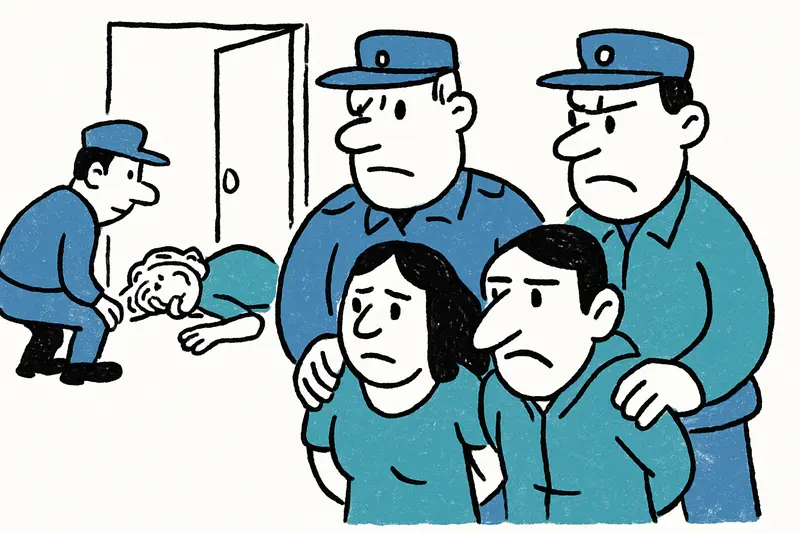
On Monday afternoon officers discovered a 73-year-old woman dead in an apartment on Carrer de Gabriel Llabrés, near the busy neighborhood market of Pere Garau. According to initial reports, her body showed signs of violence. The National Police arrested two suspects the same day: a 36-year-old woman and a man. For further local reporting on police responses in the area see Arrest after knife attack in Pere Garau: How safe is Palma's neighborhood?. The homicide unit has taken over the investigation and an autopsy will determine the exact cause of death.
Key question: How well protected are our older neighbors really — and who checks when the door stays closed for a long time?
The brief chronology is factual: emergency calls about a helpless or ill person, arrival of several patrols, entry into the apartment, discovery with signs of third-party involvement, handover to specialist investigators, two arrests. The facts are clear, but the events raise questions that cannot be answered by police statements alone.
Critical analysis
Police, crime scene investigation, forensic examination — the criminal process is underway. What is missing is the view of the preconditions: Who was the woman in the neighborhood? Did she have regular contact with relatives or social services? Why did someone only call emergency services then? Answers are important to understand whether this is an isolated act of violence or a risk that had already manifested in everyday life; recent similar cases are detailed in Fatal Discovery in Son Macià: A Case Raising Questions about Protecting Older People. The investigation must provide courtroom facts; publicly, however, we need context so similar cases can be prevented.
What is missing from the public discourse so far
The debate often focuses on spectacular crimes and arrests. Hardly ever is it asked how neighborhood networks, care structures and municipal prevention actually function. In districts like Pere Garau, where old buildings, narrow streets and an active market life come together, many elderly people live alone or have little formal support. There is a lack of a sober inventory: number of elderly living alone, frequency of contact with social services, mechanisms for quick checks after prolonged absence. Without these figures, prevention remains piecemeal, and differing investigative conclusions elsewhere underline this need, for example Manacor: No murder — but many questions remain.
Everyday scene from Pere Garau
In the late afternoon, when the market stalls are folded away, you can hear the clatter of crates, the hum of scooters and the vendors calling along Carrer de Gabriel Llabrés. That day residents stood in front of the building, voices rose, there were tears, someone nervously smoked a cigarette, a child tugged at his mother's hand. Such scenes show: violence happens among us, in the noise tapestry of everyday life. The proximity of the market makes people attentive — but not necessarily safe.
Concrete solutions
1) Regular social checks: Municipalities could set up a system of preventive home visits in close coordination with health services and community offices, especially for people over 70 without close relatives. 2) Strengthen neighborhood networks: Local initiatives, meeting points, neighborhood helpers with simple reporting thresholds — for example if someone does not respond for three days. 3) Low-threshold reporting centers: An easily reachable hotline or digital platform for neighbors' concerns, linked to a clear response chain between social services and the police. 4) Trained police presence: More visibility of the municipal police in sensitive neighborhoods, not as repression but as a point of contact for questions of safety and help. 5) Protecting older people in tenancy agreements and housing projects: Promoting cooperative housing models with integrated neighborhood services.
Why these approaches are realistic
None of the proposals requires great technological miracles or years of infrastructure work. It's about organization, prioritization and small budgets for coordination. In Palma there are already structures for social care and volunteer support groups; they would only have to be targeted more at streets like Carrer de Gabriel Llabrés. Prevention costs less than the consequences of violence and loneliness, and it makes a neighborhood more reliable for the people who live there.
Pithy conclusion
The arrests are an important step in clarifying this tragic case. At the same time, politicians and civil society should listen to the quiet questions: Who makes sure older people are seen before it is too late? Who turns concern into lasting protective mechanisms? If we only react to headlines, we remain at the symptom. If, however, we change everyday life — neighborhood care, coordinated checks, better connected services — we can at least reduce the risk of such an incident happening again. In Pere Garau, between market stalls and sputtering scooters, the conversation must now continue and lead to concrete steps.
Frequently asked questions
What happened in Pere Garau, Mallorca?
Why are older people living alone in Mallorca considered vulnerable?
What should you do in Mallorca if an elderly neighbour has not been seen for days?
Does Pere Garau in Palma have a strong neighbourhood feel?
Who investigates a suspected homicide in Mallorca?
What kind of support can help prevent loneliness among older people in Palma?
Is it common for Mallorca neighbourhoods like Pere Garau to rely on informal checks?
What can Mallorca municipalities do to better protect older residents?
Similar News
More water than last year: Mallorca's reservoirs breathe easier
September rain refilled the Tramuntana's reserves: overall fill around 35 percent, Cúber at 40.42 percent, Gorg Blau at ...
Three Luxury Hotels in Banyalbufar: Lots of Money, Many Questions
A Danish investor plans three exclusive accommodations in Banyalbufar — including the historic Son Valentí. The announce...
2.1 tonnes of cocaine on sailing yacht off Spain's coast – a reality check for the coastguard
A 14-metre yacht was seized with 2.1 tonnes of cocaine. Who monitors the ports, how does the international hunt succeed ...

Heat Bonus in Mallorca: 100 Euros Extra for Outdoor Staff at MarSenses
MarSenses pays employees who worked outdoors in August an extra €100 as recognition. Lighter uniforms, reduced hours for...
Renovating in Mallorca: What You Really Can Do Without Neighbour Consent
Many think they can do whatever they want in their apartment. That's partly true — but only as long as structural elemen...
More to explore
Discover more interesting content

Can Cap de Bou

Townhouse Lleo 72
