
Strike at Palma Airport: Why travelers with reduced mobility now have to wait longer
Strike at Palma Airport: Why travelers with reduced mobility now have to wait longer
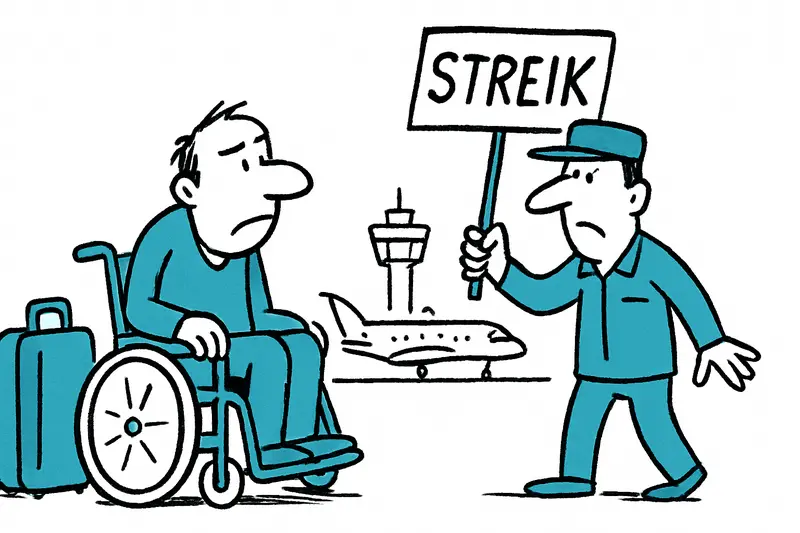
Employees of the PMR assistance service have announced indefinite strike dates. An analysis of what this means for travelers — and what is missing in the discourse on Mallorca.
Strike at Palma Airport: Why travelers with reduced mobility now have to wait longer
Key question
Who ensures that people with disabilities or reduced mobility can reliably get through the airport even on stressful travel days — and why does this apparently no longer work?
The situation on site
Today, when rolling suitcases pile up under the large arrivals board and the soft beep of the boarding pass readers sets the rhythm, the people who support travelers with reduced mobility may be missing. Employees of the so-called PMR assistance service have announced indefinite strikes and will walk out in several time windows, as reported in Palma before the departure chaos: Ground staff strike plans put the island to the test. A 24-hour strike is even planned for Saturdays. According to the works council, more than 9,000 overtime hours were ordered at short notice last year.
Strike schedule (brief)
Monday: 12:00–15:00, 18:00–21:00. Tuesday: 05:00–07:00, 12:00–14:00, 18:00–20:00. Wednesday: 12:00–15:00, 18:00–21:00. Thursday: 05:00–07:00, 12:00–14:00, 18:00–20:00. Friday: 12:00–15:00, 18:00–21:00. Saturday: all day. Sunday: 12:00–15:00, 21:00–00:00.
Critical analysis
What comes together here is not just a conflict between employers and employees. It's about safety, dignity and planning certainty for a particularly vulnerable group of travelers. Overtime assigned at short notice means rosters are not binding. Those who rely on an agreed time — an elderly couple, a woman with a stroller, a wheelchair user — risk being left alone or waiting a long time.
On a structural level, another shortcoming becomes apparent: the interface between airlines, the airport company and the external assistance provider is often renegotiated and poorly coordinated, as noted in More planes, same airport: Why Palma Airport is experiencing more delays right now. When providers have to work with tight staffing levels, the entire assistance offering starts to fall apart.
What's missing in the public discourse
Discussion usually focuses on flight delays and lost luggage. The perspective of affected travelers often remains invisible. Concrete figures on average waiting times for PMR services at different times of day are lacking, as are transparent obligations in service contracts and reliable information for affected passengers before traveling. Also rarely mentioned: How are overtime hours documented and compensated? And is there a predictable staff buffer for holidays and peak season?
An everyday scene from Palma
Imagine: an afternoon in the terminal, sunlight streaming through the glass facade, cicadas chirping outside. An elderly woman with a walker waits at the gate, her daughter speaks nervously on the phone, a young man on crutches checks his watch. At the kiosk the barista pulls one last espresso. No one says how long the assistance will take. These small, vulnerable moments are everyday life in Mallorca — and they become more visible with this labor dispute.
Concrete solutions
1) Binding rosters: company agreements that limit short-notice changes and guarantee minimum shifts. 2) Staff reserve: the airport and contractors must jointly provide a buffer team for peak times and sickness. 3) Transparent time tracking: disclosure of overtime statistics to the works council and automatic overtime compensation. 4) Emergency protocol for travelers: a publicly available plan for how affected passengers will be assisted during strikes — including phone numbers and wait-time estimates. 5) Communication campaign: airlines should proactively inform at check-in if PMR services may be affected so travelers can plan alternatives.
Practical tips for travelers
If you're flying in the coming days: allow extra time, register your support needs with the airline early and ask about alternatives at check-in. On arrival: seek the information point or ask at the terminal service desk — and keep a backup contact (family, taxi) ready.
Conclusion
The strike is not just an industrial dispute; it exposes systemic weaknesses. Mallorca is a holiday island, but also a daily environment for people with special needs. An airport that takes accessibility seriously must ensure that affected services are stable and reliable. Short-notice overtime and shaky rosters are no longer an operational risk — they are a risk to travelers' participation, a concern echoed in coverage such as Strikes at Palma Airport: Why the Weekend Chaos Could Last Longer This Time.
Frequently asked questions
Will a strike at Palma Airport affect passengers with reduced mobility?
What should I do if I need assistance at Palma Airport during the strike?
When is the strike at Palma Airport happening?
How much extra time should I allow at Palma Airport during the strike?
Can people with wheelchairs or walkers still travel through Palma Airport safely during the strike?
Why is the Palma Airport assistance service going on strike?
What can travelers with reduced mobility do if assistance is delayed at Palma Airport?
Is Palma Airport affected differently on Saturdays and Sundays?
Similar News

Who Benefits from the Half‑Hourly Flight on the Edge? Aena, Investments and the Island's Interests
Almost one billion euros is flowing into Son Sant Joan. The figures show the scale of investment and expected beneficiar...

Are the Balearic Islands the Southern Border of Europe? A Reality Check on Immigration
The Balearic Islands are again calling for EU aid after a sharp rise in arrivals by sea. Conflicting priorities between ...

"Expensive chaos" and many open questions: What clients can do when a lawyer suddenly stops responding
Several clients complain that a well-known German lawyer in Mallorca has been unreachable for months. Key question: What...

TV tip: 'The Last Problem' — Mallorca as the setting of a classic crime
A classic whodunit on Mallorca: A new miniseries set in spring 1959 brings storm, an isolated hotel and a dense web of s...

Nipping Sea Creatures: Why Bathers in Cala Major and Elsewhere Should Be Cautious
In Cala Major, bathers have reported being nipped by small fish. What is behind it, how can problems be avoided — and wh...
More to explore
Discover more interesting content

Can Cap de Bou

Townhouse Lleo 72
