
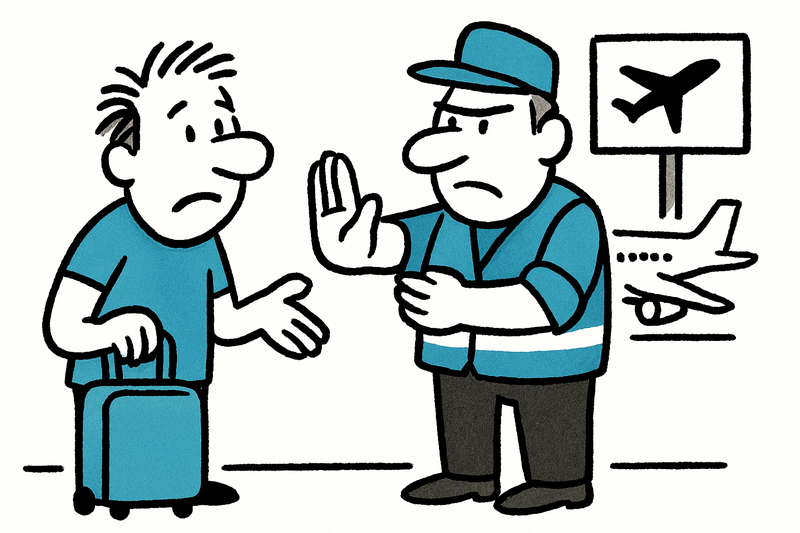
Palma before the departure chaos: Ground staff strike plans put the island to the test
Threats of strikes by ground staff could hit the heart of the island in August: flight cancellations, long queues and a tourism domino effect. Who bears the responsibility — and what solutions exist?
Strike threats cause unrest at Son Sant Joan
The announcements in Terminal A currently sound like a harbinger: travelers with suitcases anxiously checking flight times, the clatter of baggage tugs, the distant hum of air-conditioning — and the cicadas chirping outside on the apron. Of all times, in the hottest week of the season Palma faces a trial. Groundforce and Azul Handling have announced strike plans at Palma Airport starting on August 15 and potentially recurring strikes by Azul Handling from mid-August until the end of the year. For an island that relies on every single arrival in summer, this is dire news.
Key question
How resilient is the airport really — and who pays the price if the invisible hands behind the scenes fail? This is the central question hanging over the coming weeks like a storm cloud.
Why employees are angry
The list of complaints is long: staff shortages, massive overtime, precarious contracts and wages that are no longer enough for many to live on. 'We cannot endure another season', says a works council spokeswoman. That sounds simple — but it is not. Behind these words are rosters, night shifts in heat, non-negotiable safety requirements, and an economic reality where subcontractors often react to cost pressure, a dynamic visible in recent coverage of the Ryanair strike hitting Palma.
What is missing in the public debate
The headlines concentrate on flight cancellations and tired holidaymakers. Less visible are three problems: the precarious situation of subcontractors, the training and certification hurdles for specialized ground staff — highlighted in reporting on what Mallorca needs to know about Ryanair ground staff strikes, and the network dependency of airlines. If a baggage tug or a refueling team is short, it affects not just one flight but an entire rotation. These cascade effects do not appear in any statistic — until the flood of complaints begins.
Concrete risks for Mallorca's everyday life
In the long term, more is at stake than a few delayed aircraft. Hotels plan capacity, restaurants order fresh supplies, car rental companies and taxis schedule shifts around arrival times. If a block of flights is cancelled, the effects ripple through: cancelled nights, empty reservations, declines on Palma's promenade, and, as reporting warns, travelers must rethink plans now. For the people who live and work here, it's not just an economic problem but a logistical nightmare.
How airlines and the airport respond — and what they hide
Airlines try to counteract with extra flights, larger aircraft and reserve teams. But every solution costs money and time. Airlines could consolidate flights or delay departures, but that only shifts the problem. The airport operator has limited levers: it can inform and coordinate, but it cannot replace private contractual relationships between companies.
Safety and service: no easy compromises
An important, often taboo topic is safety. Faster turnarounds and shortened shifts must not create safety gaps. At the same time, chronic overloading of staff is a safety risk. Here labour law and aviation requirements clash — a tightrope walk that has so far been too rarely discussed publicly.
Practical approaches — short and medium term
There are ways to ease the crisis if all sides show willingness to compromise: a time-limited financial bonus for particularly burdened shifts, rapid temporary hires to bridge the high season, official mediation by the island government and a coordinated airline emergency plan. Technical measures such as more efficient baggage handling or prioritized service windows could also help — but they require investment and planning.
Structural changes — longer-term opportunities
In the long run the industry must look beyond day-to-day operations. Better training programs on Mallorca, fixed minimum standards for contracted subcontractors and transparent shift models would make jobs more attractive. A public-private support program for qualification could be a lever. That would not only be humane. It would be economic: reliable service protects the island's tourism base.
What should happen now
First: immediate, binding talks with neutral moderation. Second: a short-term emergency package for especially affected passengers (hotlines, refund mechanisms, clear information policy). Third: binding commitments to increase staff for next season. All this requires political backing — market logic alone is not enough.
View from Palma: voices on the ground
At the taxi rank outside the terminal a hotel receptionist tells of the first inquiries: 'Guests call asking if they should even travel.' At the baggage belt a technician sits, his hands still oily from the shift, and sighs. The airport soundtrack — loudspeakers, suitcases, footsteps — suddenly takes on a different, more nervous melody. It makes you think: who will stitch the thread if it snaps?
Conclusion: no easy solution, but a duty of responsibility
The coming weeks will show how resilient Son Sant Joan and Mallorca's tourist infrastructure really are. A strike would not be an isolated flare-up but a warning sign for a system that needs adjustment. The opportunity is to step away from short-term thinking now: more staff, fairer contracts and a voice for those who otherwise remain invisible would make the island more resilient. And that would be welcome news for all of us in a noisy terminal, under the burning afternoon sun and with clattering wheeled suitcases.
Frequently asked questions
Will the Palma Airport strike affect flights to Mallorca in August?
What should I do if my Mallorca flight is delayed or cancelled during a strike?
Why are ground staff in Palma Airport planning to strike?
Is it still worth travelling to Mallorca if airport strikes are announced?
How do strikes at Palma Airport affect hotels and taxis in Mallorca?
What part of airport operations is most likely to be disrupted at Palma?
Can Palma Airport keep running if ground staff go on strike?
What can passengers in Mallorca do to prepare for a strike at the airport?
Similar News
Release after bloody attack in Palma: Why the court's decision raises questions
An 18-year-old who allegedly inflicted a serious neck injury on a man at Plaza Gomila using a wristwatch wrapped around ...
Kidnappings in Inca: Three young men forced into car trunks and abused in the forest – a reality check
In Inca, three 18-year-old men were forced into car trunks by masked assailants at the Plaça des Bestiar, taken to a for...
Spreading Massification: The Brake That Still Has Much Work to Do
Marga Prohens announces limits on volume tourism. The measures sound harsh — but are they enough to save everyday life, ...

Through the Keyhole onto the Party Yacht: How Daniela Katzenberger Is Planning Her 40th on Mallorca
Daniela Katzenberger turns 40 and wants to celebrate it on the island — likely with a boat, cake and her mother. A relax...
By Boat Instead of the Road: Palma's Water Bus — a Reality Check
The 'Bus Nàutic' launches in two stages — but questions remain over interim operations, fares and environmental requirem...
More to explore
Discover more interesting content

Can Cap de Bou

Townhouse Lleo 72
