
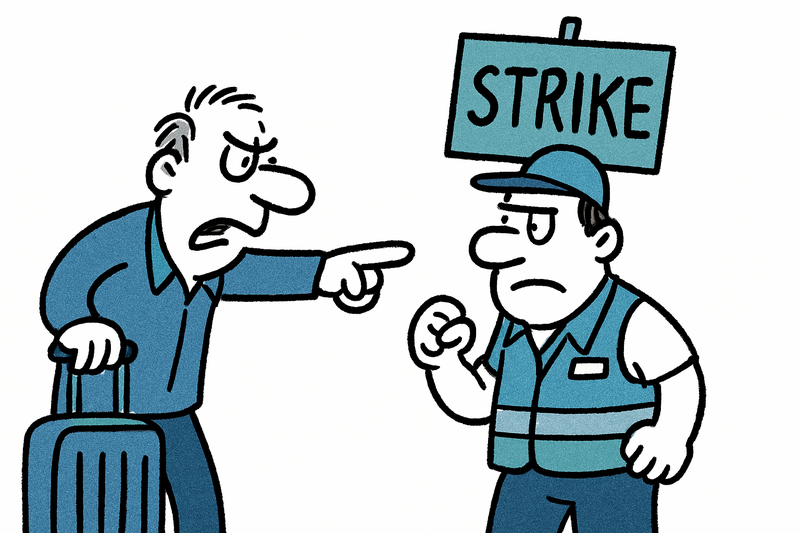
Ryanair Ground Staff Strikes: What Mallorca Needs to Know
From mid-August repeated strikes by the Azul Handling ground crew are looming — including at Palma de Mallorca Airport (Son Sant Joan). We analyse how severely Mallorca may be affected, what chain reactions to expect and what practical steps travellers and local businesses should take now.
Key question: How hard will the new ground staff strike hit Mallorca's main airports?
The news sounds like a loud clang in the ear: from August 15 employees of Azul Handling's ground services at Spanish airports will stop working — Palma de Mallorca Airport (Son Sant Joan) is also affected, as detailed in Strike at Ryanair Ground Handler: A Stress Test for Mallorca’s Summer Operations. Three days at the start, then regular actions until the end of the year on Wednesdays, Fridays, Saturdays and Sundays, focusing on peak times in the early morning, at midday and in the evening, as highlighted in Strikes at Palma Airport: Why the Weekend Chaos Could Last Longer This Time. For an island that breathes through air traffic, this is more than just a nuisance.
Why it hurts: A look behind the scenes
In the early morning, when the trolleys crunch across the apron and the beeps of the baggage conveyors echo through the halls, thousands of holidaymakers begin their day. If the ground crew is absent, this rhythm stalls: delayed loading and unloading, slower cleaning, longer turnaround times at the gates. For Palma this means: longer queues at the parada de taxis, overcrowded buses heading to Playa de Palma and hectic hotel check-ins, where reception desks often face staff shortages.
The union accuses Azul Handling of disregarding workers' rights. That is bitter, but not just an industrial dispute between two parties: on Mallorca the effects ripple far into the local fabric. Taxi drivers report that 20–30 minute delays during peak times significantly reduce the number of trips. Caterers and room service schedule their shifts around flight arrivals — if the tight time window disappears, the whole logistics chain tips over.
What is often missing in the public debate
There are three underestimated aspects: first, the chain reaction in hospitality: delayed guests lead to later check‑ins, additional staffing needs and sometimes cancellations when connecting travel is missed. Second, the impact on seasonal employment contracts: many temporary workers on the island rely on predictable shifts; strike uncertainties hit this source of income directly. Third, communication: travellers often receive only sparse information, as explained in Ryanair Strike in Mallorca: Who Pays the Price — and What Travelers Should Do Now; the result is uncertainty, lost time and an overcrowded information desk at the airport.
Concrete opportunities and solutions
The crisis can — if handled smartly — also be an opportunity for improvements. Here are concrete steps authorities, airports and airlines should take now:
1) Short‑term easing: Airlines should call on reserve staff, proactively offer rebookings and provide clear, regular status updates via SMS and apps. Hotels and hosts should communicate flexible check‑in times.
2) Medium‑term cooperation: Airport operators and the Balearic government could act as mediators: creating joint negotiation platforms with Azul Handling and the unions would establish a basis before wildcat strikes leave an economic shambles.
3) Strategic redundancy: Introducing backup handlers for critical periods, standardized emergency protocols and a central information hub at the airport, such as the services on the Aena Palma de Mallorca airport page, would significantly strengthen resilience.
4) For travellers: Early arrival, flexible connection planning, travel insurance with delay coverage and knowledge of EU passenger rights can help protect nerves and wallets.
Practical tips for guests and local businesses
If you have a Ryanair flight in the coming months: allow at least one extra hour for check‑in and luggage. Subscribe to the airline's push notifications, check alternative connections (e.g. via Barcelona or Madrid) and keep hotel and transfer numbers to hand. For hoteliers, taxi operators and caterers: create internal emergency plans, communicate transparently with guests and staff and coordinate schedules for peak times.
A sober outlook
Mallorca remains attractive — the beaches, the sea breeze on the Passeig Marítim and the aromas of fresh ensaimadas will not change that. But island life is tightly linked to the punctuality and reliability of air traffic. If the conflict escalates, noticeable drops in customer satisfaction and additional costs cannot be ruled out. The opportunity lies in using this wake‑up call: better working conditions for ground staff are also a contribution to reliability for travellers — and in the long run to Mallorca's competitiveness.
On August 15, when the sun over Son Sant Joan is already high and the public address system starts chirping in several languages, it will become clear whether the parties react quickly enough — or whether the island will once again have to improvise.
Frequently asked questions
Will Ryanair ground staff strikes affect Palma de Mallorca Airport?
When are the Ryanair ground staff strikes expected in Spain and Mallorca?
How can a ground staff strike delay my flight from Mallorca?
What should travellers do if they are flying to or from Mallorca during the strike?
Can Ryanair strikes affect taxis and hotel check-ins in Mallorca?
Is the Ryanair strike likely to cause long queues at Palma Airport?
What rights do passengers have if their Mallorca flight is delayed by a strike?
Why does a ground staff strike matter so much for Mallorca?
Similar News
Why the Striped Breams in Cala Pí Should Be a Wake-up Call
Once again bathers in Cala Pí were surrounded while swimming by small, nippy fish — some wounds bled. Time for clear rul...
Daily from New York: How Palma's Air Traffic Is Growing — and What Must Change
United will increase the Newark–Palma service to daily flights in 2027 (Boeing, 231 seats). Strong tourist numbers clash...

When Love Ends in Shards: Destruction in Son Vida and the Questions That Remain
In Son Vida a relationship dispute escalated: a woman destroyed furniture in a luxury villa, later pressed a panic butto...

Who Bears the Burden? Mallorca Between Tenant Protection and Landlord Fears
Madrid's new housing decrees strengthen tenant rights — but on Mallorca concern is growing: will the law drive small lan...
On the Edge: What Mallorca's Airport Loses If a Major Low-Cost Carrier Falters
The company that operates numerous connections from Palma to France and domestically is negotiating with creditors to re...
More to explore
Discover more interesting content

Can Cap de Bou

Townhouse Lleo 72
