
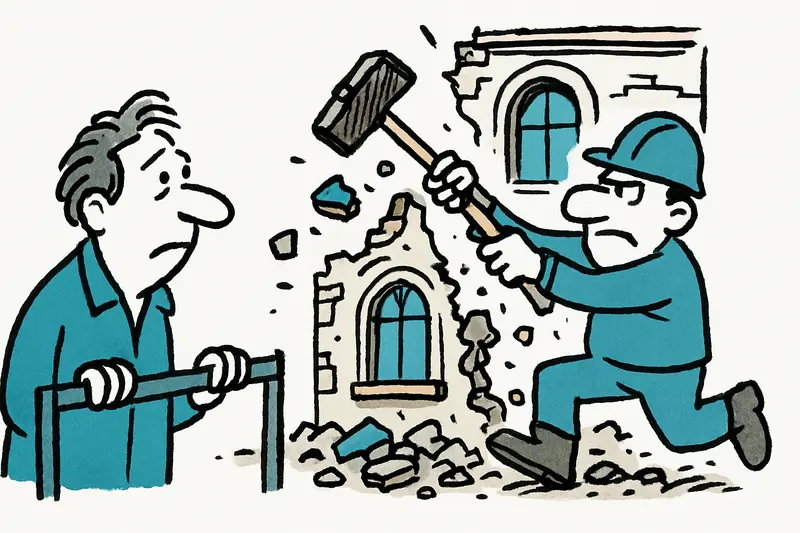
Demolition in Palma: When Reconstruction Replaces the Original
On Calle 31 de Diciembre the Bennazar House from 1926 is being taken down — permitted, contested, dusty. The demolition ignites an old question: Does Palma protect its heritage, or is it rebuilding it anew as a backdrop?
Demolition in Palma: A Piece of City History Buried Under Rubble
On the morning the jackhammers tore through the silence of Calle 31 de Diciembre, the few passers-by noticed immediately: it was not just a house disappearing but a slice of everyday life. Dust settled on the tables of the café opposite, bells rang at midday, and workers carried toolboxes by. The Bennazar House from 1926 is being dismantled — authorized, disputed, irretrievable.
The Key Question
Do we want to preserve historical substance — or will an apparently "authentic" façade soon be enough as a memory? This question dominates the debate sparked by the demolition. For many residents, reconstruction is no consolation. "It's like repainting an old family photo," says a neighbor who has lived on the street for decades. For investors, square meters and returns are often the driving arguments.
What Happened So Far — Briefly
The owners plan luxury apartments with additional floors. In a notice they promised to restore the classical façade "faithfully". The monument protection association ARCA filed objections; the city administration approved the demolition citing the building's poor condition and the fact that it is not listed as a protected monument. A typically Mallorcan scene: bureaucracy, emotions and construction noise collide.
Few Aspects That Are Often Overlooked
First: materiality and craftsmanship. Anyone who truly knows the house understands: original substance cannot be replaced one-to-one. The bricks, the wood, the patina — they tell a story that no imitation can possess. For a recent example of what can happen when historic fabric is lost, see Collapse at Palma's City Wall: What Needs to Happen Now. Second: ecological follow-up costs. Demolition and rebuilding generate large amounts of construction waste and a high CO₂ footprint. Third: the legal vacuum. As long as buildings are not formally protected, the decision often comes down to the size of the wallet, not the character of the urban landscape.
Analysis: Why This Case Is More Than a House
The conflict touches three levels. The first is legal: how easy or difficult is it to obtain protected status? The second is economic: in central locations like Calle 31 de Diciembre ownership interests are high. The third is socio-cultural: who decides which story Palma tells? If historic façades in the future only reappear as stage sets, little of the real heritage will remain.
There is also a practical problem: "faithful" often means modern structures behind an old shell. Apartments become more expensive and neighborhoods change. The result: a piece of city life is displaced — it is not just a single house that disappears.
What Solutions Are Possible Now?
There are measures that have been too rarely discussed so far:
Early inventory: A central, publicly accessible documentation requirement for historic buildings. Photos, material samples and measurements must be taken obligatorily before any demolition.
Stricter preservation rules: Expansion of formal protection categories and binding minimum standards for preserving substance instead of mere façade retention.
Incentives instead of bans: Financial grants, tax incentives or low-interest loans for owners who renovate rather than demolish.
Control of reconstructions: Independent experts and a municipal body that verifies claims of "faithful" reconstruction — including mandatory proof of materials and techniques.
Temporary use concepts: Before the excavators roll, projects such as interim uses, studios or cooperative models could be explored. Often solutions can be found that are both economically viable and compatible with the urban landscape.
Such measures require political will. They take time. But they would prevent every demolition from becoming a precedent for urbanization at the expense of cultural heritage.
What to Expect on Site
The city administration and the owner promise to rebuild the façade using photos and material samples. Practitioners warn: reconstructions are time-consuming and will still look different. ARCA has not ruled out further legal steps; related reporting includes Demolition halted in Palma: What Gaspar Bennazar’s house teaches us about heritage protection. For residents the uncertainty remains: How long will the works take? How noisy will the neighborhood be? And above all: How will the neighborhood change when new, more expensive apartments suddenly appear behind a familiar façade?
A Loud, Dusty Signal
The demolition of the Bennazar House is not an isolated case; a similar controversy unfolded over a corner plot that may replace the Bar Sagrera, as discussed in New residential building instead of Bar Sagrera? Dispute over the corner plot in Palma. Between bocadillos, construction noise and the heat of the afternoon sun, a decision is being made about whether we keep our stories — or end up preserving them only in replicas. The case offers a chance to sharpen the rules. Whether we seize it is up to politicians, owners and those of us who live here.
Frequently asked questions
Why are old buildings in Palma sometimes demolished instead of restored?
Can a historic façade in Mallorca be rebuilt after demolition?
Is demolition in central Palma a problem for the neighbourhood?
What happens to a building's original materials when it is demolished in Mallorca?
Does demolition and rebuilding create more waste and emissions in Palma?
What is ARCA's role in heritage disputes in Palma?
What makes Calle 31 de Diciembre important in Palma's housing debate?
How can Mallorca protect historic buildings without banning all new development?
Similar News
When Housing Becomes a Matter of Survival: Mallorca Between Rental Frenzy and Everyday Life
The case of 87-year-old Maricarmen showed that on Mallorca many people's lives are poised between affordable and uninhab...
Autumn in Mallorca: When Melancholy Gets a Window
Why autumn quietly tightens here — and how to make use of the mood: walks, culture, candles and the light from Palma to ...

Near-miss on Lanzarote: Landing Ryanair Jet and Iberia Takeoff — what really went wrong
On Lanzarote there was a dangerous incident: A Ryanair flight (FR5910) from Dublin landed on runway 03 while an Iberia E...

Eurowings introduces new Premium Business seats on Mallorca routes
From December 1, selected Eurowings flights to Palma and other destinations will feature eight particularly generous sea...
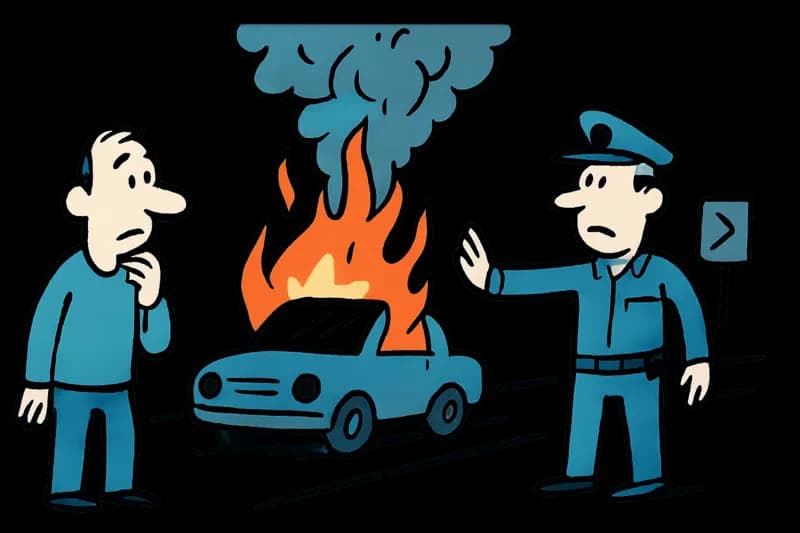
Car on MA-13 near Inca in flames – a safety check for the island
A vehicle caught fire on the MA-13 towards Alcúdia on Tuesday afternoon. The driver was uninjured, the car was destroyed...
More to explore
Discover more interesting content

Can Cap de Bou

Townhouse Lleo 72
