
Disrespect at Sea: How Mallorca's Coasts Can Tackle the Chaos
Disrespect at Sea: How Mallorca's Coasts Can Tackle the Chaos
Arrels Marines has launched the campaign “La mar no és teva” earlier than usual. Jetskis in bathing areas, boats on Posidonia meadows and parties in protected zones show a lack of control and clear solutions. A reality check with concrete, everyday proposals.
Disrespect at Sea: How Mallorca's Coasts Can Tackle the Chaos
Guiding question: Why is thoughtless behaviour escalating on our beaches and how can we get the situation back under control?
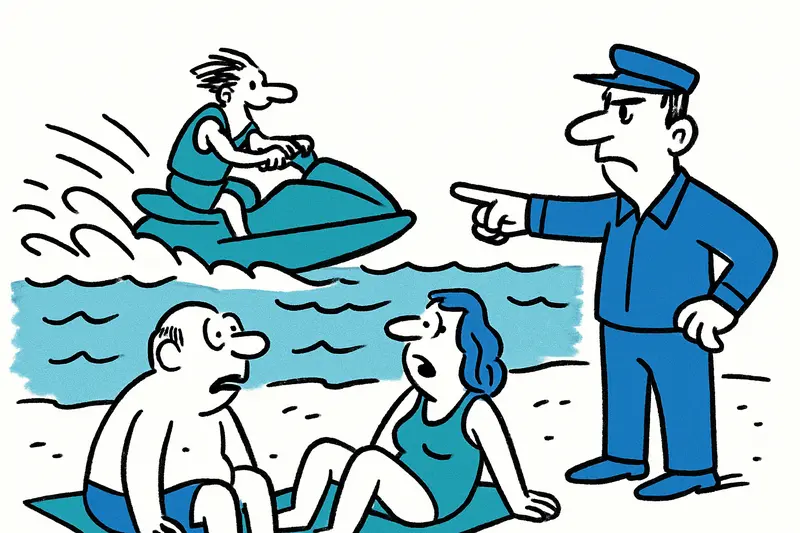
Arrels Marines has brought forward “La mar no és teva” this year because things already happened in the first weeks of June that are usually only seen in mid‑summer. Jetskis racing past bathing areas at high speed. Boats anchoring on Posidonia meadows. Parties in officially protected marine areas. The activists call for: document, report, act. The question is legitimate: are appeals and hashtags still enough?
Critical analysis: The incidents are not just individual disrespect. They are a symptom of a system with gaps. On Mallorca, many user groups converge in a short time in confined spaces: locals, day trippers, charter customers, recreational boaters, jet skis and commercial operators. Captain papers, charter terms and nautical charts are rarely checked. Harbours and marina operators enforce fine schedules, but monitoring at sea is thin. When boats anchor on Posidonia meadows without consequence, it is often not only a lack of will — but a lack of presence on the water and clear, visible infrastructure like authorised mooring buoys.
What is missing in the public debate: first, the distribution of responsibility. Who is responsible for what — the harbour authority, the Guardia Civil, the island council, the municipality? Often this is relegated to the environmental scene instead of being treated as a municipal and maritime task. Second point: the role of the charter industry. Many charter customers do not know what Posidonia is or how an anchor causes damage. The industry should provide mandatory briefings and clear maps of protected areas, documented by signature, as the problems caused by private boat rentals illustrate. Third: the costs and personnel for maritime controls are hardly discussed. Controls cost money. That is uncomfortable, but necessary.
Everyday scene from Mallorca: It is Saturday afternoon on the Passeig Marítim in Palma. Children shout, a tram toots, phones on the water flash short clips — “look how close the jetskis are.” On the horizon motorboats head for a cove; a couple fumbles with a heavy chain, searching for an anchoring spot. On the beach an elderly couple who have been coming here for decades shake their heads: “It used to be quieter,” he says, pointing to the patchy sea with yellowish Posidonia fronds drifting to the surface. Scenes like this repeat at Port de Pollença, Caló des Moro and countless small bays; recent coverage of a close approach in Banyalbufar highlights how these coves are under pressure, as in the Banyalbufar catamaran case.
Concrete, pragmatic and locally implementable solutions: First: designation and installation of mooring buoys in sensitive coves — not just as an idea, but financed through a small environmental surcharge on charter contracts and harbour fees. Buoys prevent anchoring on Posidonia and are proven in other Mediterranean regions, a lesson comparable to events like Barcolana in Trieste. Second: mandatory briefing for charter customers on protected areas and basic anchoring rules, documented by signature. Boat rental companies and organisers must be held liable if repeated violations by their customers occur. Third: clearer information infrastructure on land — signs at access points to popular beaches with maps showing protected zones; QR codes linking to short videos on correct anchoring. Fourth: support local observer networks, not replace authorities — Arrels Marines is right to call for documentation. An official reporting point or app that collects and prioritises reports would make controls more efficient. Fifth: temporary exclusion zones or speed limits for watercraft in bathing areas; markers and radar buoys can help make rule-breakers visible.
What doesn't work: mere appeals without visible sanctions or alternatives. Petitions alone change little when at the same time boats anchor with impunity. Also, the hope that education alone will change all behaviours is naive. People need clear rules, visibly enforced, and practical alternatives — like affordable, marked mooring spots or safe party areas on land.
Practical entry points for citizens: filming is good, but reporting correctly is better. Photos or videos with date, time and location plus a short report to the relevant municipality, the Guardia Civil Marítima or Arrels Marines are the next steps. Anyone booking a charter should look for environmental guidance and, if necessary, hold the provider to account. On the next beach walk: look out to sea, check on‑site signage and inform other visitors politely — sometimes social pressure works better than the threat of fines.
Punchy conclusion: Mallorca's coast is not a backdrop to be used at will. It is a habitat, an economic factor and a retreat all at once. Arrels Marines' early campaign is a warning signal. This is no longer just about outrage on social media but about concrete measures: better monitoring, mandatory briefings for charter customers, more mooring buoys and clear responsibilities. Without that, summer will remain a constant clash of interests — and Posidonia will pay the price.
Frequently asked questions
Why is Mallorca seeing more bad behaviour at sea so early in the season?
What is Posidonia in Mallorca, and why is anchoring on it a problem?
Where in Mallorca is careless boat and jet ski behaviour most visible?
What can visitors to Mallorca do if they see unsafe behaviour at sea?
Are mooring buoys a better solution than anchoring in Mallorca’s coves?
What should charter boat customers in Mallorca be told before going out?
Who is responsible for controlling bad behaviour at sea in Mallorca?
What are the most practical ways Mallorca can reduce chaos on the coast?
Similar News

Adrien Brody strolls through Mercat de l'Olivar – celebrity visit leading to Sa Pobla
Actor Adrien Brody was casually spotted at the Mercat de l’Olivar: tapas, fish stalls and later a stop in Sa Pobla spark...
Who can pick up whom? The complicated life of Mallorca's taxis
Three years after the inter-municipal service, empty runs are rarer — but there is a lack of equal treatment, transparen...

When the Tap Only Runs Sometimes: Why Municipalities in the Balearic Islands Are Now Rationing Water
Deià, Valldemossa, Esporles, Sóller and several places on Menorca are scaling back water supply. Who is responsible, why...
Battle for the Ramp: Why Cala Gamba Needs More Than Enforcement
The Guardia Civil intervened in Cala Gamba — residents breathed a sigh of relief, but unease remains. Key question: Are ...
He dances at the Duty-Free: How an airport employee brings a smile to Palma
A Duty-Free employee at Palma Airport created a viral TikTok with dancing breaks. Why the scene is more than just an int...
More to explore
Discover more interesting content

Boat Tour with BBQ along Es Trenc Beach

Private transfer from Mallorca Airport (PMI) to Pollensa
