
Drone paralyzes Palma — why a small device makes our airport vulnerable
Last night a drone visible in the sky stopped flight operations at Palma for about 35 minutes. An incident with symbolic impact: why is our airspace protection insufficient?
Drone paralyzes Palma — why a small device makes our airport vulnerable
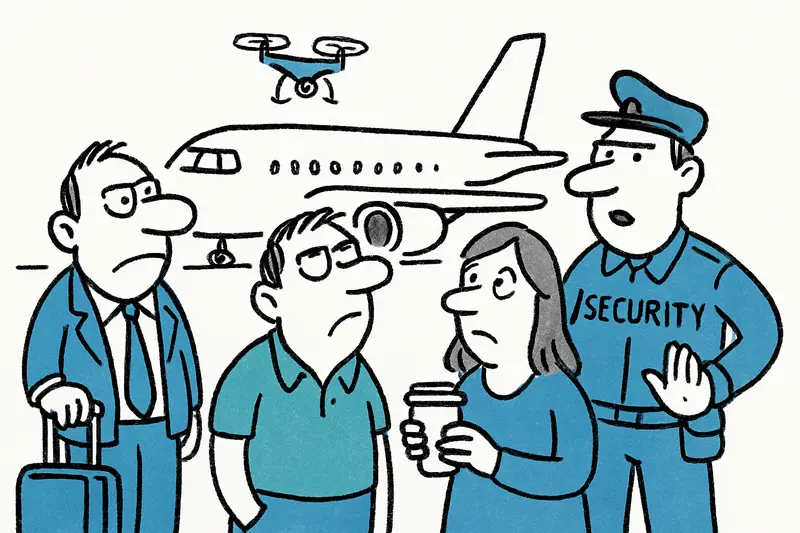
Yesterday around 7:00 pm the usual bustle at Palma Airport suddenly fell into an oppressive silence. The rolling of the baggage carts, the public address announcements in Terminal A, the smell of freshly brewed café con leche and the distant cries of the seagulls at the harbour — all stopped because a single drone was sighted near the runways. For 35 minutes, doubts about a small unmanned device were enough to freeze the entire flight operation.
The facts — short and loud
Runways were no longer clear, eight flights were diverted, aircraft arrived late, and some passengers had to make unscheduled stops en route. In the terminal the loudspeakers repeated, “We are working on solutions.” On the apron security and airport staff distributed information. At exit C a taxi driver remarked dryly, “This happens here more often, but rarely in the middle of the evening.” A sentence that swings between resignation and bitter humour.
Key question: How can a single drone cause so much disruption?
The question is not only technical; it is fundamentally organisational: airports only work with a clearly controlled airspace. As soon as the position of an unmanned aircraft is uncertain, air traffic controllers often have only a hard decision — to minimise risk by stopping takeoffs and landings. That is correct and necessary, but it also exposes a weakness: if detection and identification do not work reliably, a shutdown is the standard response.
What is often missing from the public debate
First: Not every drone is malicious. Many incidents are due to ignorance or negligence: holidaymakers rent drones, take off without briefing and ignore no‑fly zones. Renting to tourists, often without clear instructions, is a hot topic that is not discussed enough. Second: Technical gaps are real. Not every airport has a combined system of radar, RF detection and video analysis that reliably locates and classifies small multirotors. Without these means authorities are left with the blanket stop — an ineffective but safer reflex. Third: Cascading effects on an island with a tight schedule can quickly become dramatic. A half‑hour delay acts like a domino: connecting flights, baggage logistics, rental car desks and local bus lines get disrupted, as reported in Drone over Palma: Menorca refueling stop and the question of Mallorca's airspace safety. The disturbance multiplies and often hits the weakest — passengers with tight connections.
Concrete opportunities and solutions
The incident is annoying — but it is also a call for change. Concrete measures that would make sense here in Mallorca include:
Expand detection technology: A combination of radar, RF sensors and cameras enables rapid localisation and classification. Used together, false alarms could be reduced and air traffic controllers would receive more precise information. Geofencing and rental obligations: Drone rental companies should be required to provide devices with geofencing enabled and give a short, mandatory briefing on no‑fly zones. That would prevent many accidents before they happen. Rapid coordination structures: A local taskforce made up of the airport, Guardia Civil and island police that can intervene quickly, recover devices and identify those responsible would strengthen both deterrence and clarification. Public education: Information campaigns at rental car desks, the airport and hotels — simple, concise guidance: where you may fly, what a mistake costs, how to recognise restricted zones? Legal clarity and visible sanctions: Fines are of little use if they are not credibly enforced. Visible sanctions create deterrence — and trust among travellers who depend on punctuality, as discussed in Drone in the Sky over Palma: Why 35 Minutes of Chaos Aren't the Whole Story.
What travellers should know now
The most important advice for passengers remains: stay calm and be prepared. Arrive early, check airline apps and speak with ground staff in case of diversions. It is annoying — but a walk on the beach a few hours later is usually a better alternative than waiting for hours on the taxiway.
What this means for the island in general
Mallorca lives from tourism; our transport network is tightly scheduled. A small device can unsettle a larger system. Yesterday’s incident is a wake‑up call: we need technical investments, clearer rules for renters and more awareness — without turning the joy of flying into a fundamental loss of control. Authorities are currently investigating whether there was any intent; see Drone over Palma Airport: Guardia Civil Investigates – How Safe Is Our Airspace?. Until then the incident remains a clear signal: our airspace deserves better protection so that daily life at the terminal can remain what it should be — a somewhat chaotic but reliable part of island life.
On site, speaking with people, enjoying a second café con leche — we are following up and will report as soon as new information emerges.
Frequently asked questions
Why can a drone stop flights at Palma Airport so quickly?
How common are drone incidents near Palma Airport?
What should travellers do if their flight at Palma Airport is delayed by a drone alert?
Can tourists legally fly drones in Mallorca?
What happens when a drone sighting closes runways at Palma Airport?
What airport technology helps detect drones in Mallorca?
Why are short drone delays such a problem for Mallorca?
What would make Palma Airport safer from drone disruptions?
Similar News
After Being Admitted to Hospital Again: Heinz Hoenig and the Questions We Should Ask in Mallorca
Long-time Mallorca resident Heinz Hoenig was admitted to hospital again. A clear “what next?” is missing from the covera...
Yellow Alert: Is Mallorca Prepared for the Next Rain Band?
Aemet has issued a yellow alert for the south, southwest and the island's interior. Thunderstorms and heavy rain are for...
Kegel brothers trial postponed: Why Mallorca must wait for a verdict
The trial of 13 German holidaymakers will not begin until May 2028. The long wait raises questions — for victims, defend...
Chaos on Palma's Runway: Why the Summer at the Airport Was So Disrupted
This summer laid bare where Palma airport is faltering: only just over half of departures were on time and seven percent...
Cocaine Offer on Ham Street: Why the Open Trade Should Ring Alarm Bells
In the middle of Pare Bartomeu Salvà a tourist was offered a packet of cocaine as part of a sunglasses deal. A short int...
More to explore
Discover more interesting content

Can Cap de Bou

Townhouse Lleo 72
