
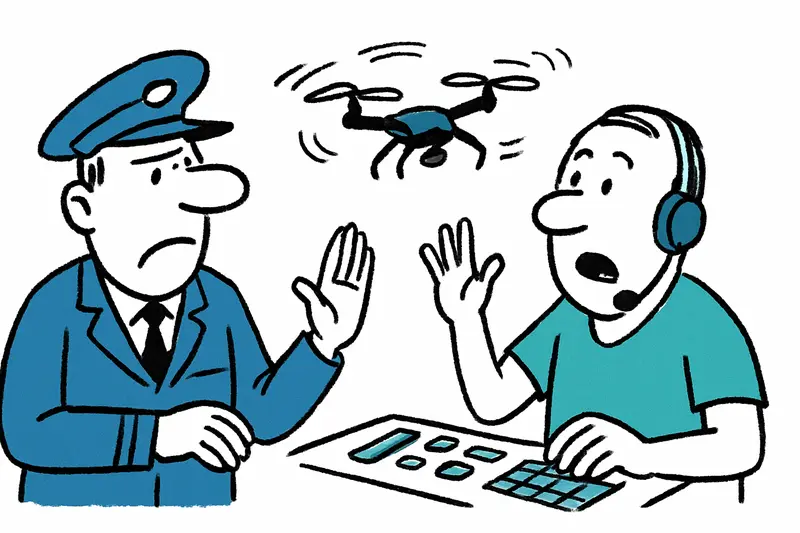
Drone Alert on Approach from Palma: Why Aborting the Landing Was the Right Decision
A flight from Palma had to abort its approach to Hamburg after a drone alert was issued. The incident shows how quickly a small aircraft can disrupt air traffic—and where prevention must begin.
An alert, a go-around—and a question for everyone who flies drones
How much has to happen before a supposedly harmless leisure flight becomes a risk to others? On Sunday, November 22, a Eurowings aircraft from Palma was approaching Hamburg when a drone alert was reported. The crew aborted the landing approach, climbed back into the air, and circled once more. The aircraft was then able to land safely.
That is the key point: the approach was not continued at any cost. A go-around takes time and fuel and can be stressful, but it is a standard safety maneuver. From the outside, it can sometimes look dramatic. In the cockpit, the decision is clear: if the situation on approach does not seem safe enough, create distance and try again.
A small device, a major disruption
Drones are easy to buy, quick to get airborne, and a hobby for many people. That is part of the problem. Operating one may seem straightforward, but responsibility does not end at your own garden fence. Near an airport, drones can disrupt operations and force crews to take evasive action or abandon an approach. Even without a collision, this is no trivial matter: in busy air traffic, a single alert can affect other aircraft and operations.
The incident in Hamburg is not just distant news for Mallorca. Aircraft take off from and land in Palma every day, alongside rescue, police, and other aircraft. Anyone planning to fly a drone here must check the applicable rules, no-fly zones, and the specific surroundings before takeoff. Regulations depend, among other things, on the location and type of flight. A general rule of thumb from an online video is no substitute for checking.
What is often missing from the public conversation
When incidents like this are reported, attention quickly turns to the person at the controls—sometimes to whether it was an accident or deliberate. The practical questions are at least as important: Do recreational users really know how to check a location before flying? Are the instructions clear where drones are sold? And do parents know that a remote-controlled gift is not automatically a toy to be used just anywhere?
These questions are less dramatic than the image of an aircraft making a last-minute maneuver over the runway. But they help determine whether a similar alert can be avoided. An investigation—if one is underway—can establish the details of this particular case. It cannot replace clear guidance for everyone who owns or gives someone a drone.
On Mallorca, the launch site matters too
On the outskirts of Palma, it is common to hear aircraft passing over the city. On a mild afternoon, someone might stand in an open space, take a controller out of a backpack, and think first about the picture the camera is about to capture. The sky looks vast and empty. For the people aboard a passenger aircraft, it is not: there are separation requirements, approach paths, and procedures that are barely visible from the ground.
This is not a call to view every drone with suspicion. Many are used responsibly. But your own view of the sky is not the whole picture. A device that looks small from the ground can create serious uncertainty for a crew on approach. Even a report of a possible airborne object can make a precautionary decision necessary.
What could help in practical terms
First: Before every flight, check the current map and the rules that apply to that specific location—not just once when you buy the drone. Second: Retailers and manufacturers should make information about flight zones and responsibilities easy to see rather than burying it in the fine print. Third: If you give someone a drone, give them the guidance they need too: Where can they fly? What height is permitted? What should they do if an aircraft appears nearby? If in doubt, keep the drone on the ground.
Clear, easy-to-find information matters to municipalities and airports as well. Not everyone knows the technical terms or which authority to contact with a specific question. Plain-language guidance in the languages spoken locally would be more useful than a general appeal to be careful.
The flight from Palma arrived safely in Hamburg. That is reassuring, but it is no reason to dismiss the alert as an insignificant episode. The crew made a sound safety decision; real prevention starts earlier—with every single takeoff from the ground. A drone may be small. The responsibility that comes with it is not.
Frequently asked questions
Can I fly a drone anywhere in Mallorca?
How can I check whether a place in Mallorca is a drone no-fly zone?
Why did a flight from Palma abort its landing after a drone alert?
What happens when a pilot makes a go-around?
Can a drone alert disrupt flights even if there is no collision?
What should I check before flying a drone near Palma?
Is a drone just a toy if I give one to a child in Mallorca?
Is advice from online drone videos enough to know where I can fly in Mallorca?
Similar News

A Passageway Full of Plush: Palma’s Ale-Hop Turns Shopping into a Little Excursion
A passageway lined with cuddly toys and mirrors has been given a makeover at the Ale-Hop store on Calle Oms. Between Pla...
Black Suitcase at the Baggage Carousel: How to Spot Your Luggage More Easily in Mallorca
Many suitcases look almost identical. A distinctive marker makes yours easier to recognize—but it cannot prevent your lu...
Inca Adds 133 New Parking Spaces—but Less Traffic Won’t Happen Automatically
Three additional parking areas are intended to ease pressure in Inca. Two are already open, and a third has been announc...

Water Main Break in Palma: 5,000 Households Without Water—and Many Unanswered Questions
A damaged pipe near Parc de sa Feixina disrupted water service in Santa Catalina, Es Jonquet and Son Armadans. The incid...
Mallorca Flight and Seat Lottery: What We Can Really Confirm About the Ryanair Report
A circulating report claims that free Ryanair seats will be assigned only a few hours before departure. Without confirma...
More to explore
Discover more interesting content

Can Cap de Bou

Townhouse Lleo 72
