
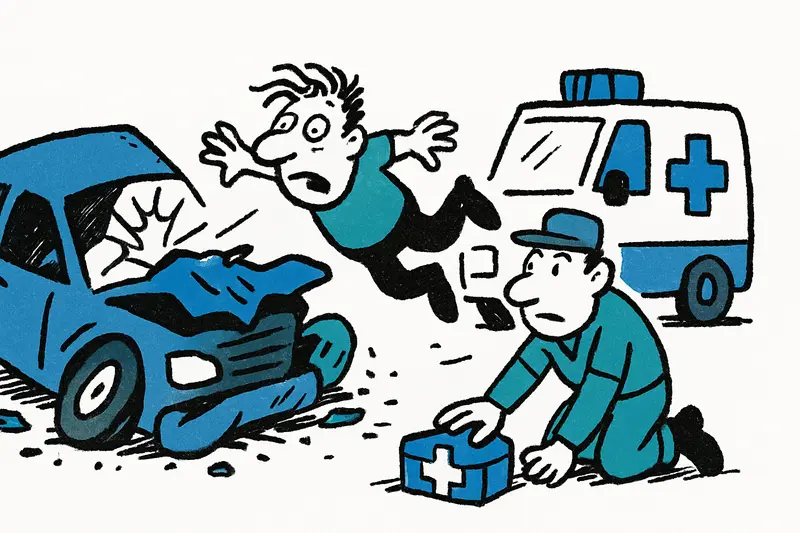
Night crash on the Ma-19 near Can Pastilla: Alcohol, no seatbelt — who pays the price?
In the early hours a car overturned near the Can Pastilla exit. Suspected alcohol and a missing seatbelt aggravated the tragedy. Why do such accidents occur so often on the Ma-19 — and what could help?
Night crash on the Ma-19 near Can Pastilla: Alcohol, no seatbelt — who pays the price?
Flashing blue lights lined the Ma-19 in the early hours as residents woke up to sirens. Around 2:15 a.m. a 40-year-old driver lost control near the Can Pastilla exit, collided with the guardrail and rolled several times. Witnesses described screeching tyres, a loud bang and a vehicle lying on its side; similar details are in Volcamiento nocturno en la Ma-19 cerca de Can Pastilla: ¿Habría salvado la vida un cinturón?. The driver was apparently thrown through a side window and was taken to hospital with serious injuries, as reported in Conductor ebrio gravemente herido en la Ma-19 cerca de Can Pastilla.
First impressions: rescue, traces and questions
Glass shards lay on the asphalt at the scene, leaked fluids were soaked up, and tow trucks cleared the wreckage to the side. The Guardia Civil began the accident investigation Guardia Civil traffic unit. According to emergency services, there were indications of alcohol and drug use; tests should provide clarity. Also clearly noticeable: the man apparently was not wearing a seatbelt — a simple measure that was missing here and likely exacerbated the injuries.
The Ma-19 is more than just pavement for many Mallorcans and couriers: it connects the airport access roads, industrial areas and residential neighbourhoods like Can Pastilla. Planes take off early in the morning, and at night the lights of the coastal bars shine. The sound of a landing Airbus mixed with the sirens that morning — a bitter, local contrast.
The central question: why do such accidents happen here — and what is rarely discussed?
We don’t just ask “who was to blame”, but: which structural factors increase the risk on this stretch? The answers are often more complex than a single error at the wheel. Three aspects stand out but are rarely linked in public debate:
1. Night traffic and risky behaviour: The Ma-19 carries many night revellers, taxis and delivery vehicles. Alcohol and party culture in coastal spots like Can Pastilla increase the risk, especially in the early hours, as shown in European Commission road safety data. A taxi is not always in sight — or it is considered too expensive.
2. Infrastructure and design: Guardrails and road surface can’t prevent all accidents, they only mitigate consequences. But route design, lighting, rumble strips or speed-reducing measures are missing in critical places. Rollovers often result from small imprecisions in a curve or sudden evasive manoeuvres.
3. Enforcement and prevention: Mobile controls, police visibility and consistent sanctions are sometimes weak. Preventive work in bars and with event organisers, testing offers after parties or subsidised night taxis are hardly implemented systematically, as highlighted in WHO road safety guidance.
Concrete measures that could help now
What good are moral lectures? Concrete proposals that can be implemented locally are better — pragmatic, not populist:
Short term: more mobile alcohol checks on weekends and holidays, visible Guardia Civil presence at known hotspots, additional rescue posts for night incidents, clear marking of accident-prone curves. Simple technical aids such as reflective posts and rumble strips could immediately increase drivers’ concentration.
Medium to long term: a coordinated night network of buses and taxi discounts during the summer months, cooperation with bars and event organisers for return tickets, mandatory safety training in driving schools with a focus on night driving and drug risks. It would also be advisable to review the route design on the Ma-19 — for example additional central barriers or speed reductions.
And very practically: every seatbelt sticker in bar toilets, every provided weekend ride service and every extra hour of police presence can save lives. Often it’s not the big programmes but small, consistent measures.
Aftermath for the neighbourhood
For residents and commuters the memory of an uneasy night remains: the blue lights, the traffic jam, the clearing of the road. Such scenes linger, they change conversations in the neighbourhood, the driving behaviour of some commuters and trust in the safety of the route. The Guardia Civil’s investigations will now clarify whether charges will follow and what traffic-law consequences the driver will face.
In the end responsibility lies with many: those who party, planners of night mobility, the bars and not least politicians who organise infrastructure and controls. One tip, as banal as it is important: buckle up, stay sober or take a taxi — it spares a lot of tragedy and trouble. And sometimes it even saves a life.
Frequently asked questions
Is the Ma-19 near Can Pastilla especially dangerous at night?
Do you have to wear a seatbelt in Mallorca if you are in the back seat?
What happens after a serious traffic crash on Mallorca roads?
Can alcohol or drugs affect liability after a crash in Mallorca?
What makes the roads around Can Pastilla busy at night?
What safety improvements could help on the Ma-19 in Mallorca?
Should you take a taxi instead of driving after a night out in Mallorca?
Why do rollover crashes happen on Mallorca roads like the Ma-19?
Similar News
After the Fatal Rally Crash: A Reality Check for Mallorca
The death of L’Osteria co-founder Klaus Rader at the Rally 550 Challenge raises questions about safety on Mallorca's cou...
Who really protects Mallorca's coasts? A reality check after the viral beach video
A viral online video compared developed coasts in Turkey with Mallorca's beaches and praised the island. A good moment t...
Arenal: How Two Strangers Stole Jewelry from a 91‑Year‑Old — and What We Should Learn
In El Arenal two young women managed to gain the trust of a 91‑year‑old and steal jewelry from her apartment. A family f...

Cool Night, Mild Days: Autumn Shows on Mallorca – Good for Land and People
The Tramuntana brought the coldest night in months: around 8 °C, 11–12 °C in the lowlands. Daytime temperatures rise aga...
Llucmajor bets on a new waste contract – is it enough to end the waste crisis?
The municipality of Llucmajor has signed a €36.6 million contract with Urbaser for eight years. After summers of overflo...
More to explore
Discover more interesting content

Can Cap de Bou

Townhouse Lleo 72
