
Troublemakers on Board: Who Pays the Bill for Diverted Flights?
Troublemakers on Board: Who Pays the Bill for Diverted Flights?
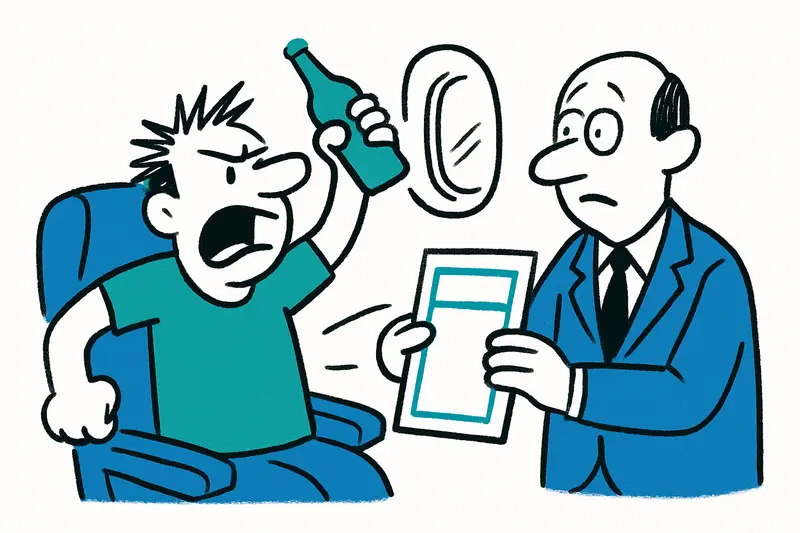
A passenger who rioted on a flight to Lanzarote and forced an unscheduled stopover in Porto was ordered in Dublin to pay €15,000. We ask: Are fines and court judgments enough, or are other prevention measures at airports and on board needed?
Troublemakers on Board: Who Pays the Bill for Diverted Flights?
Key question: Are penalties enough to prevent violence and disturbances on planes — or do airports and destinations need to act earlier?
An incident that ended in life‑threatening danger, fear and When the Toilet Became a Flight Risk: Ryanair Plane Turned Back After Takeoff and Landed Safely in Lanzarote has now resulted in financial consequences in a Dublin court: A passenger who, in April 2024, rioted on a flight to Lanzarote and attacked fellow passengers and crew members was ordered to reimburse around €15,000. According to the airline, the sum covered the costs of landing at another airport, overnight stays and additional expenses for the affected travelers (see Back after takeoff: What a 'toilet problem' reveals about flight safety).
In short: for the airline it was a clear financial loss. For those affected the fear remained. For us on the island, the news is another piece in the long debate about excessive drinking, aggression on board and the consequences for tourist destinations like Mallorca.
Critical analysis: The ruling addresses a point where law and damage calculation go hand in hand. Civil claims against troublemakers are a sensible tool: they make it clear that extremely disruptive behaviour does not go unpunished. But a single judgment does not change structural problems. The question remains whether such payments are actually made — and whether they serve as a deterrent when offenders often board planes drunk, disoriented or mentally strained.
What is missing from the public debate: Two things are rarely discussed enough. First: the responsibility of places that encourage alcohol consumption. Bars, hotel receptions and transport services at holiday destinations share responsibility when guests put themselves in a state in which they become a safety risk. Second: the seamless implementation of preventive checks before boarding, as discussed in Checkpoint Son Sant Joan: When unpaid fines can stop a holiday. It is not only about punishments afterwards, but about measures beforehand — from consistent serving rules to visible staff training at airports.
An everyday scene in Palma: early in the morning on Passeig Mallorca taxi drivers sit with café con leche and watch the highway where shuttle buses from the airport arrive. They know the patterns: groups with loud music from suitcases, lines of people saying "one more beer" at check‑in, guests staggering into the queue in flip‑flops and sunscreen. Gate altercations such as Carry-On Dispute at the Emergency Exit: Why a Loud Row Reveals More Than Bad Manners show how thin the line between comfort and safety can be. The mood is not always peaceful, and you sense that prevention often ends at the beach bar's till — not at the gate.
Concrete solutions: First, stricter checks at the airport before boarding: visual inspections, training ground staff in de‑escalation and the right to refuse boarding to obviously impaired persons. Second, better cooperation between hotels, bars and airlines: clear reporting obligations when guests are escorted to the aircraft intoxicated. Third, technical and administrative measures: digital reporting chains, an EU‑wide accessible register for banned passengers and standardized civil claims so plaintiffs do not have to chase funds for years after a ruling.
Airports and municipalities should also invest more in prevention: visible police presence in departure areas, multilingual information campaigns about the consequences of on‑board violence and mandatory training for bar and hotel staff on responsible serving. Such steps cost money — but they prevent diversions, damaged aircraft and traumatized travelers.
Another point: the medical and psychological component. Not every incident is solely the result of alcohol. Stress, medication, withdrawal symptoms or acute mental crises can escalate. Airports and airlines must get better at recognizing such risks early and organising help instead of only imposing penalties.
Why the ruling is still important: it sends a signal. Anyone whose behaviour endangers an aircraft causes real costs — economic as well as human. The conviction shows that courts can pass this bill on to the perpetrator. But signals alone are not enough if prevention is lacking in practice.
Pointed conclusion: Fines and civil claims are a necessary painful plaster, but not a prophylactic. If Mallorca wants fewer diversions, fewer conflicts at gates and fewer police interventions because of drunk guests, hotels, bars, airports and airlines must act together — before the plane takes off.
Anyone who works at the airport knows the story: a colleague at baggage claim recently remarked dryly, "better to look at one backpack too many than to have one plane too few land." That remains a simple, loud truth.
Frequently asked questions
Why do flight diversions in Mallorca become so expensive for airlines?
Can a passenger be charged for a diverted flight from Mallorca?
What can be done to stop drunk passengers from causing problems on Mallorca flights?
What role do Mallorca hotels and bars play in disruptive flight incidents?
What happens at Palma de Mallorca Airport when a passenger looks unfit to fly?
Do flight bans or public registers help with unruly passengers travelling to Mallorca?
Why is airport staff training important for Mallorca flight safety?
Is alcohol the only reason passengers become violent on Mallorca flights?
Similar News
The Maricarmen Case: Why an Eviction Is Forcing Spain's Housing Debate
Images of an 87-year-old woman on a stretcher have sparked a debate in Spain that also runs deep in Mallorca. Who protec...
Parking dispute in Els Hostalets: When a gap leads to violence
A parking dispute on Calle Aragón escalated into a mass brawl at night. Why do trivial conflicts here turn bloody so qui...
Bodycams in Palma: More clarity needed so surveillance doesn't become the norm
Palma's local police equip UII officers with Axon Body 4 cameras. Useful for evidence collection — but specific rules on...
When the Bread Door Closes: Why Maria de la Salut Lost Its Last Bakery
The only bakery in Maria de la Salut, a sales outlet of Forn de ca'n Joan Terès from Palma, has permanently closed. What...
Ancient Piece Brought to Light: Guardia Civil Recovers Roman Anchor Fragment off North Coast of Mallorca
Divers from the Guardia Civil recovered a massive iron piece from Roman times off Mallorca's north coast. The roughly 35...
More to explore
Discover more interesting content

Can Cap de Bou

Townhouse Lleo 72
