
Carry-On Dispute at the Emergency Exit: Why a Loud Row Reveals More Than Bad Manners
At Gate 14 at Palma airport a dispute between a reality couple and the cabin crew escalated — an incident that shows how thin the line between comfort and safety can be.
Carry-on at the emergency exit: more than just an exchange of words
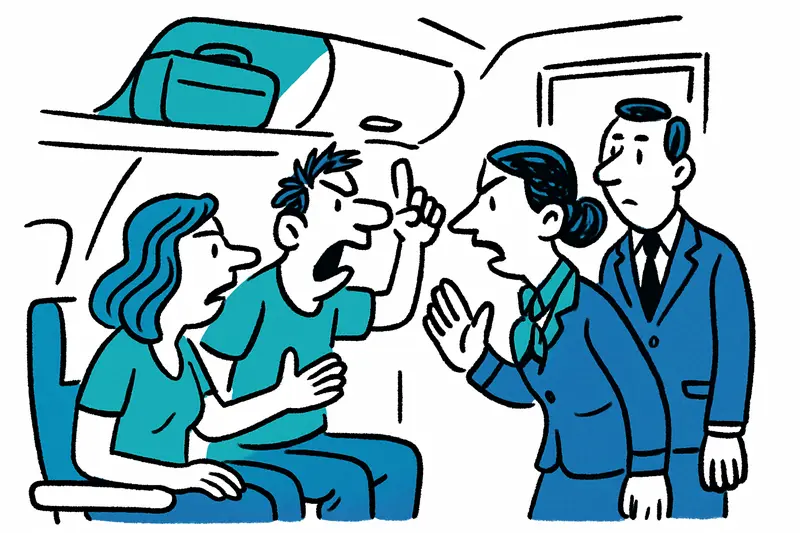
On Monday morning, when the sun was already warm through the glass fronts of Son Sant Joan and the smell of coffee came from the gate cafés, an otherwise unspectacular Eurowings flight at Gate 14 turned into a stage. A well-known reality couple, seats in the exit row, suitcases in the overhead bins — and within minutes a loud dispute with the cabin crew, as reported in Conflicto por equipaje de mano en vuelo a Mallorca: pareja de reality se enfrenta al personal de cabina.
The guiding question: Who bears responsibility — passengers or crew?
Exit row seats are coveted: extra legroom, a little luxury on short-haul flights. At the same time, stricter rules apply there. The crew reminds passengers before landing to remove bags so help can be provided in an emergency. In this case a short reminder escalated into an insult that led to police involvement at Gate 14. In the end there was no charge, no arrest — but the fundamental question remains: Can a request for safety so quickly turn into a confrontation, a dynamic echoed in the wider dispute between Ryanair and air traffic control?
On Mallorca, where many of us juggle tourists, suitcases and waiting buses every day, patience is often limited. Still: safety on board is not a favour the crew is asking for — they are rules that can protect lives. When these rules are ignored or — even worse — met with aggression, it affects the other 180 passengers just as much as the crew.
What is too often missing in the public discussion
The debate usually stays at “awkward” or “embarrassing.” Less attention is paid to three practical aspects:
1) De-escalation training: Cabin crew are trained, but not every situation can be solved with standard phrases. In a cramped cabin, with rolling trolleys and the murmurs of concerned passengers, often only a calm, clear approach helps. Regular refreshers in conflict management would do a lot of good.
2) Advance information instead of surprise: Many disputes arise from misunderstandings. Well-audible announcements before boarding, clearly visible pictograms at exit rows and short notes on boarding passes could prepare passengers better — in several languages, please; here on Mallorca people like to speak Spanish, Catalan, English and German.
3) Role of airport police: The officers at Gate 14 appeared calm and clarifying — not a spectacular appearance, but mediation. Yet that costs time and personnel. If such incidents become more frequent, it is a strain on airport operations — a tension also visible in Ryanair hand luggage checks at Palma Airport.
Concrete solutions — pragmatic and local
A few simple, non-bureaucratic steps could help:
Short, clear announcements before boarding that explicitly point out the obligation at the emergency exit. Not long speeches, but memorable sentences repeated in four languages.
Visual reminders: Stickers on armrests or on the seat itself that briefly and clearly indicate the duties. Sometimes a small visual cue is enough to prompt people to rearrange their bags before the crew has to intervene.
De-escalation training: Not just safety theatrics, but practical role-play. Crew members from Palma report that scenarios with loud fellow passengers, social-media attention for the affected parties and disturbances at the gate should be practiced.
Make consequences visible: If rules are repeatedly broken, there must be consequences — not necessarily a criminal charge, but for example a note in the passenger profile, stricter checks at check-in or temporary bans in extreme cases. Without sanctions, a rule often remains only a suggestion.
A local perspective to conclude
At the end of the day paths diverged: the plane taxied toward the arrival hall, the police held a matter-of-fact conversation, and the remaining passengers gathered their trolleys, accompanied by the clatter of wheeled suitcases and the quiet murmur of relief. An incident without legal aftermath — but with a reminder: a little politeness is often enough to avoid trouble. And good preparation by airlines and the airport can ensure such scenes do not arise in the first place.
For our island the rule applies: we are guests and hosts at the same time. If we want to be both, we should follow rules that guarantee safety — and defuse conflicts early before they become a social media clip. Small measures, big impact: that would be a win for travelers, crew and Son Sant Joan.
Frequently asked questions
What are the rules for carry-on luggage in an emergency exit row on flights to Mallorca?
Why do disputes at the gate sometimes happen at Palma Airport?
What should passengers in Mallorca know before sitting in an exit row?
How can airlines avoid conflicts over hand luggage on Mallorca flights?
What should I pack for a flight to Mallorca if I have an exit row seat?
How serious is a conflict with cabin crew on a flight to Mallorca?
Are passengers in Mallorca flights reminded about safety rules in multiple languages?
What role does airport police play at Palma Airport during passenger disputes?
Similar News
Why the Striped Breams in Cala Pí Should Be a Wake-up Call
Once again bathers in Cala Pí were surrounded while swimming by small, nippy fish — some wounds bled. Time for clear rul...
Daily from New York: How Palma's Air Traffic Is Growing — and What Must Change
United will increase the Newark–Palma service to daily flights in 2027 (Boeing, 231 seats). Strong tourist numbers clash...

When Love Ends in Shards: Destruction in Son Vida and the Questions That Remain
In Son Vida a relationship dispute escalated: a woman destroyed furniture in a luxury villa, later pressed a panic butto...
Who Bears the Burden? Mallorca Between Tenant Protection and Landlord Fears
Madrid's new housing decrees strengthen tenant rights — but on Mallorca concern is growing: will the law drive small lan...
On the Edge: What Mallorca's Airport Loses If a Major Low-Cost Carrier Falters
The company that operates numerous connections from Palma to France and domestically is negotiating with creditors to re...
More to explore
Discover more interesting content

Can Cap de Bou

Townhouse Lleo 72
