
Ryanair Hand Luggage Checks: Between Efficiency and Frustration at Palma Airport
Stricter checks and higher rewards for discovered excess hand luggage are creating tension at Palma Airport. Who benefits — and who pays the price?
More checks, more frustration: Why a small luggage size causes big waves
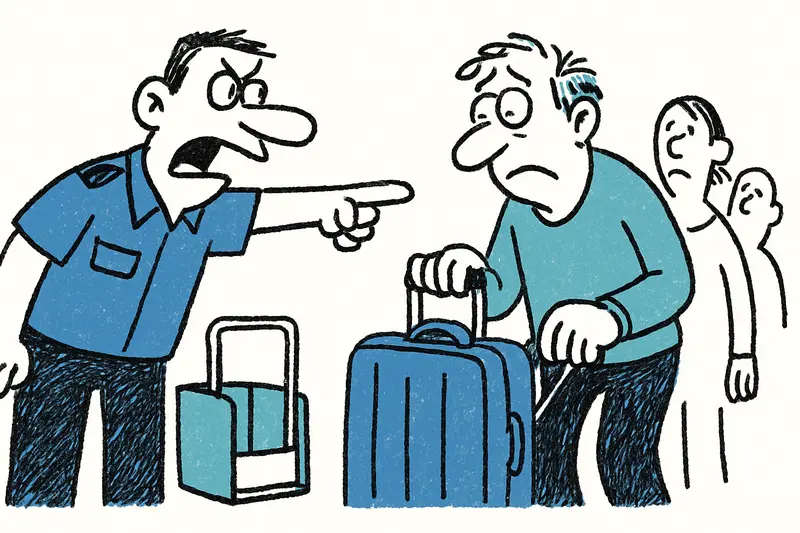
In departure hall C of Palma Airport there is an unusual soundscape these weeks: the rattling of trolley wheels, announcements over the gate desk, the soft hum of the air conditioning — and occasionally the anxious rustling of travel bags when someone repacks in front of hundreds of waiting people. The reason is an internal directive from a low-cost airline that serves popular Mallorca routes: staff are to check hand luggage more strictly at Palma from now on — and they are being paid more for it.
The key question is: Does putting more pressure on staff really lead to greater punctuality — or does it simply shift the conflict from the timetable to the passengers and the social atmosphere at the gate?
What exactly has changed
According to reports, the reward for finding an oversized piece of hand luggage rose from €1.50 to €2.50 per case, and the previous monthly cap has been removed. The aim of the measure is faster stowing, fewer delays during boarding, and lower costs from delayed departures. On paper this sounds like efficiency. In the departure hall, between the duty-free shop and the small coffee machine, it often looks different.
Between practice and mood: Who pays the price?
At the gate, flight attendants describe scenes nobody likes to see: tired families repacking on the floor in the middle of the chaos, seniors with trolleys who cannot meet the new baggage size in time, and business travelers who have to improvise at the last minute. One colleague dryly sums it up: 'We are supposed to absorb the anger before the plane even moves.'
Little discussed in the debate is the shift of power that such rewards bring: employees end up in the role of enforcers, where clear tariff and pricing models should actually set the rules. That creates conflicts, strains rosters and the already scarce personnel resources on short Mallorca routes.
Law, economics, morals: The other side of the coin
Airlines argue with numbers: full overhead bins, chaotic stowing and latecomers mean delays — and that costs money. In extreme cases reports of fees up to €500 have surfaced; there are also individual reports of limited onboard service at the airport. Consumer protection advocates, however, criticize that the basic fare only covers very small bags and that the measures act like a hidden revenue source.
Less discussed is how such rewards strain the relationship between airport operator, airline and staff. Who monitors the checks? And how can it be prevented that financial incentives lead to harsher enforcement against older or stressed travelers?
Concrete opportunities and solutions
The situation is frustrating, but not hopeless. Some pragmatic approaches that could help immediately:
Clear and visible rules: Sizes and consequences should be communicated clearly, repeatedly and early at check-in, in emails and on the boarding pass — ideally with pictures and short videos.
Measuring stations before the gate: Simple boxes to slide bags through would take the burden off staff and avoid disputes. They could be free or available for a small fee.
Staff protection instead of bonuses: Instead of individual bonuses, operational solutions would be better — dedicated personnel responsible for measurements, clear escalation rules, and training for handling conflicts.
Clarity in fares and products: Those who fly cheaply must know what restrictions apply, as discussed in Ryanair's new hand luggage rule. One option: a larger standard carry-on as an affordable upsell, combined with real boarding priority.
Oversight and consumer protection: Airport authorities could set standards for fair implementation; consumer advocates should quickly examine extreme fees.
What travelers in Mallorca can do practically now
Measure your bag before departure, repack or simply book the larger baggage option. Arriving late at the gate risks discussions — and perhaps a sour feeling at departure. In Mallorca, where many flights are short, loud and often full, this is noticeable: between luggage queues, the scent of espresso and the hum of the air conditioning, efficiency suddenly becomes a social issue.
In the end, the current debate reveals something fundamental: efficiency measures driven solely by individual incentives rarely solve the structural problems in air travel. They shift them — and sometimes vent frustration on people who are simply starting their holiday or trying to get home. A bit more clarity, a measuring box at the gate and fewer bonuses could restore peace at one of the island's loudest places.
Frequently asked questions
Why are hand luggage checks at Palma Airport getting stricter?
What hand luggage size is allowed on Ryanair flights from Mallorca?
Can I be charged extra at Palma Airport if my bag is too big?
What should I do if my cabin bag does not meet Ryanair rules?
Are there baggage measuring stations at Palma Airport?
How can passengers avoid problems with hand luggage when flying from Mallorca?
Why do stricter gate checks at Palma Airport cause so much frustration?
Is it worth paying for a larger cabin bag on a Mallorca flight?
Similar News

Release after bloody attack in Palma: Why the court's decision raises questions
An 18-year-old who allegedly inflicted a serious neck injury on a man at Plaza Gomila using a wristwatch wrapped around ...
Kidnappings in Inca: Three young men forced into car trunks and abused in the forest – a reality check
In Inca, three 18-year-old men were forced into car trunks by masked assailants at the Plaça des Bestiar, taken to a for...
Spreading Massification: The Brake That Still Has Much Work to Do
Marga Prohens announces limits on volume tourism. The measures sound harsh — but are they enough to save everyday life, ...

Through the Keyhole onto the Party Yacht: How Daniela Katzenberger Is Planning Her 40th on Mallorca
Daniela Katzenberger turns 40 and wants to celebrate it on the island — likely with a boat, cake and her mother. A relax...
By Boat Instead of the Road: Palma's Water Bus — a Reality Check
The 'Bus Nàutic' launches in two stages — but questions remain over interim operations, fares and environmental requirem...
More to explore
Discover more interesting content

Can Cap de Bou

Townhouse Lleo 72
