
Checkpoint Son Sant Joan: When unpaid fines can stop a holiday
How fair is it to use airports as places of enforcement? A checkpoint can wreck travel plans within minutes — especially for people with little money. A look at problems, blind spots and practical solutions for Mallorca.
Checkpoint Son Sant Joan: Airports as enforcers — practical, but problematic
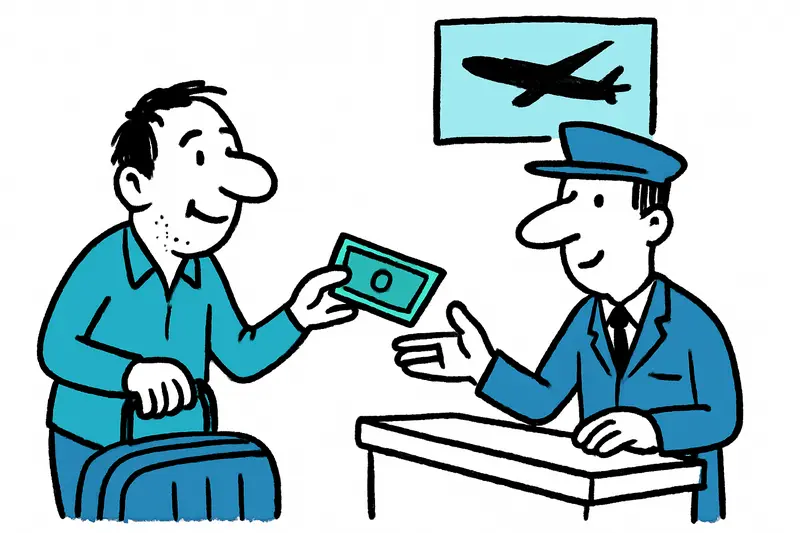
The typical sound at an airport — rolling suitcases over tiles, the murmur of announcements and somewhere the scent of freshly baked ensaimadas — can suddenly take on a very different mood. A passport control counter, a routine data check, and someone is stopped from continuing their journey because of an outstanding arrest warrant. Scenes like this have made headlines more often in recent months, as in Accidentally Detained: When a Wrong Turn After Returning from Mallorca Becomes Costly: people who only realize at the baggage claim that their trip or holiday is ending for reasons they hadn't expected.
The key question: Are airports allowed to become enforcement sites — and if so, under what conditions?
Airports are practical for authorities: high passenger flows, standardized checks, quick queries. For travelers they are usually a transitional space between everyday life and holiday. So the fundamental question is not only: can the police process warrants? But: should this happen at such sensitive moments without adequately taking social circumstances into account?
On Mallorca this is not an abstract debate. Between the runways of Son Sant Joan, tourists, commuters and newcomers meet police officers who cross-check lists and databases; recent episodes, including Emergency Landing at Son Sant Joan: Questions Over Arrests and Procedures, illustrate how quickly routine checks can escalate. For the person affected, this often means frantic cash searches at the baggage belt, embarrassing conversations in several languages or, in the worst case, imprisonment in lieu of payment instead of the booked holiday. Such scenes must not become routine.
Underestimated consequences: Who is really affected?
It is often overlooked that warrant checks at borders can exacerbate social inequality. Those who cannot immediately pay a fine are statistically more likely to be in precarious financial situations. Higher earners usually resolve the issue by bank transfer or a quick phone call. For poorer people, the consequence can be substitute imprisonment — a punishment that creates hardships barely justified by the original offense.
Another problem is the information gap: many travelers do not know that routine checks compare data with national registers, what consequences pending proceedings can have, or what rights they have at that moment under the Schengen Borders Code. Five minutes of stress at the counter are no good place for legal clarification.
Local observations and examples
On Mallorca the scene is familiar: a young man stops at the edge of the departure hall, seagulls cry above the harbor, a family arriving in swimwear looks on puzzled. At the Son Sant Joan checkpoint the officers will act pragmatically — many want to resolve cases and not delay travelers unnecessarily. But pragmatism must not be a pretext for overlooking social hardship; incidents such as Thefts at the Airport: Two Employees Detained – How Secure Is Son Sant Joan? have added to public concern.
Concrete approaches: How to make the checkpoint fairer
The situation is not hopeless. Small changes could make a big difference on Mallorca:
1. Advance notices by SMS/e-mail: Authorities could offer an optional travel-date check when penalty notices or judgment letters are delivered. An automated reminder before planned departures would prevent many embarrassing surprises.
2. Digital payment options at the airport: Instead of frantic searches for cash, standardized, secure payment options should be available — card readers, mobile payment or one-time links released by the responsible authorities. This would relieve both travelers and officers.
3. Transparent information at the counter: A multilingual information sheet (German, Spanish, English) with brief notes: why the check took place, what rights the person has, and what options are available now. Clear information reduces panic and misunderstandings.
4. Socially scaled alternatives instead of uniform penalties: Courts should take economic circumstances more into account when imposing fines. Instalment plans, community service or extended deadlines can avoid substitute imprisonment and reduce social inequality.
5. Training and time allowances for humane decisions: Police officers at the airport should have more discretion to prevent social hardship — and short, standardized advisory channels so complex cases are not decided in a five-minute scene.
Looking ahead: Practicality with perspective
Airport enforcement practices cannot be demonized across the board. Many officers act with the aim of clarifying procedures and enabling travel. But enforcement must not become an automatic mechanism that hits people with fewer financial resources harder than others.
On Mallorca, while planes roll over the bay and the espresso machines rattle in the terminal cafés, a balanced approach would be possible: efficient checks and more protection for the vulnerable at the same time. That would mean less stress at the control lane, clearer information and more humane solutions — and ultimately more time for what matters: the freedom to travel.
Conclusion: Airports are practical locations for warrant checks. They must not become stumbling blocks for socially disadvantaged travelers. With simple, concrete steps Son Sant Joan could set an example — not only as a transit point, but as a place where law enforcement and justice go hand in hand.
Frequently asked questions
Can unpaid fines stop you from flying from Mallorca?
What happens at Son Sant Joan if a warrant shows up during passport control?
What should I do if I am stopped at Mallorca airport because of a fine?
Can you pay a fine at Son Sant Joan airport?
Are airport checks in Mallorca only for criminal cases?
Does Mallorca airport have to take social hardship into account when checking fines?
Why are airport warrant checks at Son Sant Joan considered problematic?
What changes could make airport fine checks in Mallorca fairer?
Similar News

Caro Robens: 15 kilograms lighter — and again in the crossfire of online comments
Bodybuilder Caro Robens, who lives in Mallorca, has lost 15 kilograms. Her success on Instagram was met with applause — ...
Meager Industry in Mallorca: How the Island Can Be More Than Just Tourism
The industrial sector in Mallorca is shrinking, productivity is falling and firms remain tiny. The key question: can the...
Pre-Nit de l'Art: Galerie Mensing invites to a special evening with Tom Boston
Before the big art night, Galerie Mensing opens its doors: pop art, champagne, a DJ and a hand-signed print by Tom Bosto...
Sea view and more seats: Cappuccino Grand Café reopens in Port d'Andratx
After a long renovation, the Cappuccino Grand Café on the Port d'Andratx harbor promenade has quietly reopened. Larger t...

Enric Mas wins the Vuelta – a triumph that resonates in Mallorca
Mallorcan Enric Mas has won the 82nd Vuelta — the first Spanish overall victory since 2014. Cyclists and neighbors on Ma...
More to explore
Discover more interesting content

Can Cap de Bou

Townhouse Lleo 72
