
Doctors' Strike in Mallorca: Why the Frontlines of Health Are Getting Louder
Doctors' Strike in Mallorca: Why the Frontlines of Health Are Getting Louder
The nationwide doctors' strike affects Son Espases and outpatient practices: canceled surgeries, hundreds of missed appointments and high participation by resident doctors. A stocktaking with a clear question, critical analysis and proposals.
Doctors' Strike in Mallorca: Why the Frontlines of Health Are Getting Louder
Between canceled operations and angry people waiting: Who bears the cost of the conflict?
Key question: How can safe patient care be guaranteed in Mallorca without simply ignoring doctors' demands for their own statutory framework?
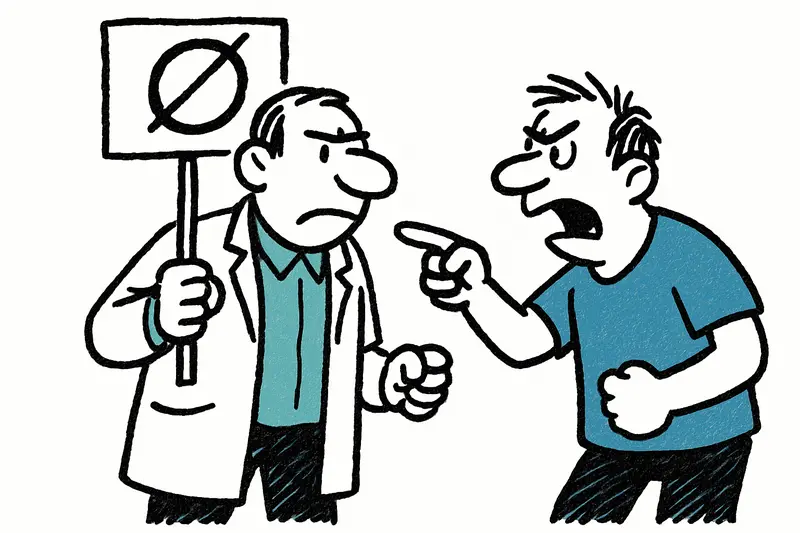
Early on Monday morning the air in front of the major Son Espases hospital was thick with the breath of demonstrators, car horns blared on the Passeig, and occasional ambulances threaded through the streets. Many WhatsApp threads in the city were about which appointment had been postponed. Local reporting had similar scenes in When Palma Falls Silent: Doctors Strike for Their Own Professional Statute. This is the everyday scene behind the sober numbers: people waiting for inquiries at the emergency departments, resident doctors in white coats standing on the steps instead of working, and unrest being felt in neighbourhoods.
Facts (official figures): On the Balearic Islands, according to the doctors' union Simebal, between around 70 and 85 percent of hospital doctors participated in the strike; in primary care participation varied by island between about 40 and 60 percent. The regional health service IB-Salut reported that 76 planned operations were canceled, more than 1,700 specialist appointments and diagnostic tests did not take place, and over 2,000 consultations in primary care were missed. Trainee doctors (MIR) showed particularly strong engagement, for example with very high participation in areas such as anesthesiology as stated by Simebal; many resident doctors therefore took part at Son Espases. Further reportage is available in Day Two of the Doctors' Strike: Why Healthcare in Mallorca Is Faltering.
Critical analysis: The numbers are clear, but they do not tell the whole story. High participation among MIR and anesthetists is no coincidence: this is about workload, shift density and training conditions that many consider unbearable. At the same time, the authorities' imposition of extended minimum services limits the visible effects for patients — this explains why on the one hand you see full demonstrations, while hospital gates are not completely closed on the other. The conflict has two faces: legitimate demands for professional protection specifically for doctors and serious, immediate repercussions on treatments and waiting lists.
What is missing from the public debate: Three things are hardly discussed. First: the concrete prioritization of canceled procedures — which cases are pushed back, which are rescheduled immediately? Second: reliable figures on the duration and causes of overtime and working time violations in hospitals and practices on the islands. Third: an honest assessment of how many positions are missing and what budget frameworks would be required to stabilise training places and permanent posts. Without this data the debate remains schematic. The question of who is left behind is discussed in Doctors' strike on Mallorca: Who gets left behind?.
Everyday observation from Palma: In a central GP practice an elderly woman sat with a stack of prescription copies. The young doctor at reception explained calmly that the next available specialist appointment was several weeks away; many patients tried nevertheless by phone. Outside Son Espases colleagues stood in groups talking, some unpacked a flashlight with their coffee — symbolic, because the night had not been short. Such scenes show: the conflict is not an abstract professional stance, it impacts concrete, often vulnerable routines.
Concrete approaches to solutions: 1) Negotiation plan with clear stages: short-term immediate measures (a postponement list for canceled procedures, reprioritisation, central coordination via IB-Salut), medium-term steps (binding rules for working hours, more training positions, protection of MIR learning time) and in the long term a legally anchored statutory framework for doctors that reflects professional reality. 2) External moderation: An independent mediation body (e.g. a mediation panel with hospital management, unions and patient representatives) should be deployed promptly. 3) Transparency initiative: Open data on missed appointments, waiting times and staffing levels, accessible to municipalities and patient organisations. 4) Emergency and on-call plans that protect patients' rights while respecting forms of protest — for example rotating duties to reduce the burden on groups such as MIR. Long-term proposals are considered in No Submission: What the four-day doctors' strike in Mallorca really reveals.
Use the political momentum: Anyone who thinks simple slogans will suffice now misunderstands the structure of the problem. A legal statutory framework that takes into account the particularities of medical work must be accompanied by resources — additional positions, adequate compensation for on-call time, clear training standards. Otherwise any regulation will remain on paper.
Punchy conclusion: The wave of strikes is both an alarm signal and a wake-up call. Patients feel the consequences immediately; the medical profession is expressing its discontent collectively. Those who want to ease the situation need both quick organisational solutions for cancelled procedures and a real, funded roadmap for structural reforms. In Mallorca that means: operate in the short term, reorganise in the medium term, legally secure in the long term — otherwise the standstill will return.
Frequently asked questions
Why are doctors striking in Mallorca?
How is the doctors' strike affecting patients in Mallorca?
Are hospitals and clinics still open during the Mallorca doctors' strike?
What should patients in Mallorca do if their appointment was canceled?
Why are resident doctors at Son Espases taking part in the strike?
What is happening in Palma during the doctors' strike?
How many doctors joined the strike in the Balearic Islands?
What would help resolve the doctors' conflict in Mallorca?
Similar News
Large-scale Anti-Tourism Graffiti at Cala Mendia: Protest or Vandalism?
On the morning walkers discovered an approximately 50-meter-long slogan against tourism on the wall above Cala Mendia. W...
Bomb threat before Jet2 flight in Tenerife: A reality check for security protocols
A passenger reported a bomb in luggage shortly before departure in Tenerife. Evacuation, baggage checks, delays — and ma...
Who is stripping Mallorca's coast bare? Why entire slopes are being removed for villas
On Mallorca steep slopes are again being removed to make way for luxury construction sites. Who bears the responsibility...
Robber Falls While Fleeing in Sant Agustí: Who Takes Responsibility?
During a purse-snatching in Sant Agustí, a non-commissioned officer chased the suspect; the man jumped from a bridge and...
Bomb threat on board? Why the Tenerife incident concerns us in Mallorca
A passenger on a Jet2 flight from Tenerife to London triggered an evacuation and intensive security checks. The result: ...
More to explore
Discover more interesting content

Can Cap de Bou

Townhouse Lleo 72
