
When Palma Falls Silent: Doctors Strike for Their Own Professional Statute
Empty waiting rooms, white coats in front of the Delegación del Gobierno: Hundreds of doctors closed their practices on Friday. The central question remains: Does the planned reform really protect employees — or does it endanger long-term healthcare provision on Mallorca?
Empty seats, loud whistles: The protest that stopped Palma's daily routine
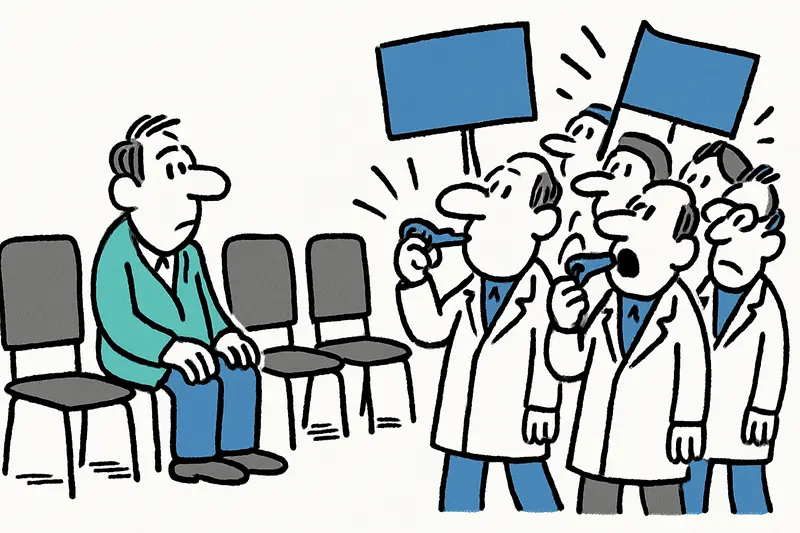
On Friday at midday Palma felt strangely quiet in places usually alive with soft footsteps and ringing phones. On the Paseo del Borne, hundreds of doctors in white coats stood with banners and whistles; in the practices behind them notes hung that read: "Closed today – doctors' strike," with local coverage in Doctors' strike on Mallorca: Who gets left behind? The Tramontana blew hard enough to make the papers flutter, and the voices blended with the distant sound of espresso machines from the row of cafés on the Passeig.
The key question
The central question of this day of protest was unmistakable: Can the planned new framework for the healthcare system reduce precarious employment while at the same time preserving medical autonomy and the security of provision on Mallorca? Or do we risk trading rights for availability?
What the doctors really want
At its core, the physicians are demanding an independent professional statute. The collective tone was shaped less by symbolism and more by concrete concerns: fixed-term contracts, increasing overtime, and a lack of predictability in everyday life. "I feel like I work on call, not as part of a team," said a specialist on the edge of the rally. Her colleague added quietly: "We help until we ourselves need help."
Emergency services remained active, officials stressed repeatedly; the protesters did not aim to put patients at risk. Nevertheless, the strike left its marks: routine appointments were postponed, GP practices in Santa Catalina and the El Terreno neighborhood had unusually empty waiting rooms, and some reception desks displayed handwritten notices with the emergency number 112, as reported in Day Two of the Doctors' Strike: Why Healthcare in Mallorca Is Faltering.
What has often been overlooked
In the public debate two lines often appear: the government emphasizes modernization and fewer precarious contracts, while the doctors demand protection and dignity. Less discussed were three practical points that were hardly visible on the signs on Friday but came up between snippets of conversation:
First: continuity of care. Short-term contract changes and staffing gaps particularly affect chronically ill and elderly people who rely on regular contacts. Second: the distribution of workload between hospital specialists and neighborhood GPs — Palma feels this shift daily. Third: the psychological strain caused by long shifts and precarious scheduling; burnout is not an abstract statistic but a topic of conversation at hospital water coolers.
Analysis: Why the anger is not just about money
The outrage does not stem solely from low pay. It is about professional identity, predictability for families, opportunities for continuing education, and decisions made in Madrid that do not fully reflect the specific structures of an island with seasonal peaks. A rigid, centralized rulebook can overlook local particularities — for example, how tourist seasons strain staff planning in outpatient services and emergency care.
There is also the question of whether reforms that lack genuine participation from the professional groups can gain acceptance. The protesters demand that legislation not only set quantitative targets but also provide qualitative frameworks: protection from arbitrary fixed-term contracts, transparent rules for on-call duties, and clear funding lines for rural practice startups.
Concrete opportunities and solutions
The conflict also offers entry points that could be pursued in negotiations. Some possible building blocks to help make the dialogue more constructive:
1. A genuine professional statute — not as a symbol, but with clear rights on working hours, training and protection against dismissal.
2. Pilot projects on Mallorca that test new schedules and model contracts in selected facilities before a nationwide solution is implemented. The island is suited as a testing ground because of its seasonal fluctuations.
3. Independent working-time measurement and transparent rota data so that overtime does not run unofficially.
4. Stronger support for primary care and incentives for young doctors to take over practices on the island — for example through rent subsidies, training budgets and mentoring programs.
5. A mediation committee with representatives from government, the medical profession and patient groups to promptly resolve disputes and publish negotiation outcomes.
What remains after the whistle?
The protest was loud, well organized and visible — a rare sight in a city where otherwise the splashing of fountains and the murmur of voices on the Passeig set the rhythm, as explored in Doctors' strike in the Balearics: Why the demonstration in Palma is more than a labour dispute. Whether the demonstration will change the law is uncertain. What is clear is that the island feels how dependent daily life is on those who often work at their limits. Empty waiting rooms are an unusual alarm signal — they show that medical care is not a given but must be negotiated.
In the end, hope remains for a reasonable compromise: a framework that reduces precarious employment without weakening medical professionalism and patient care. And an appeal to both sides: talking helps more than whistles — but sometimes whistles are necessary for the talking to begin.
On site: Palma, Delegación del Gobierno, Friday, 12:30–14:30. Many practices participated; emergency care remained in place. The discussion continues.
Frequently asked questions
Why did doctors strike in Palma and across Mallorca?
Were emergency services still available during the doctors' strike in Mallorca?
How did the doctors' strike affect everyday life in Palma?
What are the doctors in Mallorca asking the government to change?
Why do doctors say Mallorca needs different healthcare rules from mainland Spain?
What happened at the doctors' protest on the Passeig del Born in Palma?
Did Palma clinics and GP practices stay open during the strike?
Why are doctors in Mallorca worried about burnout and staffing gaps?
Similar News

Maribel: Five Decades of Service – Housekeeper from Peguera Celebrated with a Special Honor
Over 50 years in the hotel business: María Isabel “Maribel” Molinos was honored in Palma at the Nit del Turisme by Unive...
Orange Alert over Parts of Mallorca: Are We Prepared?
Dark clouds and an announced wet spell have triggered an Orange alert in parts of Mallorca. A reality check: what's miss...

Sundair & Co.: Sale speculation and what it could mean for Mallorca
Rumors about a possible sale of the airlines Sundair and Fly Air 41, which belong to Schauinsland-Reisen — and whether b...
Anne Wünsche in Mallorca: A job offer with a catch — who fits the role of personal assistant?
Influencer Anne Wünsche has left Berlin and is urgently looking for a full-time personal assistant in Mallorca. Why the ...
Daily from New York: Palma Between Boom and Strain
United will increase the Newark–Palma route to daily flights in 2027 using Boeing aircraft (231 seats). What does the in...
More to explore
Discover more interesting content

Can Cap de Bou

Townhouse Lleo 72
