
Day Two of the Doctors' Strike: Why Healthcare in Mallorca Is Faltering
Day Two of the Doctors' Strike: Why Healthcare in Mallorca Is Faltering
Second day of the strike in the Balearics: hundreds of postponed operations, thousands of canceled appointments and a political clash between Palma and Madrid. A reality check from everyday life.
Day Two of the Medical Strike: Why Care in Mallorca Is Faltering
Clear guiding question: Who bears responsibility – the central government in Madrid, regional politics, or the system itself?
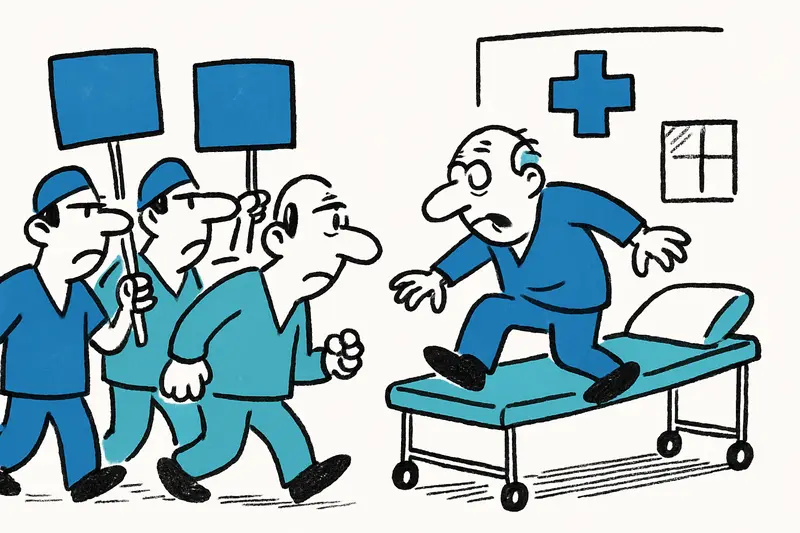
On the second day of an announced four-day doctors' strike in Mallorca, the consequences were visible in the island's hospitals and practices: emergency departments are full, scheduled operations are left empty and numerous appointments were canceled. According to available figures, about 75 operations were postponed and around 3,000 medical appointments were canceled, and local coverage expanded on these impacts in Doctors' strike on Mallorca: Who gets left behind? The situation is simple and painful: patients are caught between political disputes and the reality of empty waiting rooms or overcrowded emergency areas.
Doctors are gathering for demonstrations in Palma and in front of hospitals; the mood is tense. Between car horns and megaphone calls, on a street corner at Passeig Mallorca, an elderly woman says her follow-up appointment was canceled without explanation. Residents hear chants on the streets, and lists of postponed procedures are displayed at clinic entrances.
The regional leadership blames the central government, while the opposition accuses Madrid of lacking willingness to negotiate. At the same time, government representatives accuse previous administrations of personnel cuts that are now being remedied only hastily. The doctors' union CESM organized the industrial action; professional associations and chambers support it. At stake is not only current working conditions but also a dispute over the future structure of a framework statute for the medical profession.
In the short term, the health ministry has assured that minimum medical care – such as emergency departments, cancer treatments and indispensable therapies – will be maintained. In practice, however, administrative staff and nurses see pressure released in postponed follow-up appointments, longer waiting times and additional burdens on the remaining teams. At the same time, a severe influenza wave is spreading across the islands, which further worsens the situation; authorities recommend protective measures but so far refrain from making them mandatory.
Critical analysis: Where the system fails
The picture is multi-layered. First: staffing shortages and working conditions are not new. Second: central government legislative proposals that would bring far-reaching changes trigger fears of standardization and lower pay. Third: communication between Madrid and Palma appears contrite rather than cooperative at this stage. Crucially, no one currently provides reliable answers on how postponed operations will be prioritized and how canceled appointments can be made up quickly.
What is usually missing from public discourse: concrete numbers on staffing levels and vacancies on the islands, transparent prioritization rules for canceled procedures, and a realistic plan for additional capacity if several days of work stoppage coincide. Also rarely discussed: the psychological strain on nursing staff and the consequences for chronically ill patients whose therapies are interrupted.
Everyday scene from Mallorca
A Tuesday evening in Palma: rain has made the Paseo slightly wet, and the smell of coffee drifts from a nearby bakery. Young doctors with banners stand in front of the clinic, older patients leave disappointed. A reception assistant on the phone tries to reorganize appointments; an ambulance can be heard in the background. This mix of routine and turmoil is typical for the island in such moments – practical, loud, impatient.
Concrete approaches to solutions
1. Immediate measures: publish priority lists for postponed procedures and set up a central hotline for patients to arrange replacement appointments. Mobile teams and extended operating-room shifts could temporarily make up lost capacity.
2. Mid-term: a mediated round table with independent moderation where representatives from Madrid, the regional government, unions and clinics agree on binding deadlines and funding. External arbitrators can help untangle technical and legal questions of the statute.
3. Long-term: transparent staffing statistics, clear career paths for doctors on the islands, financial incentives for hard-to-fill specialties and an expansion of telemedicine services so that core tasks are not left hanging during strikes.
What now?
The conflict is not a local prestige issue but a test of the system. If political squabbling dominates the provision of care, patients lose trust. Those who go to a clinic in Mallorca in the morning expect clearer procedures instead of political finger-pointing. Reaching an agreement requires both sides to step back from mere power rhetoric and commit to binding steps to relieve everyday pressures.
Conclusion: responsibility is distributed. Politics must regulate reliably, health staff must articulate their legitimate demands, and clinics must communicate emergency plans clearly. Otherwise everyday life will remain: a postponed operation, a frustrated phone call, and the memory of a day when people were left between slogans and care.
Frequently asked questions
Why is healthcare in Mallorca affected by the doctors' strike?
Are emergency departments still open during the doctors' strike in Mallorca?
What should patients in Mallorca do if their hospital appointment was canceled?
How many operations and appointments were affected by the strike in Mallorca?
Why are doctors protesting in Palma?
What is the healthcare situation like in Mallorca during a flu wave?
Who is being blamed for the doctors' strike in Mallorca?
How can Mallorca prevent future disruptions in medical care?
Similar News
Fear in the Sa Teulera Forest: Youth Groups Harass Cruising Zone in Palma
In the wooded area of Sa Teulera, those affected report verbal attacks, property damage and intimidation. How safe is th...
Axa opens first health center in Palma: €3 million, 650 m² and more local access for La Vileta
In the heart of La Vileta, Axa has opened its first own health center in Mallorca. On around 650 square meters and with ...
30 Years of Nit de l'Art: What Palma's Art Night Really Shows — and Conceals
Nit de l'Art celebrated its thirtieth anniversary: full galleries, young visitors — and the quiet tensions between the a...
Hunt for Older Holidaymakers: Arrests after Suspected Pickpocketing in Port d'Andratx and Bellver
Five suspects were arrested after investigators accuse them of targeted pickpocketing of elderly tourists in Port d'Andr...
Knife stabbing in Magaluf: Why it must not remain an isolated incident
A 21-year-old tourist was stabbed in the chest in Magaluf and is in life-threatening condition. A reality check: what's ...
More to explore
Discover more interesting content

Can Cap de Bou

Townhouse Lleo 72
