
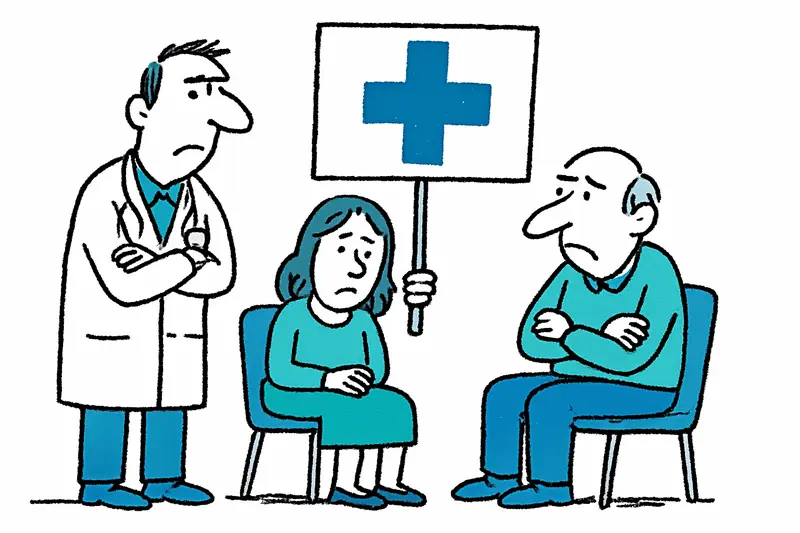
Doctors' strike on Mallorca: Who gets left behind?
Doctors' strike on Mallorca: Who gets left behind?
The doctors' strike ends today — on Mallorca more than 7,000 appointments were canceled and almost 170 operations postponed. A reality check: who feels the consequences, what's missing from the public debate and which solutions are realistic?
Doctors' strike on Mallorca: Who gets left behind?
Key question: How can a health system function when doctors have to cancel so many appointments that thousands of patients are affected?
Today the work stoppage ends, a protest that has been clearly noticeable on the island over the past few days. Around a hundred doctors gathered yesterday in front of the government delegation in Palma to demonstrate for their own professional statute and better working conditions. As an immediate consequence, more than 7,000 medical appointments were canceled on Mallorca and almost 170 operations postponed — figures that speak for themselves and mean real delays for people with medical concerns, as noted in Day Two of the Doctors' Strike.
Critical analysis
When thousands of appointments suddenly disappear, it affects more than just routine, planned care. Many canceled consultations are check-ups for chronically ill patients, preventive screenings and post-operative follow-ups. The statistics name 7,000 appointments and nearly 170 postponed procedures — both examples of how fragile routine care can be. The system is highly person-dependent: if specialists are absent or stop working, accessibility collapses in the short term. The result is backlogs on waiting lists, worried patients and increased pressure on emergency departments.
What's missing in the public discourse
The debate often stays at the level of demands and numbers, rather than addressing what the four-day doctors' strike in Mallorca really reveals. Less visible are the paths patients take: who calls older people back? Who coordinates the rescheduled operations? Also rarely discussed is prevention: could part of the appointments be handled via telemedicine without reducing quality? And finally: what concrete working hours and compensation models would doctors consider fair — not just in headlines, but in concrete, implementable provisions?
A scene from everyday life in Palma
Late morning in front of the Delegación in Palma: the air smells of bleak November rain, car horns mix with occasional applause from the protesters. An elderly woman stops, appointment slip in hand; she tried in vain to get an alternative appointment and then looks at her phone to call the health centre. In the hospital corridors you can hear the distant beeps of monitors and the rustle of paper — where people wait for answers, the crisis feels concrete and personal.
Concrete solutions
1. Short term: clear prioritization. Reschedule procedures by urgency, actively contact chronically ill patients and relieve emergency departments with temporary clinics staffed by experienced nurses supported by telemedicine.
2. Medium term: a binding framework for working hours and substitution rules that is tangible on the island. That means not just a declaration of intent, but a service agreement that regulates shift schedules, on-call times and compensation.
3. Long term: personnel resilience. More training positions, incentives for doctors to remain on Mallorca — but also better career paths for treating nurses who can take on responsibilities without reducing medical quality.
What everyone can do now
Patients should ask for details when appointments are canceled: will the case be prioritized? Who is the contact person? And: check whether a simple telemedicine solution is sufficient. On the administrative level, organisation is now required, not just communication.
Concise conclusion: The cancellation of thousands of appointments is a warning sign. It highlights a structural vulnerability: Mallorca has very good medical care — but it relies heavily on people. When these people complain about working conditions, it concerns not only the profession but every patient. A way out requires more than words: concrete rules, prioritization mechanisms and investment in staff.
Frequently asked questions
How did the doctors’ strike affect patients in Mallorca?
What should I do if my medical appointment in Mallorca was canceled?
Are emergency departments in Mallorca more crowded during a doctors’ strike?
Which medical appointments in Mallorca are usually most affected by a strike?
What does the doctors’ strike in Mallorca say about the healthcare system?
What role did the protest in Palma play in the doctors’ strike?
Can telemedicine help during a doctors’ strike in Mallorca?
When does the doctors’ strike in Mallorca end?
Similar News
From the Reality Studio to the Pitch: Aleks Petrovic Makes Mallorca His Base
The former participant in numerous TV shows moves from Dubai to the island and launches a project with FC Germania Mallo...
When the Phone Falls Silent: Concern for Sarah Joelle in Mallorca — and What It Reveals
After days without a response, the TV personality's unreachability in Mallorca sparked concern. Shortly afterwards an al...
Ultraluxury on the Ground: Four Seasons Jet in Palma — a Reality Check for Formentor and the Island
A high-priced flight crosses Mallorca and its guests stay for days at the Formentor resort. What does the island get bes...
Death of a Witness and the Justice Backlog: Why the Kegel Brothers Trial Matters in Mallorca
A witness in the Playa de Palma fire case has died, and the trial against eight German holidaymakers has been delayed un...
Champagne Reception, Red Carpet and Mini Originals: The Pre-Nit del Art at Gallery Mensing
Almost 400 guests, champagne, pop-art feats by Tom Boston and a raffle for the Parkinson's foundation: Gallery Mensing t...
More to explore
Discover more interesting content

Can Cap de Bou

Townhouse Lleo 72
