
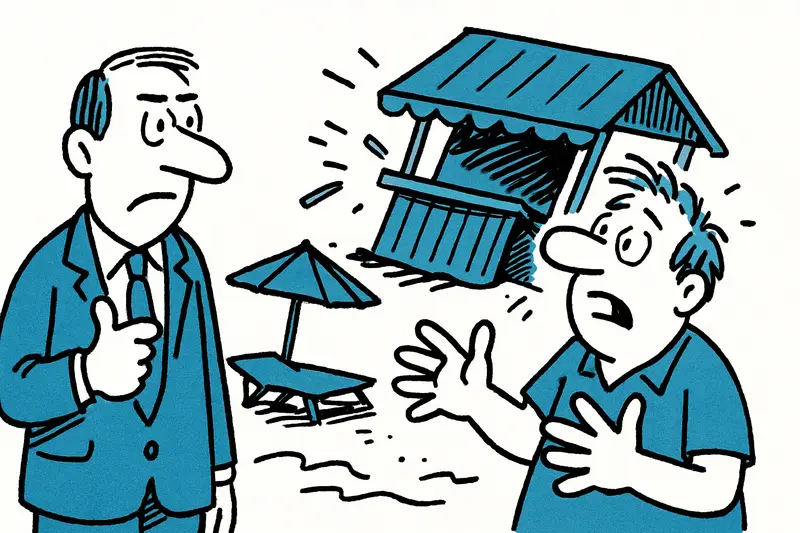
Son Moll: Iconic chiringuito to be demolished — who will take responsibility?
Son Moll: Iconic chiringuito to be demolished — who will take responsibility?
The beach bar at Son Moll beach in Cala Rajada faces demolition. After years without a valid concession, authorities have now ordered its removal. Who failed to clarify the situation — and how can similar cases be prevented in the future?
Son Moll: Iconic chiringuito to be demolished — who will take responsibility?
Key question: Who ensures that beaches remain legally secure and vibrant without decisions taking years?
At Son Moll beach in Cala Rajada the future of a familiar beach bar hangs by a thread. The administration and authorities have now ordered the demolition; there is a budget allocation of €48,398 and plans to allow a removable structure in the same spot — if everything goes according to plan, action could be taken before the high season. The chronology is short: retransfer documents were already signed in 2009, imposing on the then operator the obligation to remove the structure. Environmentalists reported the matter in 2024, the coastal authority urged the municipality to act, and at the end of 2025 the administration committed to continuing the procedure. Nevertheless, the business continued to operate, as environmental groups pointed out in autumn 2025, a situation that echoes other local disputes such as Manacor and the Topaz Apartments: Who Bears the Responsibility?.
Critical analysis: At first glance this sounds like a classic bureaucracy story: an expired concession, a tip-off from an environmental group, years of back-and-forth and finally a decision to allocate funds. But the frustration runs deeper. Why was an establishment apparently allowed to remain open for years even though it does not appear in official listings for seasonal facilities? Why did it take so long from a retransfer in 2009 to a concrete demolition order? And how can a new, supposedly removable beach bar run by the same operator be promised at the same time when the legal basis seems so vague?
What is currently missing in the public debate is above all transparency in small but decisive steps. Individual data points are known — report on 9 August 2024, reminder in October 2025, budget amendment in the plenary — but lack of access to tender documents, expert reports or written decisions leaves room for speculation, and the question of legal responsibility has also been examined in other incidents such as Medusa Beach: Who Bears Responsibility After the Collapse?. Residents, neighbors and regular guests have a right to know which criteria will apply in selecting the future operator, how environmental protection and public access to the beach will be guaranteed, and which safety and waste standards the new temporary structure must meet.
A scene from everyday life: In the morning, when the ferry has not yet left, seniors with coffee cups stand along the promenade of Cala Rajada, seagulls circle, two cyclists push their bikes over the warm sand, and at the bar the barmen make final adjustments to the loungers. It is precisely this mix of neighborhood feeling and tourist bustle that is now at stake — and many wonder whether decisions were made behind closed doors while the espresso machine at the counter kept running.
What is missing in the public discourse: first, transparent procurement documents. Second, a clear public timeline: who made which decision when, and what legal remedies were used? Third, an independent review of the environmental impacts of a new "removable" structure — temporary does not automatically mean harmless. Fourth, a plan for employees: if an operator loses the bar or conditions change, who takes responsibility for jobs, a concern also highlighted in coverage of business closures such as When the Margherita Moves Out: Iconic Pizzeria in Palma's Lonja Faces Closure?
Concrete solutions: 1) Publication of all relevant documents on the concession and tender in the municipality's council information system. 2) A binding schedule for demolition and reconstruction, with public interim reports (e.g. biweekly) so that the population can verify dates. 3) A deposit or guarantee by the concessionaire covering environmental and restoration obligations. 4) A simple but public evaluation grid for the award (environmental requirements, accessibility, waste management, local employment) against which applicants must be measured. 5) A small committee of residents, environmental representatives and experts to monitor compliance with the conditions during the season.
Practical steps for Capdepera: the municipality can link the order promptly with a clear action plan — demolition calendar, disposal logistics and the requirements for the planned removable structure should be explained in a public session. This creates trust and reduces the sense of arbitrariness. It would also be sensible for the regionally responsible coastal authority to take over follow-up inspections and publish the results.
Conclusion: The Son Moll case is more than a demolition plan; it is a test of how Mallorca treats its coast. If we want to prevent similar cases from smoldering for years, we need not only enforcement but also openness and tangible requirements. On a mild morning in Cala Rajada, between the sound of the waves and the smell of coffee, it becomes clearest: beach protection is also about credibility. Demolition yes — but with rules, transparency and a clear perspective for visitors and workers.
Frequently asked questions
Why is the Son Moll chiringuito in Cala Rajada being demolished?
Will Son Moll in Mallorca still have a beach bar this summer?
What does a removable beach bar mean in Mallorca?
Who is responsible when a beach concession in Mallorca is disputed?
What happened to the Son Moll beach bar concession over the years?
When could the Son Moll demolition in Cala Rajada happen?
What do residents in Cala Rajada want from the Son Moll beach bar replacement?
How can Mallorca avoid beach bar disputes like the one at Son Moll?
Similar News

Rental Car Theft in El Arenal: What This Incident Reveals About Our Gaps
A teenager steals a running rental car in El Arenal, flees on foot, climbs over walls and is caught by the Guardia Civil...
Red Rope in Palma's Library: What Helps Against Selfie Tourism — and What's Missing
Palma's city library cordoned off an area with a red rope to keep selfie tourism away from reading and working activitie...
Fort San Carlos: Museum, Harbor Dispute — and a Conflict That Demands Answers
The military museum at Fort San Carlos sits right on Palma's harbor, with unexpectedly quiet rooms filled with cannons a...
Old Town Under Pressure: When a Doorway Becomes a Sleeping and Shower Place
For months a woman has been living with a parasol, a clothes rack and personal belongings next to the social welfare off...
When Shopping Weighs Heavier: Mallorca Demands a Tax Pause on Food and Fuel
Rising prices are putting pressure on households and agriculture. The Balearic Islands are calling for temporary tax rel...
More to explore
Discover more interesting content

Can Cap de Bou

Townhouse Lleo 72
