
1,144 potency pills at Palma Airport: A reality check on smuggling, controls and the local market
1,144 potency pills at Palma Airport: A reality check on smuggling, controls and the local market
The Guardia Civil stopped a traveler carrying 1,144 sildenafil tablets (100 mg) at Palma Airport. What does the find reveal about gaps in controls and the local market?
1,144 potency pills at Palma Airport: A reality check
How could such a large quantity of sildenafil reach the island — and what does that say about our controls?
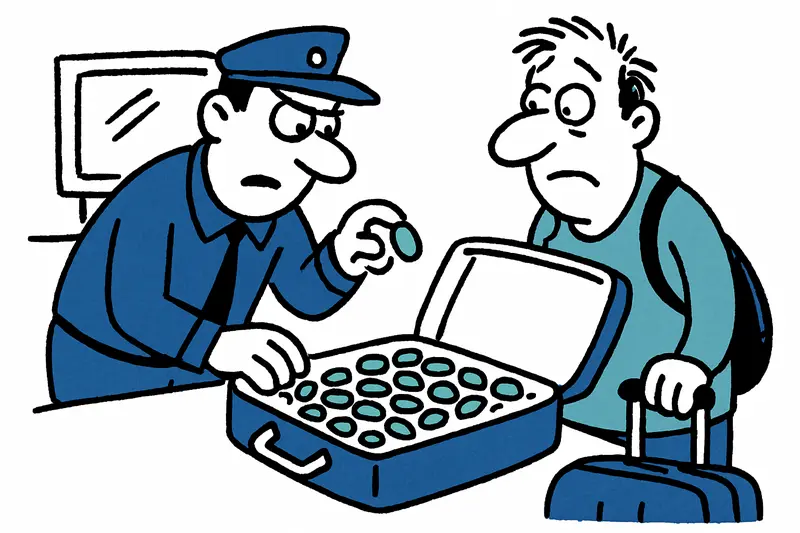
On April 16, Guardia Civil officers found 1,144 tablets of 100 mg sildenafil citrate in a suitcase during a baggage check at Palma Airport. The traveler, a 47-year-old Spanish national, had arrived on a flight from Santo Domingo via Madrid. The dosage and quantity made the tablets conspicuous; an X-ray scanner had previously shown unusual structures in the luggage. Since there were no import documents or prescriptions, the products were confiscated and a report was filed for an alleged smuggling offense.
Key question: Are the control mechanisms at Palma de Mallorca sufficient to effectively prevent targeted imports of prescription-only medicines?
At first glance, the seizure looks like a success for the security forces: scanners alerted and the special unit UDAIFF responded during the inspection. On closer inspection, however, questions remain. Why did this particular shipment stand out while other pieces of luggage apparently passed without incident? And: who is the actual recipient of such quantities — personal use seems unlikely, commercial resale is more probable.
In many small shops and on street markets around Palma, products circulate that are sold outside regular pharmacies. Added to this is a flourishing online trade: foreign online pharmacies and intermediaries often offer prescription medicines without sufficient controls. Mallorca, as a travel and hub with many connections from overseas, is vulnerable to flows of goods that are difficult to trace, as recent large-scale seizures demonstrate in 675 Kilos of Cocaine: What the Find Means for Palma, Inca and Binissalem.
What is often missing in public debate is a sober inventory of demand and distribution channels on the island. People talk about seizures and isolated cases, such as Traffic stop in Palma: 171 pills, two arrests – how safe are our streets?, but hardly about the economic incentives for smugglers or the role of online platforms. Also rarely discussed is how illegal supply of medicines affects local health — contaminated active ingredients, incorrect dosing, lack of medical advice.
A commonplace scene that makes the problem tangible: morning at Terminal 1, baggage carousel 5. The smell of coffee mixes with sunscreen, taxi drivers wave to arriving passengers, announcements announce delayed flights. Beside waiting families stand travelers with large trolleys, some looking as if they came from far away. Among them, the angular figures of Guardia Civil officers inspect suitcases with practiced eyes. This creates the impression that controls are present — but not every anomaly is immediately noticed.
Concrete starting points for improvement are practical and expensive at the same time:
1) Better risk analysis: Consolidate data on frequent countries of origin, flights with stopovers and suspicious passenger profiles. If regular patterns are recognizable, more targeted spot checks can be planned.
2) Scanner training and manual checks: Modern X-ray machines help, but their interpretation depends on personnel. Regular training and rotating teams reduce routine blindness.
3) Cooperation with airlines and origin countries: Advance information on suspicious bookings, joint checklists and faster data exchange increase effectiveness at the border.
4) Control of digital distribution channels: Authorities must work better with platform operators to detect and block large sales of prescription substances, and with operations such as Palma: Van with 700 Counterfeits Seized — Controls in Focus highlighting the challenge of stopping illicit goods.
5) Local prevention: Awareness campaigns in pharmacies, clinics and with general practitioners about the risks of illegal potency products reduce demand and help prevent health consequences.
These suggestions are not panaceas. They require resources, personnel and political priority. Nevertheless, they are practical: many authorities in Europe already work in a similar direction; this is about adapting to local specifics — airport traffic, seasonal peaks and tourist demand.
The conclusion is short: The case with 1,144 tablets shows that controls can work. But it also shows: a single seizure does not replace a strategy. Those who only react in Palma remain one step behind actors who know the markets, routes and demand. More analysis, better prevention and closer cooperation — these are the ingredients so that a baggage find like this no longer has to be a surprise.
On the road behind the airport car park, where buses depart for the city center, arrivals sometimes hear the sound of the sea as a reminder that Mallorca is not an isolated place. That is good for tourism and trade — it becomes problematic when that same open access makes life easier for criminals.
Frequently asked questions
Can you bring sildenafil into Mallorca without a prescription?
How do airport controls at Palma de Mallorca detect suspicious luggage?
Why are prescription medicines smuggled into Mallorca?
What happens if customs finds undeclared medicine at Palma Airport?
Are online pharmacies in Mallorca selling prescription drugs safely?
What are the health risks of buying potency pills outside a pharmacy in Mallorca?
Is Palma Airport known for smuggling cases involving medicines?
What can Mallorca do to reduce illegal medicine sales?
Similar News

More Electric Cars in the Balearic Islands: Sales Rise Sharply
Between January and August, 14,185 vehicles without petrol or diesel propulsion were sold — an increase of more than 40 ...
Autumn in Mallorca: What Truly Remains of Summer
The days grow shorter, the evenings cool — and yet more of summer lingers than you might think: sounds, recipes, people,...
Rescue operation at Tolleric: Why nighttime cliff parties become dangerous
A British holidaymaker fell about ten meters at the cliffs of Tolleric during the night, later climbed back up and was r...
Car accident on the MA-1: Mother and daughter on a bicycle struck by a fellow countryman – Who protects cyclists here?
On the MA-1 between Portopí and the Cala Major exit, a mother and her daughter on a bicycle were struck by a car. A para...
Smoke over the UIB: Who is responsible for the fire on the roof?
On Saturday afternoon a fire broke out on the roof of the Arxiduc Lluís Salvador building at the University of the Balea...
More to explore
Discover more interesting content

Can Cap de Bou

Townhouse Lleo 72
